



President Bola Ahmed Tinubu has repeatedly argued that his economic reforms are designed to secure Nigeria’s long-term growth. He has also made it clear that the reforms would cause short-term discomfort. But as the pains of these policies continue to reverberate, his administration has begun to claim that the reforms are already yielding positive results.
This self-congratulation may be viewed as premature. It raises questions about the necessity of the painful reforms introduced over the past three years if the current reality is what they were meant to deliver. Understandably, however, the narrative of early success has become politically expedient in the context of a president seeking re-election in January 2027. Present hardship and future gains are not the message any candidate wants to run on.
Road to Recovery
Nevertheless, there are signs that the economy is recovering. Nigeria’s real GDP growth rate fell to 2.74% in 2023, covering the first seven months of the administration, during which it initiated its major economic policies. Growth began to rebound a year later, with 3.38% in 2024 and 3.87% in 2025. The World Bank projects growth of 4.4% in 2026. Other indicators of macroeconomic stability include the relative steadiness of the naira and inflation, which appears to have plateaued – although at elevated levels.
Corporate earnings have also stabilised after the balance sheet turmoil caused by the naira devaluation in 2023 and 2024. Employees who once feared job losses may now feel more secure. But this stability is surrounded by the wreckage of jobs in smaller firms and the struggles of informal-sector workers.
If this pattern of recovery continues, a small minority will enjoy the gains, while a growing majority will remain trapped in poverty. The future would appear less fortunate than the outcome of sound policymaking. Tinubunomics (or Tinubu’s economic reform) would be seen as inefficient and a source of misery, mirroring the dubious Structural Adjustment Programme (SAP) of the 1980s.
Causing Shocks
President Tinubu’s policy actions have amplified the latest shockwaves across the economy. His removal of petrol subsidies, broader fiscal consolidation, and naira devaluation have stoked inflation, dampened investor confidence, increased unemployment, and shrunk the economy. Nigeria’s GDP fell from $646.95 billion in 2022 to $290.79 billion in 2025, according to World Bank data. These policy actions, combined with monetary tightening by the Central Bank of Nigeria (CBN), define the administration’s reform agenda and establish a clear causal link to the slump.
But this is only half the truth. Economic mismanagement under former President Muhammadu Buhari had already set the stage for a severe shock. The petrol subsidy programme was already riddled with fraud long before Buhari took office, rendering it unsustainable in its abused form. For decades, the economy has also remained structurally defective, with reliance on the export of raw commodities, predominantly crude oil, and heavy dependence on imported finished goods. Oil prices and demand, which the government relies on for its major revenue, are subject to global geopolitical events, supply chain disruptions, and systemic crises in major economies.
Nigeria’s downturn under Tinubu is not unprecedented. The country has experienced repeated cycles of shocks and recoveries, including the meltdown in the 1980s, the late-1990s stagnation, the ripple effects of the 2008–09 global financial crisis, the 2016 oil-price recession, and the COVID-19 slowdown in 2020.
The fundamental truth is that economic shocks are frequent in Nigeria. Even without Tinubunomics, the economy was heading towards another crisis. Public debt was spiralling, oil theft was rampant, and key institutions, including the CBN and NNPC Limited, had been compromised. In short, the country was at the tail end of another weak recovery cycle when Tinubu assumed office and launched his ‘reforms’. The economy was bound to be hit by a new shock and then rebound.
Natural Healing
To put it more provocatively, if the economy did not need Tinubunomics to enter a new cyclical shock, it also does not require it to begin to recover. Nigeria’s cyclical downturns naturally lead to recoveries. The so-called reforms were immaterial to both the crisis and the recovery over the past three years – except to worsen the former and weaken the latter.
At least six theoretical and empirical frameworks support this view. These theories argue that economies possess internal stabilisers, such as productivity adjustments, labour-market flexibility, capital reallocation, and expectation-driven behaviour, which gradually restore growth without deliberate policy intervention.
The Real Business Cycle theory (RBC) frames recessions and recoveries as efficient, self-correcting responses to real shocks. It assumes flexible prices and wages, rational expectations, and recovery as shocks dissipate. While some of the assumptions are difficult to substantiate in Nigeria, price and wage flexibility is evident. Agricultural prices fluctuate seasonally, and refined petroleum prices respond to global oil prices.
Classical economists such as Adam Smith and Ricardo emphasised economic self-correction. Their argument that long-term involuntary unemployment does not exist aligns with Nigeria’s informal sector’s absorption of displaced workers. When Nigerians lose formal jobs, or never had one, they “hustle” – temporarily or permanently.
Neoclassical growth models posit that economies return to their long-run growth path after temporary shocks. Policy can accelerate or slow convergence, but the mechanism remains in place. One could argue that Tinubu’s reforms delayed equilibrium. To underscore the influence of policy on what could have been a more moderate but inescapable devaluation of the naira, the currency has now regained more than 25% of its value since its precipitous fall to around ₦1,900 per dollar in the parallel market in 2024. Meanwhile, inconsistent crude-oil supply to the Dangote refinery, which the country had supported with foreign exchange as an important economic asset during its construction, has kept petrol prices elevated and has returned the locally refined product to dollar pricing.
Nigeria’s recent recovery also reflects Schumpeterian creative destruction. New technologies and entrepreneurs continue to drive innovation cycles, as I noted in my new book, Youth Breed: How Generations of Nigerian Youth Impact Their Country. The successes of yesterday’s entrepreneurs have not impeded today’s youth from starting and succeeding in their businesses. During the COVID-19 lockdowns, e-commerce and broader technology supported consumption and spurred recovery.
While Tinubunomics may have cleared out inefficient firms, economic renewal in Nigeria has been a natural phenomenon.
Theoretical Exemplifications
Nigeria’s demographic structure is one of the strongest natural stabilisers of its economic cycle. With a young, expanding, and increasingly urban population, the country maintains a baseline of consumption, labour supply, and entrepreneurial activity even during downturns. This demographic momentum ensures that aggregate demand rarely collapses and that the labour market continuously regenerates through new entrants and absorption into the informal sector. In macroeconomic terms, Nigeria’s population dynamics create a built-in floor beneath economic contractions, reinforcing the argument that recovery is embedded in the country’s fundamentals rather than engineered by policy.
The country’s informal sector acts as a macroeconomic shock absorber, cushioning downturns and accelerating natural recovery. When formal firms shed labour or scale back operations, millions of Nigerians pivot to informal enterprises, spanning micro-retail, transport, services, and small-scale manufacturing. This sector adjusts rapidly to price changes, features flexible wages, and sustains household consumption even when formal incomes decline. In effect, the informal economy performs the stabilising role that labour-market flexibility plays in classical and Real Business-Cycle models. It absorbs displaced workers, reallocates capital at the micro level, and sustains economic activity when formal institutions falter. This resilience is not a sign of policy success; it is a structural feature of Nigeria’s economic DNA.
What’s more, Nigeria’s economic cycles are closely intertwined with global commodity dynamics, particularly crude oil. Oil prices exhibit mean-reverting behaviour: sharp declines are often followed by gradual recoveries as supply and demand rebalance. This pattern creates predictable windows for Nigeria’s economic rebound. Even when domestic policy is weak or inconsistent, external price corrections eventually ease fiscal pressures, improve foreign-exchange inflows, and stabilise macroeconomic indicators. The country’s recoveries after the 1980s crisis, the 2008 global financial shock, the 2016 recession, and the COVID-19 slowdown all coincided with oil-price adjustments. This mean reversion reinforces the argument that Nigeria’s recoveries are cyclical and externally anchored, rather than primarily the result of domestic reform agendas.
But while Nigeria’s economy naturally recovers from shocks, institutional decay sets the ceiling on those recoveries. Weak regulatory agencies, politicised economic institutions, and inconsistent policy implementation limit how effectively natural stabilisers can translate into sustained growth. Even when demographic momentum, informal-sector resilience, and commodity-price corrections push the economy upwards, institutional weaknesses cap the speed and durability of the rebound. This explains why Nigeria’s recoveries since 2016 have been notably weaker than earlier ones since the early 2000s. Natural healing may occur regardless of policy, but strong institutions are required to convert recovery into transformation. Without them, Nigeria remains trapped in shallow cycles of rebound and relapse into crisis.
Expectations also play a powerful role in Nigeria’s economic dynamics, often shaping outcomes as much as policy itself. In classical and RBC frameworks, recovery is partly driven by how households, firms, and investors interpret future conditions. Even when fundamentals are weak, stabilising narratives – such as government claims that reforms are working – can influence investment decisions, exchange-rate behaviour, and market sentiment. This does not mean such narratives are accurate, but it does mean they are impactful. Tinubu’s messaging about reform success may have contributed to the recent uptick in portfolio inflows and market confidence, even if the underlying recovery is cyclical rather than policy-driven. Although expectations do not create recovery, they can accelerate or delay its visible expression.
Tepid Growth, Weak Rebound
Nigeria’s recoveries are weak also because growth itself has been weak. Recovery merely returns the economy to its immediate multi-year trend. Past recoveries mirror previous peaks: the 1990s rebound reflected the 1970s oil boom; the post-2008 recovery mirrored pre-crisis growth. These cycles are oil price stories. Their strength and durability were determined by oil price cycles.
The early- to mid-2000s recovery was distinct because it coincided with institutional reforms that strengthened governance, investment attractiveness, and market performance. After President Olusegun Obasanjo’s administration, these institutions began to deteriorate. They have deteriorated further since 2015, as presidents have leaned heavily on loyalists lacking the rigour and discipline to uphold the rule of law or protect state interests, thereby undermining both growth and crisis recovery.
Global dynamics have also changed. China’s economic transition, the global energy shift, and frequent geopolitical events have made oil price spikes fleeting. The oil supercycle of the early 2000s is now history that is unlikely to be repeated.
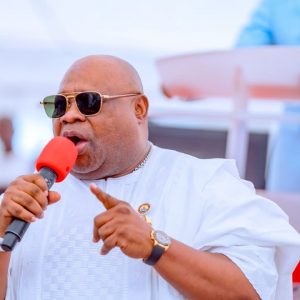
As Sam Amadi, Director of the Abuja School of Social and Political Thoughts, has argued, the wisdom of Tinubu’s “bold” reforms is questionable. The administration introduced disruptive reforms while tightening control over institutions that should function more independently, thereby bolstering investor confidence. It has also prioritised Foreign Portfolio Investment (FPI) over Foreign Direct Investment (FDI). Scholars warn that FPI seeks short-term gains, whereas FDI builds long-term capacity, jobs, and foreign-exchange stability.
Conclusion
Nigeria’s economy will remain trapped in cycles of shocks and weak recoveries. These recoveries will occur naturally, with or without policy intervention, because the economy possesses inherent resilience. Nigerians are entrepreneurial and innovative. The country’s large market is exposed to global shocks but also attracts investment when global conditions favour diversification into frontier markets.
For recovery to be strong and durable, Nigeria must free its institutional pillars from abusive control. Policymaking must avoid deepening slumps and making recoveries harder, especially as the country remains vulnerable to recurring internal and external shocks.
Jide Akintunde is the Managing Editor of Financial Nigeria publications. He is the author of the new book, Youth Breed: How Generations of Nigerian Youth Impact Their Country.
Stay ahead with the latest updates!
Join The Podium Media on WhatsApp for real-time news alerts, breaking stories, and exclusive content delivered straight to your phone. Don’t miss a headline — subscribe now!
Chat with Us on WhatsApp