



Forbes contributors publish independent expert analyses and insights.Dr. Cheryl Robinson covers areas of leadership, pivoting and careers.
Summary
A leader’s emotional state is highly contagious, quickly spreading frustration or calm throughout a team. With 71% of leaders reporting increased stress and widespread employee job insecurity, emotional regulation is paramount. This learnable skill involves understanding one’s feelings and choosing a response aligned with goals, rather than letting emotions dictate actions. Dysregulation often appears subtly, like reacting impulsively, misinterpreting questions as challenges, and changing priorities erratically, forcing teams to manage the leader’s mood instead of their work. Leaders can regulate by delaying reactions, separating facts from interpretations and using phrases like, “I want to think about this.” This prevents personal stress from becoming a collective burden.
Have you ever seen a leader receive one difficult email and let the frustration spread across the entire team? Within minutes, one emotional reaction shapes their leadership, and people act as though everything is going better than it is.

Leadership emotions rarely remain personal. They are expressed through conversations and decisions with remarkable efficiency. Emotional regulation is the ability to recognize what you are feeling, understand what may be driving it and choose a response that serves the situation. It does not mean suppressing anger or avoiding conflict. It means using emotion as information without allowing it to take control.
As Yale Center for Emotional Intelligence director Marc Brackett explained in October 2025, regulation involves intentional, learnable skills that help people respond in ways aligned with their goals and values.
Leadership Pressure Is Rising
The need for those skills is becoming harder to ignore. DDI’s January 2025 Global Leadership Forecast, based on responses from 10,796 leaders in more than 50 countries, found that 71% had experienced significantly greater stress since entering their current roles. Among stressed leaders, 40% had considered leaving leadership to protect their well-being.
Employees are carrying their own uncertainty. The American Psychological Association reported in May 2025 that job insecurity significantly affected the stress levels of 54% of U.S. workers surveyed. That pressure is present in every one-on-one and performance review. A leader who cannot regulate it may become reactive. The team then spends energy managing the leader instead of managing the work.
Stress says, “This situation is demanding.”
Dysregulation says, “Everyone else must experience my stress too.”
What Emotional Dysregulation Looks Like In A Leader
Dysregulation is not always a raised voice or an angry exit from a meeting. It can look polished and controlled. The problem begins when the leader’s emotional state begins to shape their judgment, communication and behavior.
Common signs include:
- Reacting before understanding. The leader responds to a comment, email or mistake before asking what happened.
- Treating questions as challenges. Clarification feels like resistance, and disagreement feels personal.
- Becoming unusually controlling. Stress leads to excessive check-ins, last-minute revisions or decisions that should have been delegated.
- Changing priorities impulsively. A frustrating update suddenly becomes an emergency, even when the facts have not changed.
- Using tone to communicate what words do not. Short replies, visible irritation and tense meetings leave employees guessing about what is wrong.
- Struggling to recover. The emotion continues long after the immediate problem has passed.
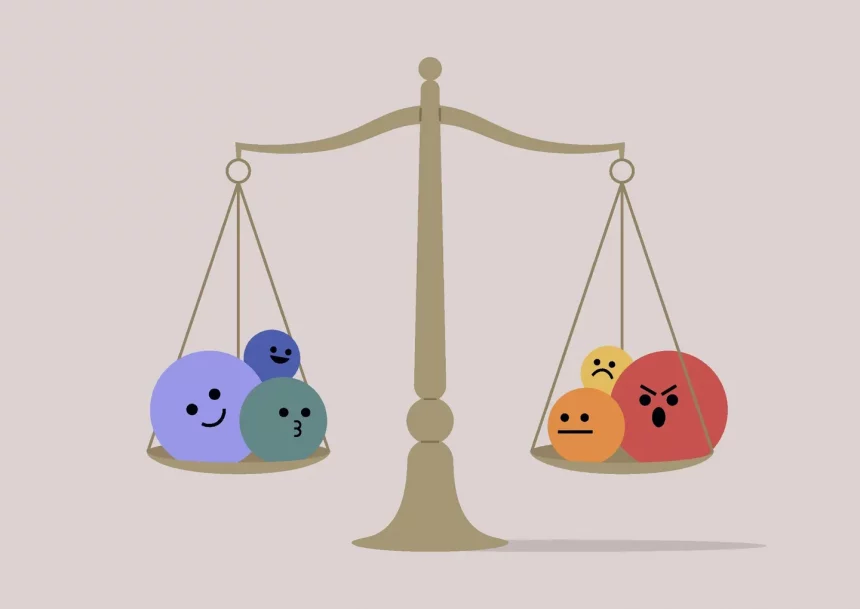
Leaders who manage their emotions effectively can make clearer decisions, communicate with greater care and create more stable workplaces.
getty
How Leaders Can Regulate Emotions In The Moment
Regulation begins with noticing when a reaction is gaining momentum. The signs may be physical, such as a tense jaw. They may also be mental, such as rehearsing an argument.
Try these practices:
- Name the emotion precisely. Replace “I’m annoyed” with “I feel dismissed,” “I feel unprepared” or “I’m worried about the deadline.”
- Delay the first reaction. Take one slow breath or ask for five minutes before answering.
- Separate facts from interpretation. Ask, “What do I know, and what story am I adding?”
- Lower the temperature, not the standard. A calm response can still be direct, specific and accountable.
- Choose the correct setting. Do not deliver emotionally charged feedback in a crowded meeting because your calendar looked inconvenient.
These practices shape more than a leader’s tone. A June 2025 study involving 16 head nurses and 193 nursing staff found that emotional intelligence was positively associated with transformational leadership. Leaders with higher emotional intelligence also used more participatory approaches, including debriefings and team reflection.
Source: Forbes
Stay ahead with the latest updates!
Join The Podium Media on WhatsApp for real-time news alerts, breaking stories, and exclusive content delivered straight to your phone. Don’t miss a headline — subscribe now!
Chat with Us on WhatsApp