



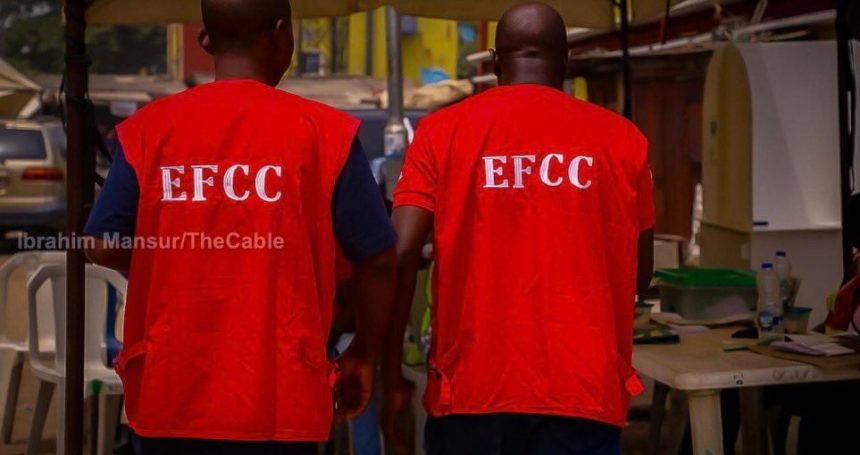
A federal high court in Ibadan has restrained the Economic and Financial Crimes Commission (EFCC) from proceeding with its planned investigation into the finances of the Oyo government.
In a judgment delivered on Wednesday, Nkeonye Maha, the presiding judge, held that the commission’s request for the state’s financial records amounted to a speculative “fishing expedition” rather than a lawful investigation based on specific allegations.
The judge also set aside the EFCC’s June 2, 2025 letter to the Oyo accountant-general seeking extensive financial records from the state government.

In suit number FHC/IB/CS/61/2025, Maha ruled that although the EFCC has statutory powers to investigate financial crimes, such powers must be exercised within the bounds of the constitution and the rule of law.
According to a statement issued by Sulaimon Olanrewaju, special adviser on media to Seyi Makinde, Oyo governor, the court held that any request for information by the commission must be reasonable and tied to identifiable allegations of wrongdoing.
The judge held that section 38 of the EFCC Act empowers the commission to obtain information only for the investigation of offences under the Act and does not authorise speculative or blanket inquiries into government finances.
Maha found that the EFCC’s request was overly broad and lacked the specificity required to justify such an extensive demand for official records.
“His Lordship noted that the constitutional rights of the plaintiffs to fair hearing could not be trampled upon under the guise of investigation,” Olanrewaju said.
The statement said the Oyo government filed the suit after receiving the EFCC’s June 2, 2025 letter requesting, among other things, copies of all contracts awarded by the state and details of payments made to contractors from 2021 to the date of the request.
The plaintiffs, the Oyo governor, the attorney-general and the accountant-general, argued that the commission’s demand was oppressive, unreasonable and excessively wide, considering the volume of contracts executed during the period.
Represented by Abiodun Aikomo, attorney-general of Oyo, the state argued that although the EFCC has investigative powers, those powers are subject to constitutional safeguards and cannot override the right to fair hearing.
The government also maintained that anti-corruption investigations must be evidence-driven and based on identifiable allegations rather than sweeping requests covering several years of government transactions.
According to the statement, court documents showed that before approaching the court, the state government wrote to the EFCC asking it to identify the contractors or companies under investigation so that relevant documents could be produced.
“The government subsequently wrote to the EFCC, requesting the commission to specify the contractors or companies under investigation so that appropriate documents could be provided. When the EFCC failed to respond, the state filed the suit,” the statement said.
In its defence, the EFCC relied on section 38 of the EFCC Act, arguing that the provision empowers the commission to demand information from any person, public authority, corporation or organisation in the course of investigations.
I.G. Ojibor, counsel to the commission, argued that the provision entitled the EFCC to obtain the requested documents as part of its investigative mandate.

However, Maha rejected the argument, holding that the commission’s powers are not unlimited and must be exercised within constitutional limits.
The judge added that the constitutional right to fair hearing cannot be undermined under the guise of investigation and that law enforcement agencies must demonstrate a legitimate investigative basis before compelling the production of documents.
Stay ahead with the latest updates!
Join The Podium Media on WhatsApp for real-time news alerts, breaking stories, and exclusive content delivered straight to your phone. Don’t miss a headline — subscribe now!
Chat with Us on WhatsApp