



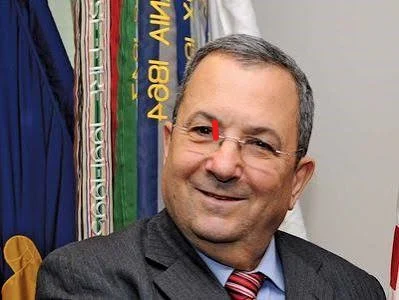
Former Israeli Prime Minister Ehud Barak has said Nigeria can successfully establish state police without allowing governors to misuse the institution, provided the legal framework includes strong safeguards and effective federal oversight.
Speaking on Thursday, at the ARISE NEWS Townhall on State Police, Barak acknowledged concerns that governors could deploy state police against political opponents but said such fears could be addressed through carefully drafted legislation.
According to him, decentralised policing would make security agencies more responsive to local communities while enabling the Federal Government to step in whenever the system is abused.

“The worry that someone might try to use the fact that he has a state police for his own political ambitions and so on is a real issue and should be addressed,” he said.
Barak argued that recruiting officers from the communities they serve would improve policing by strengthening local knowledge, cultural understanding and intelligence gathering.
“When you mobilise and recruit the policemen from within the community, they will be much more sensitive. They will understand the norms and the practises, the religious space, and everything that relates to the people around them. It will be much more effective,” he said.
He stressed that the success of state police would depend on a detailed legal framework that clearly defines the relationship between state police authorities and the Federal Government.
“I think that it is much easier to deal with such events through the very detailed legislation that gives certain authority to the president and to the federal government in Abuja over the governors and so on,” Barak said.
He maintained that putting safeguards in place through legislation would be more practical than attempting to police a country as large and diverse as Nigeria solely from the centre.
“It’s much easier to correct this element than to activate through a vast country like Nigeria from a central place,” he added.
Barak also said decentralised policing would improve emergency response because officers familiar with local terrain and communities would be able to respond more effectively to security threats.
“Response is much faster when you’re talking about the state police. Response is much more calibrated to the nuances, subtleties of the arena in which it’s carried out,” he said.
He identified intelligence gathering as one of the biggest advantages of state policing, noting that officers drawn from local communities are better positioned to gather the human intelligence needed to combat terrorism and organised crime.
“Intelligence is essential for running a fight against terror, against organised crime. But, you know, it’s mainly human intelligence,” Barak said.
However, he cautioned that sophisticated intelligence capabilities, particularly signal intelligence, should remain under the control of the Federal Government because of their strategic importance and the risks associated with misuse.
“Signal intelligence is extremely expensive, and if the capabilities of signal intelligence ended up in the hands of the wrong person or the wrong group, they can cause huge damage to the national structure and become a kind of a threat,” he warned.

Barak also proposed the creation of a federally controlled rapid deployment police unit that could support state police whenever they face security challenges beyond their operational capacity.
“There should be, to the best of my judgement, a central kind of rapid deployment police force under the command of Abuja that could be sent in any region to support them when a problem which is beyond their capabilities emerges,” he said.
He further stressed the need for continuous intelligence sharing between state police commands and federal security authorities to ensure effective coordination.
“The state should report; there should be no secrets of what happens to the police. And at the same time, the federal authorities should be sensitive to the needs,” he said.

Although he acknowledged that implementing state policing would present challenges, Barak expressed confidence that the model could succeed if local accountability is balanced with strong federal oversight.
“It won’t be easy, but that’s the only way,” he said.
Calls for the establishment of state police have intensified in Nigeria amid worsening insecurity and growing demands for a more decentralised policing structure.
While supporters argue that state police would improve community policing, intelligence gathering and rapid response to crime, critics have warned that governors could abuse the system for political purposes.
The National Assembly is currently considering constitutional amendments that would move policing from the Exclusive Legislative List to the Concurrent Legislative List, enabling states to establish their own police services under a regulated legal framework.
Stay ahead with the latest updates!
Join The Podium Media on WhatsApp for real-time news alerts, breaking stories, and exclusive content delivered straight to your phone. Don’t miss a headline — subscribe now!
Chat with Us on WhatsApp