



On a recent evening in Brussels, I had the privilege of delivering the keynote address at the launch of The City He Never Returned To, a remarkable new novel by a Nigerian-born, Belgian writer, Ibekwe Paul Chukwuemeka. The book is ostensibly about the Nigerian Civil War, memory, healing, and national repair. But as I reflected afterwards, I realised that the significance of the evening extended beyond literature. It offered a powerful lesson about the role of the African diaspora in shaping the future of our continent.
For too long, conversations about the diaspora have been dominated by one metric: remittances. Certainly, remittances matter. They support families, sustain communities, and contribute billions of dollars annually to African economies. Yet reducing the diaspora to a source of financial transfers is akin to valuing a library solely for the paper on which its books are printed.
The greatest contribution of the diaspora may not be money. It may be memory. It may be knowledge. It may be perspective. It may be the ability to connect experiences across continents and generations in ways that enrich both home and host societies. That is precisely what The City He Never Returned To accomplishes.

Written from Brussels yet deeply rooted in Nigerian history, the novel demonstrates that distance does not diminish belonging. Sometimes distance sharpens perspective. Sometimes it allows us to see our societies more clearly. Sometimes it creates the intellectual space needed to ask difficult questions that those immersed in daily realities may struggle to ask.
The author begins with a deceptively simple question: “How does a nation live with a past that refuses to become past?” It is a question that resonates with many of us. I spoke at the launch not merely as an analyst or author, but as someone shaped by the afterlife of the Nigerian Civil War. I was a toddler when the conflict began. Like many children of that generation, I did not inherit detailed political arguments. I inherited fragments: anxious conversations, careful silences, unresolved grief, and the lingering understanding that something profound had happened to our country.
The author inherited the same history differently. Through family stories, memory, and imagination, he transformed inherited experience into literature. Neither of us lived the war in the same way as those who fought it. Yet both of us were shaped by its consequences. There is a broader lesson here. Africa possesses a vast and underutilised reservoir of lived experience scattered across the globe. Millions of Africans in Europe, North America, Asia, the Middle East, and elsewhere carry valuable insights accumulated through migration, professional practice, public service, entrepreneurship, research, and cultural exchange. These experiences are not merely personal achievements. They are strategic assets.
A Nigerian doctor in London, a Ghanaian engineer in Toronto, a Kenyan entrepreneur in Dubai, a Senegalese academic in Paris, or a Congolese artist in Brussels each possesses knowledge that can help shape the future of Africa. The challenge is how to convert these experiences into collective national value. This conviction sits at the heart of my own work and my recent book, Economic Diplomacy of the Diaspora. The central argument of that book is straightforward: the diaspora should no longer be viewed merely as an external community sending money home. Rather, it should be understood as a strategic partner in national development, economic diplomacy, knowledge transfer, innovation, investment promotion, cultural influence, and institutional strengthening.
Economic diplomacy is not only about trade agreements and investment missions. It is also about relationships, trust, networks, credibility, and ideas. These are forms of capital too. Indeed, some of the most transformative contributions made by the diaspora have little to do with money. They involve mentoring young entrepreneurs, helping universities build international partnerships, introducing new governance practices, supporting innovation ecosystems, strengthening institutions, promoting cultural understanding, and helping countries navigate an increasingly interconnected world.
What struck me most about the launch of The City He Never Returned To was that it served as a practical demonstration of this principle. A diaspora writer drew upon family history and national memory to produce a work that contributes to a wider conversation about healing and nation-building. The value of that contribution cannot be measured in remittance statistics. Yet its impact may endure for generations. The same principle applies beyond literature. Africa’s future will depend not only on what its diaspora sends back, but also on what it shares back.
Ideas. Knowledge. Mentorship. Networks. Experience. Wisdom. Perspective. And perhaps most importantly, hope.
This brings us to another challenge confronting diaspora communities themselves. Too often, organisations and leaders within the diaspora fall into the trap of competition rather than collaboration. Fragmentation consumes energy that could otherwise be directed towards impact. Personal rivalries frequently overshadow collective objectives. Too many initiatives begin with the question, “Who gets the credit?” rather than, “How do we create value?”
This is a mistake. The true power of the diaspora lies not in individual accomplishment but in collective influence. No single professional, entrepreneur, scholar, activist, or community leader possesses all the answers. But together, the diaspora constitutes one of Africa’s largest and most diverse reservoirs of expertise. When collaboration replaces competition, extraordinary things become possible. Young people gain mentors. Businesses gain markets. Universities gain partnerships. Governments gain trusted advisers. Communities gain opportunities. And nations gain access to global networks that would otherwise remain beyond reach. Everyone wins.
The launched novel contains a profound observation: “The opposite of war is not just peace, but the difficult, daily work of building something worthy of the survivors.”
The same could be said of development. The opposite of poverty is not merely wealth. The opposite of underdevelopment is not merely growth. The true task is the difficult, daily work of building societies worthy of future generations. That work requires governments. It requires businesses. It requires civil society. But it also requires the diaspora. Not as spectators. Not as critics from afar. Not merely as senders of remittances. But as contributors of ideas, builders of bridges, mentors of the next generation, and custodians of experiences that can help illuminate Africa’s path forward.
The launch of The City He Never Returned To reminded me that every life story contains lessons. Every journey contains insights. Every experience carries potential value for someone else. The question is whether we are willing to share those lessons generously, and whether we are willing to collaborate sufficiently to transform individual experiences into collective progress. If we can do that, then the diaspora’s greatest contribution to Africa may still lie ahead. And it will be measured not only in what we send home, but in what we help build.
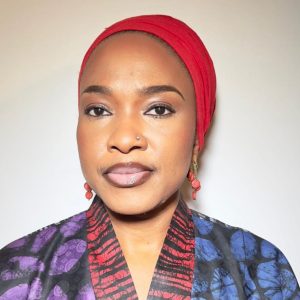
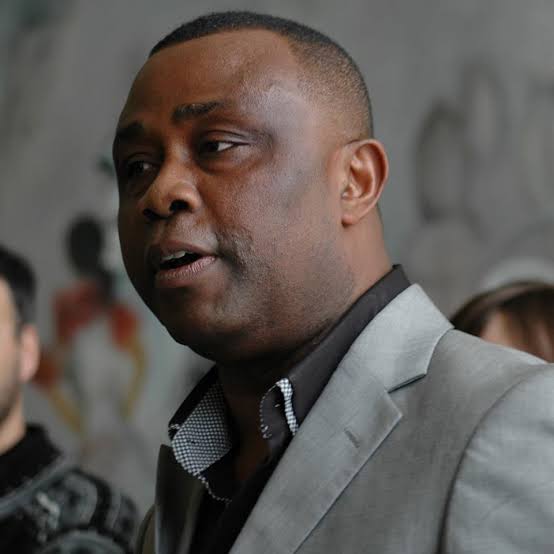
Collins Nweke is a Belgian-Nigerian public affairs practitioner, former councillor in Ostend City Council, Belgium, and author of Economic Diplomacy of the Diaspora. He writes on governance, diplomacy, development, and Africa-Europe relations.

Stay ahead with the latest updates!
Join The Podium Media on WhatsApp for real-time news alerts, breaking stories, and exclusive content delivered straight to your phone. Don’t miss a headline — subscribe now!
Chat with Us on WhatsApp