




As Nigeria accelerates the digitisation of public services, internet access has become essential for everyday life. Activities such as education, banking, healthcare, employment, identity verification, and communication now depend heavily on reliable connectivity.
Access to many government and private sector services now depends on a stable internet connection, making connectivity increasingly necessary for social and economic participation.
However, rising data costs are making it harder for many Nigerians to stay connected. Despite the country’s growing investment in digital public infrastructure, affordability challenges continue to limit access, raising concerns that millions of citizens could be excluded from the benefits of an increasingly digital society.

‘IT IS NO LONGER WORTH IT’
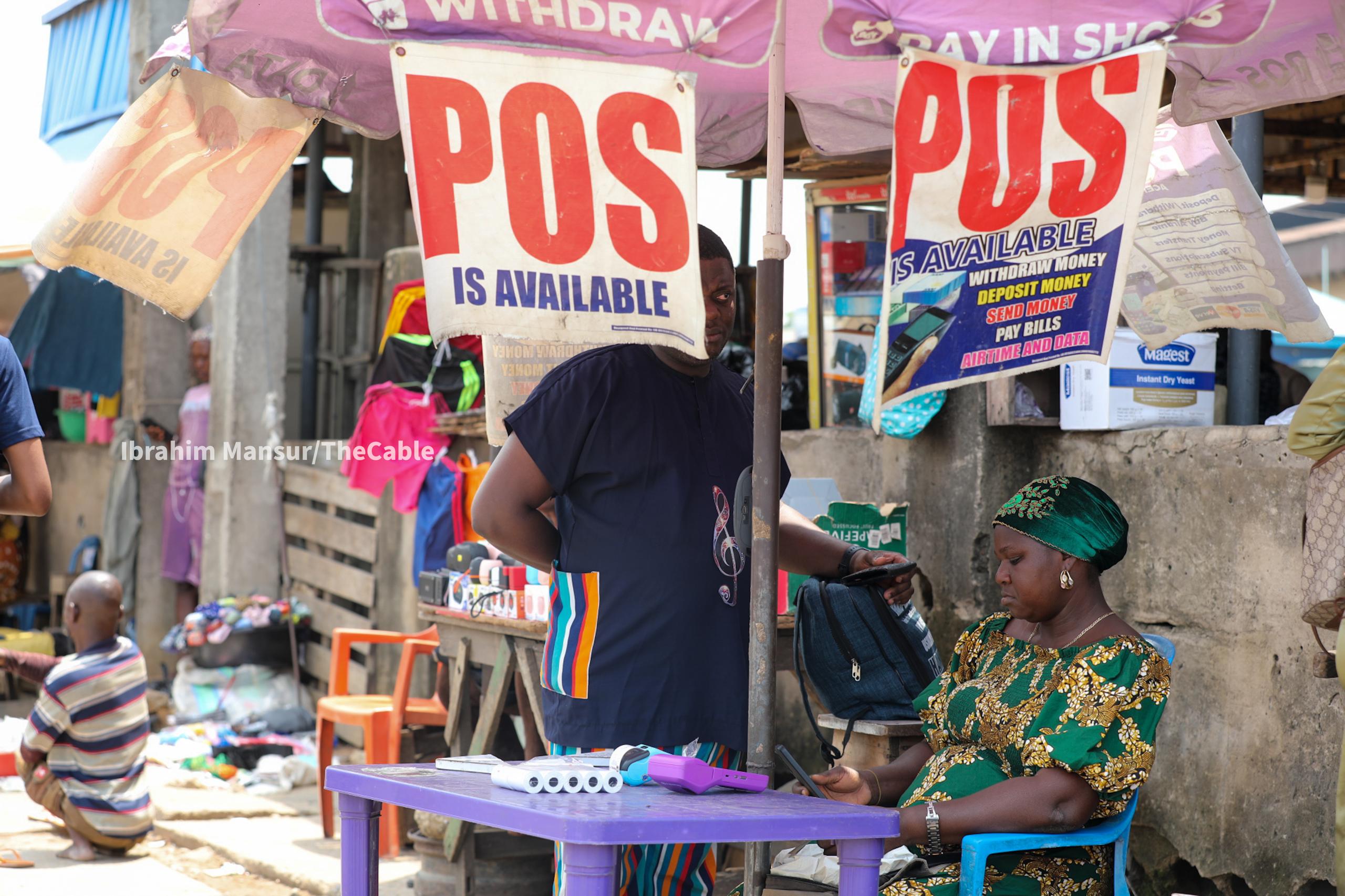
In the Oko-Erin area of Kwara state, a charcoal seller, Iya Abbas, said rising data costs forced her to abandon the POS business she once operated alongside her charcoal trade.
For her, the POS service was supposed to provide extra income and attract more customers. Instead, it became another expense she could no longer sustain.
“The small profit I make from the POS business almost finishes on data subscriptions every month,” she said. “Sometimes, after buying data and trying to keep the network active, there is barely anything left for me. I had to stop the business because it was no longer worth it.”
She added that unreliable networks made the situation even worse.
“You will buy data, and the network will still be bad. Customers will be waiting while transactions fail or hang. At the end of the day, you are stressed and still spending money to stay online,” she said.
Her experience reflects a growing reality for many Nigerians operating small businesses in an economy increasingly dependent on digital transactions. Internet access has become part of the cost of survival.
At the other end of the income spectrum, a Lagos-based content strategist and social media manager working remotely for a foreign company describes her data spend as a daily source of frustration.
“I spend a huge amount on data every month, about N50,000 to N60,000. How much is my salary, really?” she queried. “The fact that I don’t spend money on transport is the only way I’m managing to cope with these ridiculous data costs.”
The irony, she said, is that high spending does not guarantee quality service.
“Clips take forever to upload. It’s exhausting. Sometimes, it feels unreal, like I’m living in a simulation, because this can’t be the reality we’ve accepted.”
HEALTHCARE WORKERS PAYING TO STAY CONNECTED
The burden of expensive and unreliable internet access is also affecting Nigeria’s healthcare system, where digital health programmes increasingly depend on stable connectivity.

A report by the International Centre for Investigative Reporting (ICIR) in January found that some primary healthcare centres in Anambra state lose N20,000 monthly from their Basic Healthcare Provision Fund (BHCPF) disbursements to data subscriptions tied to telemedicine services, despite poor network access making the systems difficult to use.
“Despite the challenge, OICs alleged that N20,000 is deducted monthly from their facilities’ quarterly BHCPF disbursements for data subscriptions dedicated to telemedicine. They claim the data often expires unused due to poor network access,” the report stated.
The report also highlighted how some healthcare workers resort to using personal data subscriptions from alternative networks to keep telemedicine services running.
The experience highlights a broader structural problem within Nigeria’s digital transition, where even when digital infrastructure exists, affordability and connectivity gaps continue to determine who can meaningfully access it.

WHAT IS DRIVING THE COST?
The growing frustration over internet prices is part of a wider economic crisis affecting Nigeria’s telecommunications sector.
In January 2025, the Nigerian Communications Commission (NCC) approved a telecom tariff adjustment of up to 50 per cent, the first major increase in over a decade — significantly lower than the over 100 per cent increase requested by some operators. Tariffs, the NCC said, had remained largely unchanged since 2013 despite rising operational costs.
“Tariff rates have remained static since 2013, despite the rising operational costs faced by telecom operators. The approved adjustment is aimed at addressing the significant gap between operational costs and current tariffs while ensuring that the delivery of services to consumers is not compromised,” Reuben Muoka, NCC’s director of public affairs, said.
Operators point to several pressures. Karl Toriola, MTN Nigeria’s chief executive officer (CEO), highlighted that the naira’s devaluation, dollar debt, and rising energy prices had exponentially increased operational expenses.
Speaking at the GITEX Nigeria 2025 conference and exhibition, Ayham Mousa, MTN Nigeria’s chief operating officer (COO), said inadequate power supply to base stations continues to undermine service quality, noting that no operator can afford to take energy availability for granted.


He explained that roughly 20 to 30 per cent of operational expenses go into ensuring power supply across network sites, adding that about 70 per cent of network downtime is linked to power failures, alongside rising incidents of fibre cuts and vandalism.
Femi Adeniran, director of corporate communications and corporate social responsibility at Airtel Nigeria, also disclosed in 2024 that the company spent about N28 billion monthly on diesel.
He said the operator has begun shifting toward cleaner energy solutions, including solar power and lithium-ion batteries, to reduce its environmental impact and rising operational costs while lowering its carbon footprint.
Gbenga Adebayo, chairman of the Association of Licensed Telecom Operators of Nigeria (ALTON), has also described energy as one of the industry’s largest burdens.
According to the State of Africa’s Infrastructure Report 2025 by the Africa Finance Corporation (AFC), telecom operators in Nigeria consume over 40 million litres of diesel each month, resulting in annual spending exceeding $350 million.
This further underscores that Nigeria’s unreliable power infrastructure remains a key driver of operational costs for telecom operators, forcing them to continue relying on expensive diesel-powered alternatives to sustain service delivery.
THE NUMBERS BEHIND THE BURDEN
The scale of what Nigerians are collectively spending on data offers a stark snapshot of the pressure they are under.
Nigeria’s monthly spending on internet services surged to N721.18 billion by mid-2025, more than four times the N176.87 billion recorded just two years earlier.
During the same period, the average price of 1GB of data increased from N287.50 in 2023 to N637.50 across major telecom operators such as MTN, Airtel, Glo, and 9mobile, making a 122 per cent rise.
At the same time, internet subscriptions began to decline, falling from 141.6 million in January to 140.6 million by mid-2025. The decline suggests that rising costs are pushing some Nigerians to scale back or abandon internet use altogether.
Broadband penetration also fell short of expectations. The National Broadband Plan 2020–2025 had targeted 70 per cent penetration by the end of 2025; by January 2026, it had only reached 53 per cent.
The International Telecommunication Union (ITU) estimates that only 38 per cent of Nigerians and Africans broadly were using the internet in 2024, compared to a global average of 68 per cent. In 2025, the global digital report estimates internet penetration in Nigeria at roughly 45.5 per cent
While Nigeria’s nominal data prices are lower than in some African countries, affordability tells a different story. The ITU’s ICT Services Affordability Report 2023 found that 2GB of data in Nigeria costs $2.35, cheaper than Ghana ($2.66), Kenya ($2.92), and far below South Africa ($7.98). But Nigeria also has the lowest GDP per capita among those countries. A lower nominal price does not mean cheaper access when income is lower.
THE GOVERNMENT’S POSITION: BUILDING FOR THE FUTURE
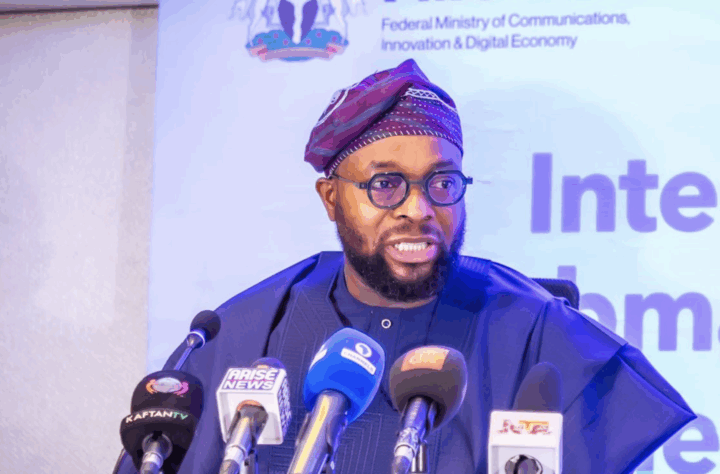
Nigeria’s government has framed the data cost debate within a broader vision of digital transformation, positioning near-term affordability pressures as temporary costs of building sustainable infrastructure.
Bosun Tijani, the minister of communications, innovation and digital economy, said Nigeria is currently at the forefront of deep investments in digital infrastructure across Africa, adding that noticeable improvements in internet access and quality are expected to emerge within the next couple of months or years as ongoing projects begin to materialise.
He explained that Nigeria is the only African country involved in a 90,000-kilometre fibre-optic network project led by the World Bank while also allocating resources to two new communications satellites.
“The only country that is also investing in an additional 3,700 towers for rural areas, which means we can now bring online about 20 million Nigerians that are currently unconnected at all,” Tijani said.
The ministry, he noted, has also developed Nigeria’s Digital Public Infrastructure Standards and Framework, a blueprint designed to enable seamless interoperability between government systems, including identity, payments, and public service delivery, and ensure better access for citizens.
Speaking at UN Open Source Week in 2025, Tijani described DPI as central to building responsive governance, stressing that technology must go beyond digitisation to restore citizens’ trust in and access to public services.
“DPI is not just an evolution of e-government — it is a new form of social infrastructure, one that offers a modular, open, and interoperable foundation for innovation to thrive and public services to scale,” he said.
But there is a structural tension in that vision. For digital public infrastructure to deliver on its promise, it must first be accessible. A national identity system that depends on online verification, or a payment platform that relies on mobile data, ultimately serves only those who can afford to remain connected.
The Federal Competition and Consumer Protection Commission (FCCPC) acknowledged this concern following the 2025 tariff increase.
In a statement, the commission emphasised accountability while recognising the economic pressures facing operators.
“Consumers have consistently expressed the desire for measurable improvements in the quality of service before any tariff increases are implemented. It is therefore crucial that tariff adjustments directly translate into demonstrable and tangible service enhancements for consumers,” it said.
The senate also called for a review of pricing, citing the growing strain on citizens’ economic conditions.
MORE MONEY, SAME PROBLEMS
Despite higher tariffs, users continue to report poor service quality, including slow speeds, dropped calls, and unexplained data depletion.
In April 2026, the Nigerian Communications Commission (NCC) directed telecommunications operators (telcos) to compensate subscribers with airtime credits for poor network quality.
The commission said the directive followed verified failures by operators to meet established minimum quality of service standards in several locations across the country. The compensation specifically covers service failures recorded between November 2025 and January 2026 across multiple network providers. He said eligible subscribers will receive airtime credits accompanied by notifications explaining the cause and value of the compensation.
The commission also noted that independent checks will confirm that affected subscribers are properly credited, adding that sanctions may be imposed on operators that fail to comply. The compensation framework is part of broader reforms intended to improve accountability and restore consumer confidence in the telecoms sector.
For many Nigerians, however, the deeper frustration remains unchanged as they are paying more than ever to remain connected, yet access itself is unstable and increasingly out of reach.
This report is produced under the DPI Africa Journalism Fellowship Programme of the Media Foundation for West Africa and Co-Develop.
Stay ahead with the latest updates!
Join The Podium Media on WhatsApp for real-time news alerts, breaking stories, and exclusive content delivered straight to your phone. Don’t miss a headline — subscribe now!
Chat with Us on WhatsApp