


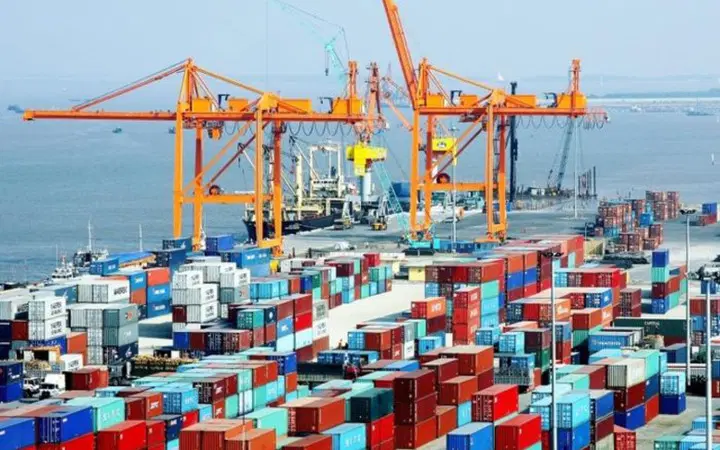
On May 1, China began granting zero-tariff treatment to imports from 53 African countries with which it has diplomatic relations. Eswatini, which maintains ties with Taiwan, was the excluded state.
The policy aims to advance China-Africa cooperation in areas spanning services, trade, green industries, and sustainable development.
It also comes as China seeks to position itself as a more favourable trade partner to the continent amid geopolitical shifts and transitions.

For business owners, the policy opens a pathway into one of the world’s largest consumer markets, lowering long-standing barriers to entry and pricing competitiveness. At the same time, state governments may see it as a strategic avenue to diversify revenue streams, shifting focus from traditional income sources toward export-led growth and deeper integration into global value chains.
But beneath the generous framing lies a more strategic calculus. What exactly does the policy involve, and what could it ultimately mean for African economies? Here’s what to know about China’s zero-tariff move.
WHAT’S THE SHORT-TERM RELIEF, LONG-TERM LEVERAGE
When the policy was announced in February, a time frame for the deal was not stated. As such, it was widely perceived as a long-term move. However, in April, the Customs Tariff Commission of the state council announced that the policy will run from May 1, 2026, to April 30, 2028.
The policy is expected to act as a temporary buffer while China negotiates a longer economic partnership contract for shared development (CADEPA) with African states.
It is important to note that the zero tariff only applies to the least-developed countries (LDCs) in Africa, of which there are only 32 recognised by the UN Trade and Development (UNCTAD), excluding Nigeria. However, China has listed 33 LDCs in Africa as beneficiaries of this zero-trade policy. It is unclear which country was included as the 33rd LDC.
Some LDCs in Africa include Rwanda, Senegal, Tanzania, Angola, and Madagascar.
For non-LDCs like Nigeria, Kenya, and South Africa, China will grant the zero-tariff treatment in the form of a preferential tariff rate.
This means only products under tariff quotas, with in-quota tariff rates, will be reduced to zero, while products in the out-of-quota tariff rates will remain unchanged.
The in-quota rate is a low tariff (e.g., one percent on wheat) applied to imports up to an annual quota limit (e.g., 9.6 million tons for wheat). This encourages controlled imports to meet domestic needs without fully protecting local producers.
Once the quota fills, the out-of-quota rate kicks in — much higher (e.g., 65 percent on wheat) — making excess imports expensive and discouraging oversupply.
While these various agreements run for LDCs and non-LDCs, China will continue to negotiate the signing of CADEPA.
WHAT IS CADEPA?
CADEPA is a free trade agreement between China and Africa that aims to reduce tariffs in accordance with the World Trade Organisation (WTO) rules.
According to the WTO, China, alongside over two dozen African nations, is a developing country. Therefore, China’s offer of tariff preference to its African counterparts outside the LDC classification is not permitted by the WTO.
China and other developing countries could, however, sign a free trade agreement that includes mutual tariff reductions with more flexibility.
“This is why the zero-tariff agreement is only a short-term policy till China and African nations finalise a deal in CADEPA’s agreement,” Zhao Yuguo, director, department of WTO at the Chinese ministry of commerce, said.
CADEPA spans four modules covering trade liberalisation and facilitation, supply chains, inclusive growth, and modernised sectors for development. Countries are required to choose at least one or all modules during the negotiation process.
Yuguo noted that the supply chain module would include investment promotion, while the module on modernised sectors may include topics of AI and the digital economy.
Before choosing a module, participating countries must first sign a framework agreement to clarify the goal, principle, scope and mechanism of the follow-up negotiation and an early harvest arrangement (EHA), which will ensure participation in the zero-tariff policy.
About 35 countries, including Nigeria, have signed the framework agreement, which is the first step.
THE EHA AS A CRUCIAL STEP
The EHA is termed an early harvest because it allows African countries to enjoy the zero-tariff policy before fully striking a deal.

While China does not demand reciprocal concessions, African countries are permitted to return the gesture within the scope of their ability.
The EHA also mandates that both countries conclude the module agreements within five years.
After the entry into force of this arrangement, either party is required to notify the other if it engages in free trade negotiations or other tariff reduction negotiations with a third party and endeavour to explore the possibility of further tariff liberalisation under this arrangement.
Kenya and the Democratic Republic of Congo (DRC) are the two known African countries to have completed the signing of the EHA — the second step.
Some of the goods China ultimately aims to channel through Africa under the broader arrangement, Yuguo said, are semi-finished, medium-value manufactured products. These would be further processed within African countries before being exported back to China.
Stay ahead with the latest updates!
Join The Podium Media on WhatsApp for real-time news alerts, breaking stories, and exclusive content delivered straight to your phone. Don’t miss a headline — subscribe now!
Chat with Us on WhatsApp