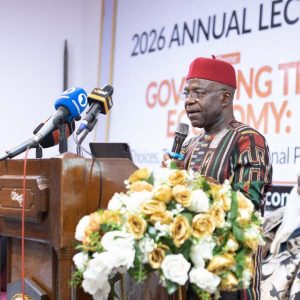



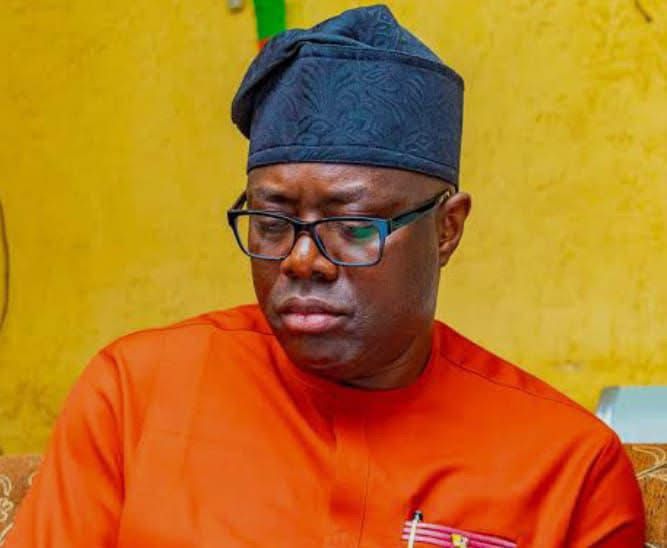
Did Governor Seyi Makinde of Oyo State actually mention “Wetie” at the opposition parties’ summit in Ibadan?
The video clip says “Yes.” The context says maybe. But the history says he shouldn’t have. We all must be careful of what we call back from the grave.
What “Wetie” was for those not yet born might be like a Yoruba epic, but it’s not. “Wetie” means wet him, soak him and burn him to ashes. That was not a slogan, it was a death sentence passed on political opponents in the Western Region between 1964 and 1966.

Houses were doused with petrol and lit. Party leaders were hunted in broad daylight. Ibadan, our Ibadan, became a map of burnt roofs and unmarked graves. The violence was not random. It was the ugly child of a rigged 1965 election, of a regional government that lost legitimacy, of federal forces that chose sides. By January 15, 1966, the soldiers came to rescue the nation from “Wetie.” They stayed for 13 years!
“Wetie” was not a metaphor. Not a meme. It was blood and ashes.
Let’s compare the Governor’s age with the weight of words.
Governor Seyi Makinde was born on December 25, 1967. Wetie ended in January 1966.
Makinde did not hear the screams. He did not smell the fume. He did not run from Oke-Ado to Mokola because a car with party flags turned the corner.
That matters. Because historical memory is not inherited. It is learned. And when a leader who was not there casually invokes the language of that era, two things happen: the old remember with trauma, and the young misremember with excitement.
At the opposition summit in Ibadan last week, the Governor reportedly said: “If they try what they did in 1964, they will see “Wetie” again.”
If true, it was a poor choice of warning. If taken out of context, it is still a dangerous phrase to leave hanging in the air of the same city that once choked on its smoke.
With the negative effects of “Wetie,” no one should use it as a metaphor of any sort.
Ask them in any state in the South West. Ask the families in any part of Yorubaland with sense of history, “Wetie” did three things that still hurt us: one, It killed politics, birthed coups. When ballots got burnt, bullets took over. Nigeria lost its First Republic not to ideology, but to arson. We have had 33 years of military rule since then, all traceable to the day we chose “wet him” over “vote him.”
Two, ‘Wetie” criminalized opposition. After “Wetie,” to oppose was to risk your roof. That culture has not fully died, especially in Ibadan. It is why today, some governors still see local government autonomy as treason. Why opposition rallies are tear-gassed. “Wetie” taught us that the other party is not a rival, but an enemy to be soaked.
Three, “Wetie” stained Ibadan. For decades, the political capital of the West was called “city of brown roofs. ” Some brown might be from rust, but many were from fire. Investors took their money to Lagos. Scholars took their books to Ife.
Committed stakeholders spent 30 years rebuilding trust in the city’s politics. Makinde’s uncensored word can undo that.
Makinde is right to defend electoral integrity. Perhaps what he could have said and what I think he meant, even when he wanted to warn against rigging is that “we will resist it.” Not at all mouthing the word “Wetie.”
The Governor should use history as vaccine, not as weapon.

The 1960s are not a playbook. They are a cautionary tale. Governor Makinde was not born when “Wetie” happened. That is not his fault. But he now governs the city where it happened. That is his responsibility.
Neither he nor any political lleader of worth from the axis should mention “Wetie,” unless it is to mean “Never Again!” No one should invoke the ghost, unless it is to be laid to rest. Because the day Ibadan forgets “Wetie” is the day Ibadan risks “Wetie.” And of course, Oyo”s neighbours, will also inhale the smoke.
We say “No” to “Wetie!”
-Segun Dipe is the Publicity Secretary of the All Progressives Congress, APC, in Ekiti State.

Stay ahead with the latest updates!
Join The Podium Media on WhatsApp for real-time news alerts, breaking stories, and exclusive content delivered straight to your phone. Don’t miss a headline — subscribe now!
Chat with Us on WhatsApp