



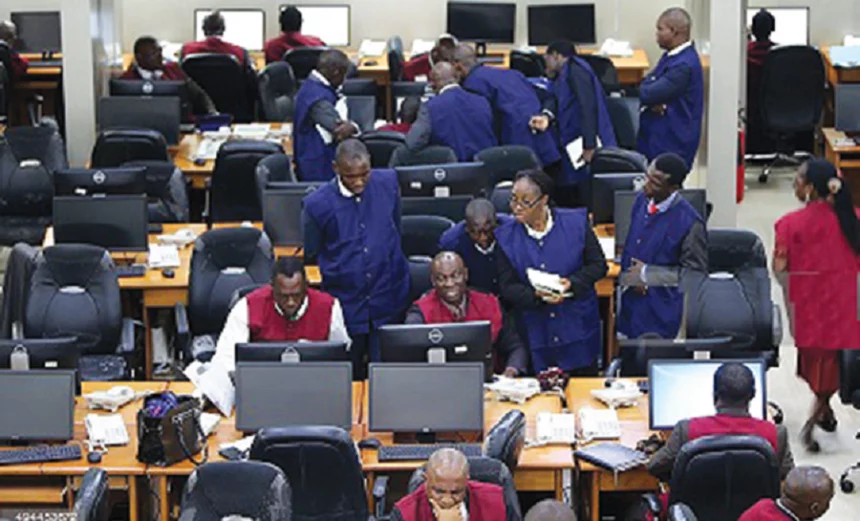
Bismarck Rewane, Managing Director of Financial Derivatives Company Limited, said Nigeria’s rising investment culture has lifted the Nigerian Exchange market capitalization to N129 trillion.
He disclosed this during a live session of Drinks & Mics, hosted by Ugodre Obi-Chukwu, CEO of Nairametrics, alongside Samson Esemuede of Zrosk, Tunji Andrews of Awabah, and Arnold Dublin-Green of Renaissance Capital Africa.
Rewane noted that the stock market is now an expanding component of national savings, a role previously dominated by banks, reflecting Nigeria’s gradual transition toward a more market-based financial system.

“Investment in the stock market generates an opportunity for everyday Nigerians to feel the impact of a growing economy, which is still largely experienced by corporate players for now,” he said.
What the experts are saying
The Experts say that with easing Naira devaluation and moderate inflation, Nigeria is better positioned to benefit from rising crude oil prices—if the country can utilize the opportunity effectively.
They noted that fast-moving consumer goods companies and other sectors listed on the Nigerian Exchange are already feeling positive effects, reflected in stronger FY2025 financials and higher shareholder value.
However, Samson Esemuede cautioned that past experiences suggest Nigeria might struggle to fully leverage this windfall, citing missed opportunities during the 2022 Ukraine-Russia conflict.
- “We have a windfall right now, but we might not manage the benefits from it properly,” he said.
Tunji Andrews highlighted that the Strait of Hormuz disruption has pushed urea prices up 30–50%, creating potential opportunities for African nations like Ethiopia and Nigeria, though Nigeria’s response remains uncertain.
Asked if Nigeria is positioned to navigate a new world order without U.S. dominance, Arnold DublinGreen noted Iran’s ability to tighten crude oil supply and affect the world economy; situations that Nigeria could adjust to.
All experts on the show agreed that Nigeria’s natural resources present opportunities, but ensuring these benefits reach everyday Nigerians remains the key challenge.
A switch in fundamentals
The experts noted that U.S.-Iran tensions have shifted global market fundamentals, creating new risks and opportunities for countries like Nigeria.
Samson Esemuede explained that historically, oil price spikes would bolster both the dollar and U.S. Treasury bills, but currently only crude oil is rising, and the market no longer favors the U.S.
- “There is a fundamental shift in the dollar, and the superior belief surrounding the economy is not holding through anymore,” he said, adding that inflationary pressures, including rising gasoline prices, could ripple through the U.S. CPI.
He noted that the global economy had previously survived shocks like COVID and wars due to disinflationary conditions, but current trends are turning inflationary, making future supply shocks more threatening.
Despite these risks, all experts agreed that Nigeria’s natural resources could serve as both a protective shield and a potential windfall, offering the country an opportunity to benefit if managed wisely.
Stay ahead with the latest updates!
Join The Podium Media on WhatsApp for real-time news alerts, breaking stories, and exclusive content delivered straight to your phone. Don’t miss a headline — subscribe now!
Chat with Us on WhatsApp