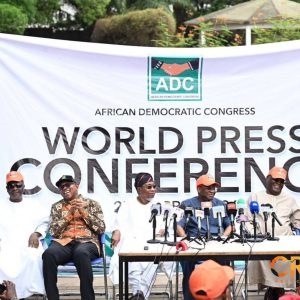



There is an old saying that a house divided against itself cannot stand. The ongoing implosion within the African Democratic Congress, better known as the ADC, is a textbook illustration of that truth.
And while party chieftains and their lawyers are busy writing letters and trading accusations, the real story here is not about the Independent National Electoral Commission doing anything wrong.
The real story is about a political party that planted the seeds of its own destruction long before INEC became the subject of anybody’s complaint.

Let us trace this crisis from where it actually began. In July 2025, the founding exco members of the ADC, led by the party’s original chairman Mr. Ralph Okey Nwosu, resigned from their positions.
That alone should have been a matter of grave concern to any serious political party. When a group of people who built a structure together all choose to walk away at once, it tells you something important about the state of things inside that building.
But rather than pause and reflect, a new set of actors moved quickly to fill the vacuum. Senator David Mark, a former Senate President, was installed as the new national chairman, alongside Ogbeni Rauf Aregbesola as national secretary.
INEC, acting in good faith on the basis of the information presented to it, uploaded their names on its portal in September 2025.
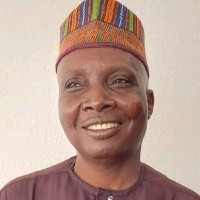
Now comes the complication. Hon. Nafiu Bala Gombe, who was the party’s vice-national chairman, says he never resigned. He says that when Mr. Nwosu left, the party constitution entitled him to step up as acting chairman.
He went to the Federal High Court in Abuja with that argument and the matter has been there ever since, with all its motions, counter-motions, appeals and counter-appeals.
What INEC has done in response to this mess is neither partisan nor improper. After the Court of Appeal delivered its judgment on 12th March 2026 dismissing Senator Mark’s interlocutory appeal and ordering all parties to maintain the status quo ante bellum, the Commission studied the orders carefully and acted accordingly.
It resolved to remove from its portal the names that were uploaded seven days after the suit was filed. It resolved not to attend, monitor or recognise any meeting, congress or convention convened by either side until the Federal High Court decides who is who.
And it specifically refused to hand over the party to Mr. Gombe’s group, as his lawyers had requested, because that would equally amount to jumping ahead of a court that has not yet given its final verdict.
This is not INEC taking sides. This is INEC doing exactly what a responsible electoral umpire is supposed to do when a political party drags its internal crisis into court and then expects the Commission to become an instrument in settling political scores.
The legal basis for INEC’s position is solid. The Court of Appeal’s preservatory orders are clear in their language. The court directed parties to refrain from taking any step capable of foisting a fait accompli on the trial court.
To continue recognising Senator Mark’s group, or to transfer recognition to Mr. Gombe’s group, would be to do precisely what the appellate court warned against. INEC has simply taken the court at its word.
But beyond the legal questions, Nigerians need to ask themselves a deeper question. What kind of opposition is the ADC offering this country? Here is a party that cannot manage its own leadership succession without producing a courtroom drama.

Here is a party whose founders resigned en masse, leaving the door open for a scramble that has now consumed whatever was left of its credibility as a political institution. If these are the people who want to govern Nigeria, who want to contest the 2027 general election and present themselves as a serious alternative to the ruling All Progressives Congress, then Nigerians deserve to ask them some very pointed questions.
The names involved in this ADC dispute are not new names in Nigerian politics. Senator David Mark spent eight years as Senate President. Ogbeni Rauf Aregbesola served as governor of Osun State for eight years and thereafter as Minister of Interior.
These are not young men still learning the ropes of governance. They are experienced political figures who, between them, have held enormous power in this country. The question that must be asked is this: after all those years in office, after all those opportunities to shape policy and build institutions, what exactly did they build that Nigerians should now rally behind them in a fresh bid for relevance?
That is the conversation Nigerian citizens need to be having rather than allowing themselves to be distracted by a letter-writing war between lawyers and the spectacle of politicians fighting over a party secretariat.

The ADC’s current crisis did not start with INEC. It started with leaders who have consistently treated political parties as personal property rather than as democratic institutions built on rules, process and the consent of members.
When founding members resign together and a vice-chairman says he was not consulted, when two groups hold rival meetings and send rival letters to INEC claiming to be the real party, the problem is not INEC’s neutrality. The problem is a political culture that has never taken internal party democracy seriously.
Nigerian voters have seen this pattern before. A group of politicians loses influence in their original party, defects to a smaller platform, takes it over through force of money and connections, gives it a brief burst of national attention, and then watches it fall apart when the internal contradictions they brought with them finally explode.
The ADC is not the first party to go through this. It will not be the last unless Nigerians begin to demand better from those who seek to lead them.
What INEC’s decision ultimately shows is that the Commission understands its constitutional role. An electoral umpire is not a kingmaker inside political parties. It is not INEC’s job to decide who leads the ADC.
That is a matter for the courts and ultimately for the members of the party themselves. What INEC can do, and what it has done, is refuse to become a weapon in the hands of any faction while the courts are still speaking.

As we approach 2027, Nigerians must develop sharper eyes. They must look beyond the noise of legal letters and press statements and ask what any political actor is truly offering.
Opposition politics in a democracy is not just about being against the party in power. It requires a coherent programme, credible leadership and a party structure strong enough to carry the weight of a national campaign. A party that cannot elect its own officers without going to court three times is a party that has nothing to teach the country about governance.
The ADC should look inward, resolve its crisis through due process, respect the courts and come before Nigerians with something more substantial than the familiar faces of yesterday’s power.
Until then, the responsibility for everything happening inside that party rests squarely on the shoulders of those who chose to build it on a cracked foundation.
Abare is a Muck Rack journalist. He writes from Lafia, Nasarawa State.
Stay ahead with the latest updates!
Join The Podium Media on WhatsApp for real-time news alerts, breaking stories, and exclusive content delivered straight to your phone. Don’t miss a headline — subscribe now!
Chat with Us on WhatsApp