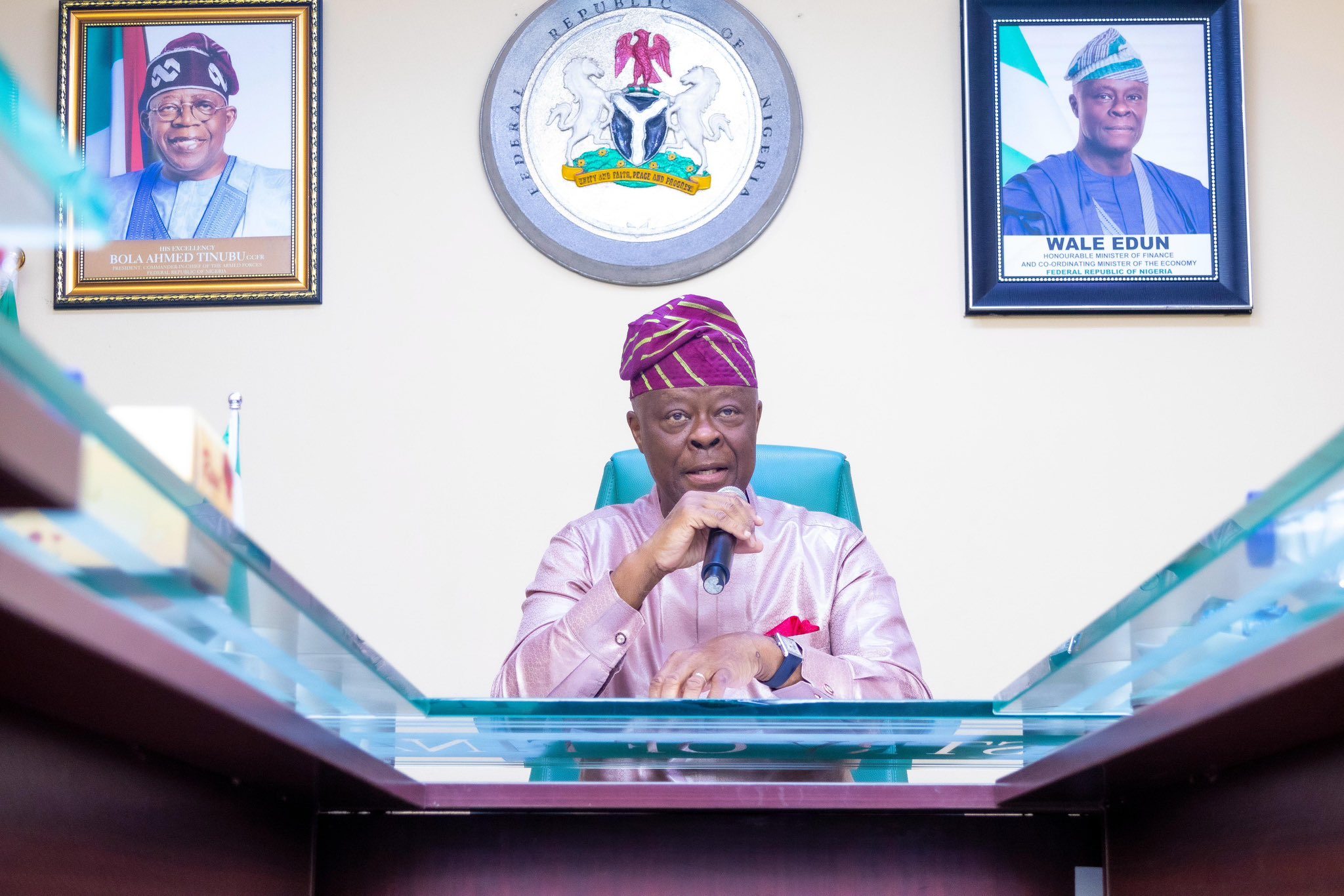



Nigeria requires an estimated $14 billion in annual investments to address its infrastructure gap, according to the Minister of Finance and Coordinating Minister of the Economy, Mr. Wale Edun.
Edun made this statement on Monday during the Islamic Development Bank (IsDB) Day in Lagos, where he also highlighted the country’s deepening collaboration with the bank.
He stressed that this investment gap is a critical challenge, but one that is being tackled through strategic partnerships and initiatives, particularly with the IsDB.

What the Minister is saying
Edun emphasized the importance of achieving a seven per cent annual Gross Domestic Product (GDP) growth rate, which he said is essential for reducing poverty and keeping up with Nigeria’s growing population, which expands by about three per cent annually.
He said Nigeria is facing an infrastructure financing gap of $14 billion each year, which the government is addressing through strategic partnerships, notably with the IsDB.
He further stated that the government is repositioning Nigeria’s economy to attract both domestic and foreign investments within a stable macroeconomic framework.
- “We are moving from stabilization to growth, from relying on public financing to mobilizing private capital, and from traditional borrowing to using innovative financing instruments,” he said.
The minister outlined key priority sectors for investment, including energy, transport, agriculture, and digital infrastructure, all crucial for enhancing Nigeria’s productivity and global competitiveness.
- “In a young country like Nigeria, digital infrastructure is essential for empowering the population and driving innovation,” he added.
Get up to speed
Earlier this week, Emomotimi Agama, Director General of the Securities and Exchange Commission (SEC), highlighted Nigeria’s strategy to reposition its capital markets as a key driver for economic growth and infrastructure financing.
- He emphasized the need to address a funding gap that could be as high as $100 billion.
- Agama also pointed out that the country’s population of over 220 million people and its position as the largest economy in Africa make this funding gap an existential issue.
The capital market, he stressed, is not a luxury, but a necessity for Nigeria’s growth and competitiveness.
More insights
On Monday, Edun noted that 2026 has been designated as a “year of social development” in Nigeria. The government plans to integrate 10 million Nigerians into the economy through skill development programs, financing support, and job creation initiatives.
- He also mentioned that the government would focus on empowering micro, small, and medium enterprises (MSMEs) to increase production capacity and expand market access.
- To attract private investment, Edun announced plans to expand Nigeria’s use of Sukuk, deepen domestic capital markets, and securitize public assets.
He emphasized the importance of de-risking investments and creating a conducive business environment for long-term growth.
What you should know
Earlier in March, Nairametrics reported that African countries were urged to seek long-term capital from foreign investors to tackle the continent’s estimated $170 billion infrastructure deficit.
According to the African Union Development Agency (AUDA), Africa needs between $130 billion and $170 billion annually to bridge this gap, but current investments are significantly below that threshold.
Stay ahead with the latest updates!
Join The Podium Media on WhatsApp for real-time news alerts, breaking stories, and exclusive content delivered straight to your phone. Don’t miss a headline — subscribe now!
Chat with Us on WhatsApp