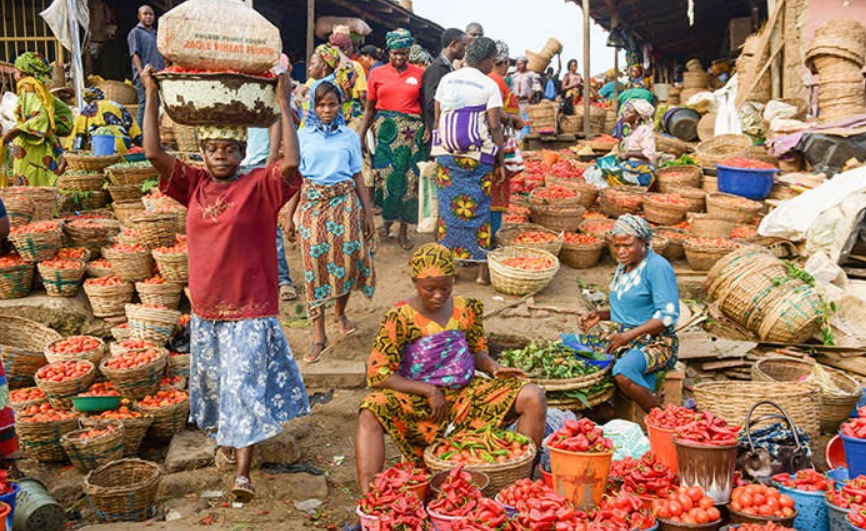




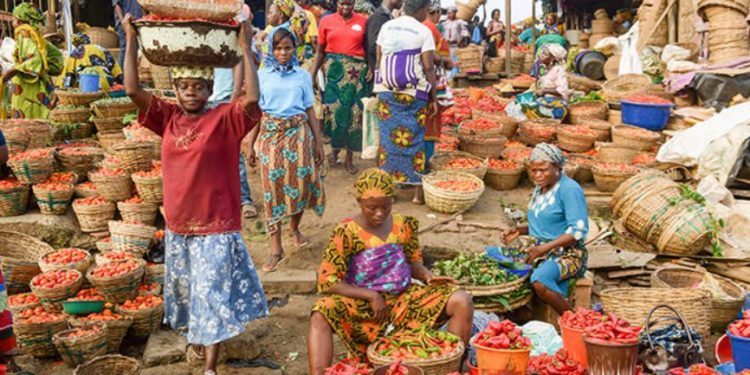
Rising food and fuel prices are dampening Eid al-Fitr celebrations in Lagos, with traders reporting slower patronage and cautious spending despite the festive season.
According to the News Agency of Nigeria (NAN), key commodities such as egusi and ogbono remain expensive, limiting bulk purchases and reducing the typical market activity associated with festivals.
Consumers are also adjusting their shopping habits as high transport costs and inflation eat into disposable income.

Markets in Oyingbo, Surulere, and Idi-Araba are witnessing mixed sales patterns, with some items slightly cheaper due to fresh harvests, but most staple foods remaining costly.
Traders say higher logistics costs are being passed on to buyers, forcing them to ration purchases.
What the traders are saying
Traders at Lagos markets are attributing the high prices to transportation costs, low production, and strong demand.
- Mrs. Bose Adeyemi, an egusi trader at Oyingbo Market, said a derica of hand-peeled egusi sells for N3,000, while engine-peeled goes for N1,500.
- Mrs. Funmilola Gbajumo noted that bulk purchases have declined as customers now buy smaller quantities due to high costs.
- Mrs. Kudirat Lawal, an ogbono trader, said a paint bucket of ogbono sells between N25,000 and N49,000 depending on quality, while smaller buckets range from N21,000 to N37,000.
Traders explained that festive demand keeps prices high, while rising fuel costs continue to push transportation and logistics expenses up.
Get up to speed
Food prices in Lagos have been under pressure in recent years due to supply chain challenges, rising fuel costs, and seasonal fluctuations.
- The Eid al-Fitr period typically drives bulk buying of staples like egusi, ogbono, tomatoes, and peppers.
- Rising fuel prices increase transportation costs, which are often passed on to consumers in the form of higher market prices.
- Fresh harvests sometimes bring short-term relief in prices, but popular commodities like egusi and ogbono remain consistently expensive due to limited production and processing costs.
This year, the combination of high logistics costs and inflation has reduced the vibrancy of markets traditionally associated with festive celebrations.
More Insights
Other produce items are also affected, though to varying degrees, showing the broader impact of economic pressures on Lagos markets.
- At Surulere markets, tomatoes sell between N2,750 and N7,000 per paint bucket, while scotch bonnet peppers (rodo) range from N5,000 to N7,500.
- Large baskets of tomatoes, previously selling for over N140,000 during shortages in 2024 and 2025, now cost between N10,000 and N30,000.
- Onions at Idi-Araba Market sell from N3,000 for small paint buckets to N15,000 for larger bowls, but sales remain slow as customers buy in minimal portions.
Consumers are prioritizing essentials and limiting purchases to a day or two at a time, reflecting how economic constraints have tempered festive spending.
What you should know
The rising cost of staple foods and transportation is reshaping festive consumption patterns in Lagos.
- Earlier, Nairametrics reported that residents of the Federal Capital Territory (FCT) have raised concerns over rising transport fares following the recent increase in the pump price of petrol across the country.
- Fuel price increases have historically triggered wider inflationary pressures in Nigeria, particularly in transportation and food markets.
Recently, the Nigerian Midstream and Downstream Petroleum Regulatory Authority (NMDPRA) said fluctuations in fuel pump prices are a direct result of market dynamics under Nigeria’s deregulated downstream petroleum sector.
Stay ahead with the latest updates!
Join The Podium Media on WhatsApp for real-time news alerts, breaking stories, and exclusive content delivered straight to your phone. Don’t miss a headline — subscribe now!
Chat with Us on WhatsApp