Stakeholders in Nigeria’s peacebuilding ecosystem have called for the establishment of a national framework to systematically track and document peacebuilding initiatives in crisis-affected communities across the country.
They said such a system would help improve the visibility of preventive efforts and strengthen coordination among policymakers, researchers, donors, and civil society actors working to promote peace.
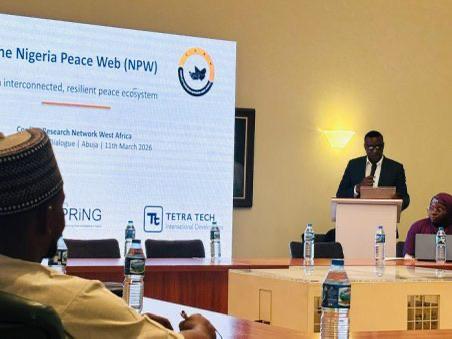
The call was made on Thursday during the launch of the Nigeria Peace Web, a digital platform designed to document peace actions and initiatives across Nigeria.

Speaking at the event, the Executive Director of the Conflict Research Network West Africa, Timpreye Allison, said Nigeria’s conflict landscape is widely documented, but peacebuilding activities are often overlooked.
“However, the same cannot be said of the peace landscape. Across the country, community mediators, faith leaders, civil society organisations, traditional authorities, women’s networks, youth groups, and state peace agencies work daily to prevent violence and manage tensions,” Allison said.
He noted that despite these efforts, there is currently no national system that systematically documents peacebuilding activities and their impact.
“Yet there is no national system that systematically documents who is building peace, where these efforts take place, how they operate, and what lessons they generate,” he said.
According to Allison, the absence of such a framework has created a gap in the evidence base used to shape peace and security policies.
“This gap creates a structural imbalance in the evidence base informing peace and security policy. Policymakers, donors, and researchers often have detailed visibility of violent events but limited visibility of preventive and peacebuilding activity,” he said.
“As a result, policy attention and funding tend to prioritise crisis response over prevention. At the operational level, organisations struggle to identify existing initiatives, potential partners, or lessons from past interventions.”
Allison explained that research conducted among actors in the peacebuilding ecosystem showed that many organisations rely on personal networks, costly field visits, and fragmented documentation to identify ongoing initiatives.
“Smaller community-led interventions, often the first responders to local tensions, remain largely invisible beyond the immediate contexts,” he said.
“When projects end, documentation is rarely preserved in accessible repositories, resulting in the loss of institutional knowledge.”
He added that the Nigeria Peace Web platform was developed to address this gap by aggregating structured data on peace actors, initiatives, and peace-related events across the country.
“Allison said the open-source digital platform will help government institutions improve situational awareness and planning, support donors in allocating resources more strategically, and reduce duplication of efforts.
“For civil society, it strengthens collaboration and increases the visibility of local initiatives, and for researchers, it enables systematic analysis of peacebuilding trends,” he added.

Stay ahead with the latest updates!
Join The Podium Media on WhatsApp for real-time news alerts, breaking stories, and exclusive content delivered straight to your phone. Don’t miss a headline — subscribe now!
Chat with Us on WhatsApp