



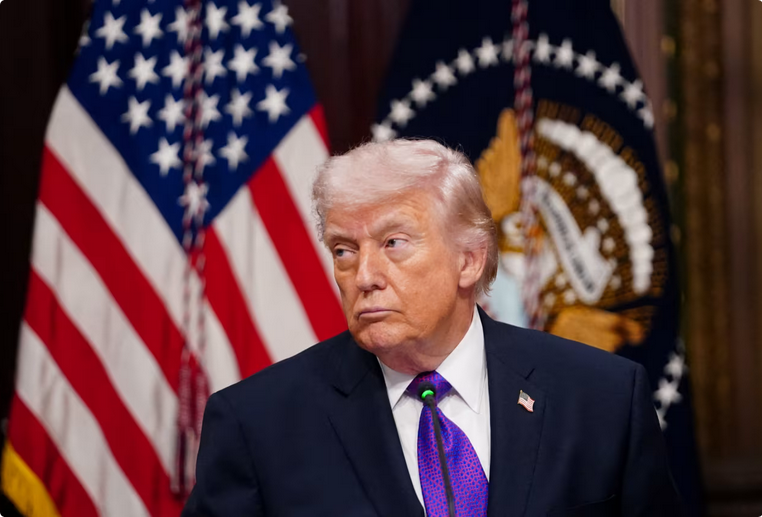
• Trump on Iran: US President Donald Trump said there will be no deal with Iran until “unconditional surrender.” The president also told CNN he’s not concerned whether Iran becomes a democratic state, and he is seeking leadership that will treat the US, Israel and Middle East allies well.
• Strikes in Tehran: Explosions lit up the sky in Tehran after Israel said it had begun a “broad-scale wave of strikes.” CNN saw thick black smoke in the capital, while state media reported a busy shopping street was hit. Tehran residents tell CNN they experienced the “worst night” of airstrikes since the war began.
• Panic in Beirut: Fresh strikes also hit Beirut, hours after Israel said it targeted Hezbollah sites overnight in the Lebanese capital’s southern suburbs.

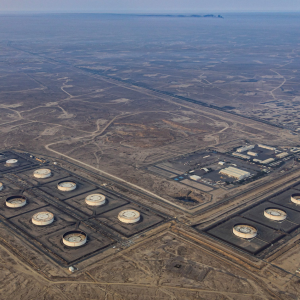
• Strait of Hormuz chokepoint: As the war disrupts global energy supplies, Trump said he is not worried about soaring gas prices in the US. Meanwhile, two of the largest shipping companies are no longer accepting cargo bound for the Persian Gulf.
80 Posts
What will it look like for Iran to deliver an “UNCONDITIONAL SURRENDER,” as President Donald Trump demanded Friday?
The president will decide, his spokeswoman said a few hours later.
“What the president means is that when he, as commander in chief of the US Armed Forces, determines that Iran no longer poses a threat to the United States of America and the goals of Operation Epic Fury has been fully realized, then Iran will essentially be in a place of unconditional surrender, whether they say it themselves or not,” she told reporters in the White House driveway.
“Frankly,” she went on, “they don’t have a lot of people to say that for them, because the United States and and the State of Israel have completely wiped out near more than 50 leaders of the former terrorist regime, including the Supreme Leader himself.”
Leavitt’s explanation, like Trump’s post from earlier in the day, stopped short of making any specific demands that Iranian leaders renounce their nuclear ambitions or terror groups.
British helicopters with counter-drone capabilities have started arriving in Cyprus, the UK’s Ministry of Defence said on Friday.
After an attack on a military base in Cyprus, Prime Minister Keir Starmer said that he would send the Royal Navy’s HMS Dragon warship and Wildcat helicopters to the region
Four additional Typhoon aircraft are scheduled to arrive in Qatar overnight, the defense ministry said.
The UK also had aircraft making defensive air patrols over Qatar, Jordan and the Eastern Mediterranean last night, the ministry said.
Starmer has repeatedly asserted that the UK will not join the US and Israel in taking offensive action against Iran.
President Donald Trump and Defense Secretary Pete Hegseth are expected to meet with defense contractors at the White House today, according to press secretary Karoline Leavitt.

“The president will be meeting with defense contractors here at the White House in a few minutes, with Secretary Hegseth,” Leavitt told reporters.
“This is a pre-scheduled meeting, and the purpose of it is to talk about the president’s aggressive and fierce support for rapidly increasing the ability of US manufacturers to produce American-made weapons,” she added.
A White House official previewed this meeting earlier in the week, saying in part that the president would discuss ramping up weapons production with the defense contractors.
CNN’s Alejandra Jaramillo contributed to this report.

Energy supply fears are intensifying, catapulting the price of oil beyond $91 a barrel for the first time since the fall of 2023.
US oil prices spiked by another 12% in recent trading to $90.85 a barrel. That leaves crude on track for its biggest one-day gain since May 2020.
Earlier today, oil traded as high as $91.09 a barrel — the highest intraday level since October 2023.
Brent crude, the world benchmark, surged 8% to $92.50 a barrel in recent trading.
While traders initially took the de facto shutdown of the Strait of Hormuz in stride, fear is starting to set in about when this critical waterway will reopen. About 20% of global crude is transported through the strait, but the US-Israel war with Iran has effectively shut down that avenue.
“Unless the market believes and sees those tankers are going through the Strait of Hormuz, we’re going to blow through $100 and keep going until we hit a recession,” said McNally, a former energy adviser to President George W. Bush.

US oil prices have now surged by 36% this week, on track for their biggest weekly gain on FactSet, whose records go back to 1983.
A senior administration official said that there is currently “no specific timeline” on launching the Naval escort operation in the Strait of Hormuz, but there is a concerted effort to set the conditions for the operation as soon as possible.
US officials view the strait as part of an active conflict zone where Iran has taken action to target several tankers since the start of the conflict. That’s why the US military is actively working to take out Iran’s firepower, reducing its ability to attack vessels in the region.
Trump administration officials are viewing the current moment as a short-term disruption that can quickly be eased once the security environment allows for tankers to restart transit with US military protection.
“The world is at absolutely zero risk of running out of oil or energy through this conflict, but we are suffering a short-term price dislocation. That’ll be over soon,” the official said.
Still, the administration’s actions in recent days provide a window into a level of concern that isn’t reflected in the more sanguine public statements from Trump and his top energy and economic officials.
Trump’s public announcement this week of a US backstop to commercial maritime insurance through a risk-based reinsurance proposal was paired with the promise of US naval escorts through the strait at a future date was intended to talk down the rapidly accelerating market unease triggered by the de facto closure of the strait.
The announcement had a near-term effect, but as Gulf states have more publicly warned of the rapidly looming production shutdowns tied to dwindling storage capacity and the timeline for naval escorts has remained unclear, prices resumed their steady upward trajectory.
“Insurance isn’t the issue. It’s a problem, but it’s not the issue. Security is the issue,” a senior shipping executive told CNN.
The Trump administration is currently weighing a number of additional short-term actions designed to unlock global supply in a short-term manner, the official added.
A federal judge today stressed the importance of press access to the Pentagon during the war in Iran as he looked skeptically at a restrictive policy rolled out by Defense Secretary Pete Hegseth last year.
“Isn’t it even more important than ever that the public have information and a variety of views on what their country is doing?” senior US District Judge Paul Friedman asked a Justice Department attorney defending the policy.
He cited major moments when press coverage that included reporting of confidential information helped the public better understand what was unfolding. Those moments, he said, included the Vietnam War, the US invasion of Iraq and the use of Guantanamo Bay during the war on terror.
“A lot of things need to be held tightly and securely. But openness and transparency allows the public to know what their government is doing,” Friedman said. “That’s what the First Amendment is all about.”
Friedman is weighing a major challenge brought by The New York Times to the Pentagon policy, which requires beat reporters to sign a pledge not to obtain or use unauthorized material. Scores of news organizations, including the Times and CNN, have declined to agree, resulting in reporters being denied press badges that give them access to the Pentagon.
During one testy exchange with DOJ attorney Michael Bruns, the judge scoffed at the government’s argument that the First Amendment doesn’t protect journalists who solicit or receive confidential information.
“Why not? Why not?” he shouted. “There is no prohibition on them asking the question” that may result in the disclosure of such information.
“It’s not our war,” a regional source told me earlier in the week, requesting anonymity to discuss sensitive policy issues. The same sentiment reverberated through many conversations in Riyadh. Yet, explosions and fires caused by drones, missiles and debris of interceptions are serving the Gulf nations the ashy taste of war zones.
In the months leading up to the joint US-Israel attack, Arab nations argued strenuously against a prolonged war.
They understood that the chaos resulting from regime collapse in Iran would ensnare their economies and security for years. These repercussions are likely to far outlast the Iranian drones and missiles that are currently shattering the Arabian Gulf’s carefully tended brand of stability and prosperity.
That route has been upended. In the United Arab Emirates, billionaire Khalaf Ahmad Al Habtoor slammed Trump for dragging the region into war after promising peace and prosperity.
Official statements from Gulf nations condemning Iranian attacks have stressed that they have not allowed the US to use their airspace or territory to launch attacks.
And while the same statements note that Arab Gulf countries reserve the right to respond to Iranian aggression, hitting back comes with strategic and political risks.
Taking this option means weighing the reliability of the US as a political partner and weapons supplier. Israel’s attack on Qatar, home to the biggest US air base in the region, in September is still fresh in people’s minds.
A satellite image taken on March 1 shows smoke rising from a radar site near the Prince Sultan Air Base in Saudi Arabia, where dozens of American planes are stationed. At the site, a tent previously used to shelter a radar system for a nearby THAAD battery was badly charred and debris was scattered around it.
It’s one of five radar sites CNN has identified as being struck by Iran or its allies. These are the heart of US air defenses, detecting an incoming missile and triggering the interceptors to shoot them down.
Four of the sites hosted radars for THAAD batteries, a US-made high-end missile interceptor system, used to engage and destroy ballistic missiles as they fly toward their targets. These systems, the US-made AN/TPY-2 transportable radar, cost just shy of half-a-billion dollars each, according to a 2025 Missile Defense Agency budget.
A satellite image from January of the tent near Prince Sultan Air Base showed the radar system’s antenna was positioned inside, pointed northeast toward Iran. It wasn’t immediately clear if the radar was present at the time of the attack or if the system previously stationed there belonged to the United States or Saudi Arabia.
Saudi officials did not respond to questions about the ownership of the system, and a US defense official declined to discuss the system citing operational security.
Russia is providing Iran with intelligence about the locations and movements of American troops, ships and aircraft, according to multiple people familiar with US intelligence reporting on the issue, the first indication that Moscow has sought to get involved in the war.
One of the sources briefed on the intelligence said, “This shows Russia still likes Iran very much.”
Much of the intelligence Russia has shared with Iran has been imagery from Moscow’s sophisticated constellation of overhead satellites, one of the people said. It is not clear what Russia is getting in return for the assistance.
CNN has asked the Kremlin and the Russian embassy in Washington for comment about the intelligence sharing, which was first reported by the Washington Post.
More than 1,000 people have been killed so far in one week of US-Israeli bombings in Iran, according to human rights groups, including school girls in an elementary school that was hit in the opening salvo last week.
With no exit strategy in sight, CNN’s chief international anchor Christiane Amanpour analyzes how the war with Iran could play out:
Video Ad Feedback
What are the possible outcomes of the Iran conflict?
With more than a thousand killed and no exit strategy in sight, CNN’s chief international anchor Christiane Amanpour analyzes how the war in the Middle East could play out.
What are the possible outcomes of the Iran …
The number of people displaced in Lebanon after Israel renewed strikes and issued sweeping evacuation orders is close to half a million, the Norwegian Refugee Council (NRC) estimates.
“There is a lot of anxiety and suffering and despair,” NRC’s Lebanon program director Maureen Philippon told CNN’s Becky Anderson, saying government figures suggest around 100,000 have found safety in government shelters.
But Philippon warned this is likely a fraction of the real figure.
“From past experience in Lebanon, it’s about 20 to 25% (of the displaced population) who go to the government designated official shelters,” she said, meaning the number of displaced people is probably closer to half a million people.
Philippon said evacuation notices often spark chaos, as communication can be sporadic and information can fail to reach everyone.
“People would go on the street, trying to make noise, and potentially shooting in the air just to wake up people, make sure they wake up, pack and leave,” Philippon said, describing responses of civilians desperate to support the safe evacuation of their neighbors.
Lebanon’s death toll amid the renewed conflict has risen to 217, while a further 798 have been wounded, as per the latest announcement from the country’s health ministry.
Aerial video released by the Israeli Air Force today purports to show the destruction of the secret bunker of Iran’s former Supreme Leader Ayatollah Ali Khamenei beneath the regime’s headquarters in central Tehran.
The Israel Defense Forces say the bunker was intended to be used by Khamenei as an emergency command center, although the supreme leader was killed by US-Israeli strikes before retreating to it. The bunker remained “one of the Iranian leadership’s most important military command centers,” the air force said in a statement.
Grainy footage, appearing to be from the early hours of the morning, shows huge explosions ripping through several buildings as Israeli fighter jets struck multiple locations around the compound, sending smoke and debris high into the air.
CNN cannot independently verify the time and date of the videos.
US President Donald Trump today gave more insights into his view of the war with Iran while US allies are cementing their positions.
If you’re just reading in, here’s what to know:
Everything Trump has said this morning:
- “There will be no deal with Iran except UNCONDITIONAL SURRENDER!” he wrote on Truth Social, setting terms for an end to US strikes on Iran.
- Trump told CNN Iran’s leadership has been “neutered” and he’s looking for new leadership that will treat the United States and Israel well, even if that’s a religious leader and it’s not a democratic state. He expressed confidence in the ease of picking a new leader, which he’s said he must be involved in. Read more from the interview with Trump.
- He suggested he wasn’t worried about rising gas prices in the US, saying “it’ll go way down very quickly.” He dismissed that prices are up significantly and said he’s “already figured out” the Strait of Hormuz. US retail gas prices are already up 34 cents a gallon since the start of the war.
What’s happening in Iran:
- CNN’s Fred Pleitgen and Claudia Otto have arrived in Tehran, where Iran’s leadership gathered thousands following Friday prayers to voice their anger at the US-Israeli bombing campaign across the country and mourn the late Supreme Leader Ayatollah Ali Khamenei. While usually religious hardliners come to Friday prayers, the turnout shows the government is still able to mobilize the masses.
- Many young Iranians, who typically don’t have TVs or satellites and rely on the internet for information, are getting creative during communications blackouts across the country, one Tehran resident tells CNN.
- Iranian authorities estimate more than 100,000 people may have left Tehran in the first two days of the war, which may be an underestimate, an official from refugee agency UNHCR told CNN, saying fears of a devastating humanitarian crisis are emerging.
Elsewhere:
- Leaders of the UK, France, Germany and Italy spoke Friday and stressed diplomacy amid the war. Iran’s collapse or proxy conflicts in the country could impact Europe on “security, energy supply, and migration,” German Chancellor Friedrich Merz said in a statement.
- The Iranian armed forces say they launched a fresh wave of drones against US bases in Kuwait. There are no reports from Kuwait of damage or casualties.
- Spain’s Prime Minister Pedro Sánchez, who has emerged as Europe’s harshest critic against the war in Iran, defended his decision to send a warship to help defend Cyprus, saying Spain is determined to “lend a hand to an EU state that is a victim of that conflict.”
- Saudi Arabia intercepted a cruise missile east of Al-Kharj, its defense ministry said.
The New York Times is pressing a federal judge to strike down a restrictive press policy rolled out at the Pentagon last year that cut off mainstream media outlets’ physical access to the building.
The hearing Friday morning before US District Judge Paul Friedman in Washington, DC, is the latest flashpoint in the administration’s effort to exert control over coverage. It comes as reporting on the Defense Department has ramped up amid the war in Iran and the US operation earlier this year in Venezuela.
“The Pentagon belongs to the American people. It does not belong to the temporary occupants of the Defense Department,” Boutrous said.
Some background: The Times challenged the policy late last year, arguing it violates its First Amendment and due process rights. The newspaper is asking the judge to declare it unlawful and permanently block the Pentagon from enforcing it.
The policy requires beat reporters sign a pledge not to obtain or use unauthorized material, even if the information is unclassified. Journalists who don’t sign the pledge, the US defense secretary said, risk being deemed “a security or safety risk” to the building and its employees and could, as a result, lose physical access to the Pentagon.
DOJ lawyers argued in court papers “access to the Pentagon is a privilege, not a right,” and said the policy doesn’t run afoul of the First Amendment because the Pentagon intends to enforce it equally and not in a way that would discriminate against outlets whose reporting its leaders take issue with.
Some of US President Donald Trump’s oil-rich Gulf Arab allies are reviewing overseas investments as the war in Iran strains their economies, a Gulf official said, just months after the president secured trillions in investment pledges from the region.
Saudi Arabia, the UAE and Qatar collectively pledged to invest around $3 trillion in the US economy when US President Donald Trump visited the region on his first foreign trip abroad last year and any changes could put pressure on him to end the war.
“A number” of countries in the region have begun an internal review to determine whether force majeure clauses can be invoked in foreign contracts to alleviate some of the anticipated economic strain from the Iran war, the official told CNN.
The official said the shift reflects growing budget strains caused by reduced energy revenues as production slows and exports are disrupted, a slump in tourism and aviation, and rising defence spending.
CNN cannot confirm which countries are reconsidering their investments but has approached the foreign ministries in UAE, Qatar and Saudi Arabia for comment.
News that some Gulf states were reviewing their investments was first reported in the Financial Times, which quoting an official as saying three of the four big economies in the region – Saudi Arabia, the UAE, Kuwait and Qatar – were weighing moves. But the official declined to name which.
Eight Israeli soldiers have been injured, including five who were seriously wounded, by projectile fire from militant group Hezbollah towards Israeli territory near the border with Lebanon on Friday, according to the Israel Defense Forces (IDF).
The soldiers have been admitted to the Galilee Medical Center.
The IDF’s international spokesperson, Nadav Shoshani, said earlier Friday that Israel had seen some 70 rockets fired towards its territory from Lebanon.
Israel and Hezbollah have been engaged in an escalating conflict since soon after the US and Israel launched joint strikes against Iran last weekend.
CNN’s Oren Liebermann contributed reporting.
US retail gas prices, already up 34 cents a gallon since the start of the latest war in the Middle East, could rise as high as $3.90 a gallon later this month, according to independent oil analyst Tom Kloza, an advisor to Gulf Oil.
Kloza — who correctly predicted on Sunday that gas would rise between 5 cents and 10 cents a day during the war with Iran — said he thinks it’s virtually certain the average price will hit $3.50 a gallon by early next week, up from Friday’s average of $3.32 a gallon. Kloza thinks gas prices could hit $3.90 a gallon as soon as the following week, assuming the fighting with Iran doesn’t stop before then and the Strait of Hormuz doesn’t reopen.
That vital shipping channel, which normally handles tankers carrying 20% of the world’s oil supply, has been closed to traffic for several days, driving up the cost of oil and gasoline futures, as well as other petroleum products such as diesel and jet fuel.
“It’s happening quickly. It really is like a rocket,” he said.
Iranians living in diaspora in the UK have expressed their hopes for the country’s future following the death of Iran’s Supreme Leader Ayatollah Ali Khamenei, who was killed in joint US-Israeli strikes on Saturday.
Who will lead Iran following the death of Khamenei remains unclear. Mojtaba Khamenei, the son of the late supreme leader, has emerged as a potential frontrunner. He has strong links with the Islamic Revolutionary Guard Corps and is known to wield significant influence behind the scenes.
US President Donald Trump has already said Mojtaba Khamenei would be “unacceptable.”
Trump said yesterday he must be “involved in the appointment” of Iran’s next leader and would not accept a successor who continues the policies of Khamenei. He told CNN today that Iran’s leadership has been “neutered” and he’s looking for new leadership that will treat the United States and its allies well, even if that’s a religious leader and it’s not a democratic state.
Many Iranians in diaspora have celebrated Khamenei’s death as the end to a chapter in Iran’s history defined by repression.
“Justice has finally prevailed,” Afsaneh, a 57-year-old scientist, told CNN.
Elsewhere, there have been some, rare expressions of support for the late Iranian leader. In the UK city of Manchester, up to 100 mourners held a candlelit vigil for Khamenei on Wednesday night, as hundreds of counter-protesters demonstrated nearby, British news agency PA Media reported.
“You can kill a man but you can’t kill an ideology,” a handwritten sign at the vigil said.
I’m in Iran’s capital of Tehran, where Iran’s leadership has gathered thousands following Friday prayers to voice their anger at the US-Israeli bombing campaign across the country.
The crowds are also turning out to mourn Iran’s late Supreme Leader Ayatollah Ali Khamenei.
This is just a small snapshot of Iran’s society, and the people who come to Friday prayers here in Tehran are usually religious hardliners. But the turnout does show that the government here is still able to mobilize the masses.
My producer Claudia Otto and I arrived in Iran’s capital via car, with CNN becoming the first US network inside Iran since the conflict broke out.
We saw plumes of black smoke from an airstrike before dawn. However, arriving in the country, there were no visible signs of panic, with shops open and well stocked, and gas appearing to be readily available with no long lines.
In an interview with CNN, President Donald Trump suggested he wasn’t worried about rising gas prices in the US.
“We’ve knocked their navy because, you know, when you knock out the navy, they can’t do what they wanted to be able to do. The navy is almost, we just hit about the 25 mark. Can you imagine that? Big ones — 25 ships are down,” he said.
Prices now: The AAA national average for regular gasoline surged by another seven cents today, to $3.32 a gallon.
That marks the highest average gas price of either of Trump’s two terms in the White House, according to AAA data. The prior high under Trump was set April 4, 2025, at $3.27 a gallon.
Oil prices also continue to skyrocket as the de facto shutdown of the Strait of Hormuz lingers, blocking the flow of energy out of the Middle East.
Source: CNN
Stay ahead with the latest updates!
Join The Podium Media on WhatsApp for real-time news alerts, breaking stories, and exclusive content delivered straight to your phone. Don’t miss a headline — subscribe now!
Chat with Us on WhatsApp