On February 17, MTN Group, Africa’s largest mobile network operator, agreed to acquire full ownership of IHS Towers in a transaction valued at about $2.2 billion.
The deal, which will take IHS private and delist it from the New York Stock Exchange, marks a significant shift in Africa’s telecom infrastructure landscape.
It followed an earlier disclosure by IHS Holding Limited, the parent company of IHS Towers, that discussions were ongoing with MTN to acquire the remaining shares not already owned by the telecom giant.

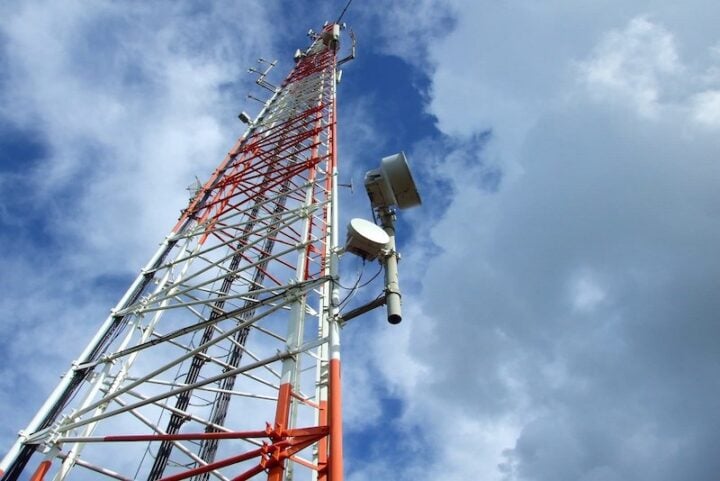
IHS builds, owns and operates telecommunications towers that mobile network operators (MNOs) lease to provide their services.
For years, operators sold their towers to independent firms like IHS to unlock capital and reduce operating costs, then leased the sites back under long-term agreements.
The “neutral host” model enabled multiple operators to co-locate on shared sites, accelerating coverage expansion and lowering duplication of infrastructure.
Interestingly, in November 2021, IHS signed an agreement to acquire 5,709 of MTN’s South African towers for over $400 million in a sale-and-leaseback deal.
The transaction, completed in 2022, expanded IHS’s footprint in Africa’s most industrialised economy.
Now, the ownership structure is shifting in the opposite direction.
HOW THE ACQUISITION COULD IMPACT OTHER OPERATORS
If MTN assumes full control of IHS, it moves from being a tenant and minority shareholder to the outright owner of one of the industry’s most strategic infrastructure platforms.
For operators like Airtel and T2, IHS towers are critical infrastructure, even though the leasing company said T2 agreed to vacate its sites starting from the third quarter (Q3) of 2025.
Airtel, for instance, recently renewed tenancy agreements covering thousands of sites in Nigeria through 2031.
Should the acquisition be completed, MTN Group will own over 15,900 towers in Nigeria, some of which IHS leases to MTN and Airtel in Nigeria.
A broader look shows MTN will take ownership of over 28,700 towers, owned by IHS, across five key markets in Africa, comprising South Africa, Cote d’Ivoire, Cameroon, Zambia, and Nigeria — and serving 10 out of 13 mobile network operators in Africa.
Breakdown of IHS towers in Africa shows that Nigeria accounts for 15,942 sites, Cote d’Ivoire 2,678, Cameroon 2,470, Zambia 1,918, and South Africa 5,696.

Industry experts say the key concerns for other MNOs revolve around future lease pricing, access priority, and operational independence.
Tony Izuagbe Emoekpere, chairman of the Association of Telecommunications Companies of Nigeria (ATCON), told TheCable that other MNOs, which rely heavily on leased tower space to expand coverage, could face reduced negotiating leverage if infrastructure ownership becomes more concentrated.
IS THIS A MONOPOLISTIC MOVE?
The deal has sparked whispers of monopoly, given MTN’s dominant subscriber base and IHS’s extensive footprint.

However, Emoekpere said the situation may not be as straightforward as it appears.
Speaking to TheCable, Emoekpere said ownership change does not automatically translate to monopolistic control.
“It’s still going to be run as a separate entity,” he said.
“In other countries where this has happened, the infrastructure company continues to operate independently from the MNO. It’s just the ownership structure that changes.”
According to the telecom expert, tower companies remain commercially motivated to serve multiple tenants.
“If you are providing infrastructure, the more tenants you have, the more profitable you become. So economically, it does not make sense to shut out other operators,” he said.

Emoekpere added that IHS is not the only tower company in Nigeria, noting that other MNOs, including Airtel, also utilise additional tower infrastructure providers.
“MTN has always been a shareholder in IHS,” he explained.
“This is not entirely new. What has happened is that they have increased their shareholding to full ownership.”
While the deal has raised monopoly concerns, IHS has an industry rival in Africa, American Tower Corporation (ATC), which operates over 22,000 sites across Nigeria, Ghana, Uganda, South Africa, Kenya, Burkina Faso and Niger.
WHY IS FG REVIEWING THE DEAL?
The federal government has indicated it will examine the transaction.
Bosun Tijani, minister of communications, innovation and digital economy, said the government must assess the acquisition to ensure it aligns with Nigeria’s telecom development objectives and does not undermine competition or consumer protection.
Emoekpere described the government’s involvement as standard regulatory practice.
“Every transaction of this magnitude must pass certain tests. It’s not peculiar to Nigeria. Governments assess such deals to ensure national interest is protected,” he said.
Beyond ownership, industry insiders say quality of service may be a key motivation behind the deal.
A telecom executive, who does not want to be named, told TheCable that MTN’s decision is partly driven by past frustrations over tower management and response times during network outages.
“The deal was necessary,” the executive said.
“There were concerns about poor management of towers and delays in response during downtimes.”
Owning the towers, the executive added, would allow MTN to have greater operational control and faster resolution of connectivity issues.
Emoekpere agreed that quality of service concerns may be central.
“One of the major issues raised by regulators has been quality of service,” he said.
“Being in control of the infrastructure could give MTN more decision-making power to manage service delivery, since their subscribers are ultimately affected.”
WHAT IT MEANS FOR SUBSCRIBERS
For customers, expectations are high.
With full infrastructure control, MTN may no longer attribute service disruptions to third-party tower management.
More so, greater ownership could translate into faster maintenance response, improved uptime, and potentially stronger network performance.
“More responsibility will now rest on the operator,” Emoekpere said.
“Subscribers will expect improved quality of service.”
However, experts caution that improved service will depend on strong regulatory oversight to ensure fair access for competing operators.
From a financial standpoint, an industry expert, who spoke anonymously, said the acquisition could improve MTN’s long-term margins by eliminating lease payments to third parties and creating more predictable cash flows.
The expert added that investors are expected to respond positively once the deal closes.
“If properly regulated, could benefit Nigeria through increased infrastructure investment, job creation, faster broadband rollout, and stronger control over strategic telecom assets,” he said
However, he warned that “without strong rules, it could hurt competition”.
Stay ahead with the latest updates!
Join The Podium Media on WhatsApp for real-time news alerts, breaking stories, and exclusive content delivered straight to your phone. Don’t miss a headline — subscribe now!
Chat with Us on WhatsApp