
As the Nigerian proverb goes … “The drum that is cracked is always the loudest”.
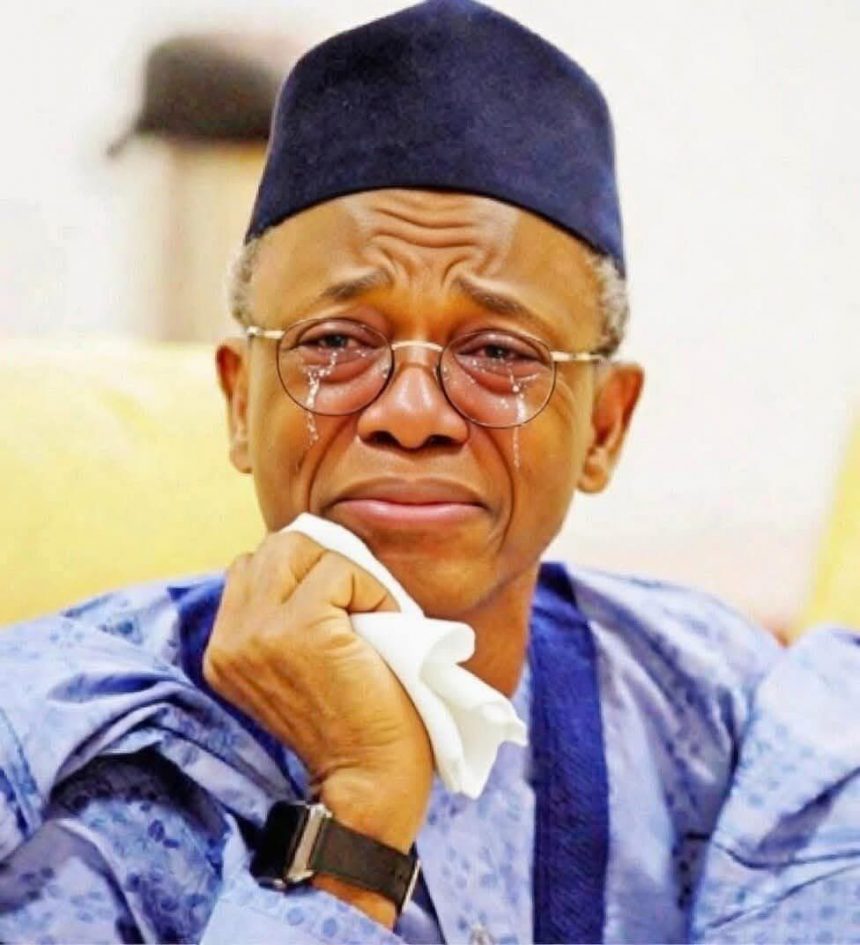
Let’s say it plainly. Nasir El-Rufai used to operate like a man fully in control, calm, strategic, and deliberate. Whether people agreed with him or not, he carried the weight of someone who understood power and how to use it. That version of him feels very different from what we’re seeing now. The fall of a one-time minister and two-term governor into this current posture is stark and, to many, pitiable, a steep drop from commanding influence to struggling for relevance. In trying to revive himself from the grave of irrelevance, he has leaned even further into distraction and provocation, only deepening the sense that what was once authority has now become agitation and desperation.
The ministerial rejection did not just deny El-Rufai a job; it cut deep, and it shows. Since that moment, he has looked unsettled. Instead of taking the loss quietly and moving on like a seasoned politician, he has reacted in ways that have made him look smaller, not stronger. The rejection stripped away some of the authority he once held, and he has not recovered. In politics, how you handle defeat matters as much as victory, and his handling of this one has only weakened his image. What could have been a brief setback has turned into a visible wound, and the more he reacts, the more obvious that wound becomes.

Then came the television moment that stunned even his followers, when El-Rufai openly spoke about the phone of the National Security Adviser, Nuhu Ribadu, being wiretapped. It was neither calm nor measured. It felt like a man completely unhinged and visibly rattled. For someone who once chose his words carefully, the outburst came across as reckless. Instead of strengthening his position, it made him look desperate. What may have been intended as tough, macho talk sounded more like agitation spilling over, leaving many to question not just the claim, but his mental state in making it so publicly and so emotionally.
The wiretap dust had barely settled before he posted an explosive claim, alleging that the office of the National Security Adviser, Nuhu Ribadu, had purchased a dangerous toxic chemical (Thallium sulphate). These are serious accusations in any country, especially one already dealing with security challenges. When claims of that magnitude are thrown into the public space without clear institutional follow-through, they can begin to sound more sensational than strategic. Instead of keeping the focus on policy or ideology, Elrufai just turned himself into a drama king, a.k.a. jester, and drama rarely strengthens the hand of the person driving it.
Meanwhile, his and his fellow travellers’ attempts to reposition through alternative political alignments, particularly around the ADC platform, have not produced the kind of numbers that translate into real leverage. In Nigeria, political strength is visible in defections, structures, funding signals, and state-level momentum. Those indicators have not moved forward a single point; instead, they are retrogressing. When numbers don’t move, narratives collapse. What was presented as a bold realignment has not translated into measurable traction. That contrast between expectation and reality makes every public outburst look heavier.
There is also a clear pattern forming. When someone who once shaped national conversations begins sounding like they are trying to force their way back into them, the tone changes. The repeated sharp interviews, the emotional language, the public airing of grievances, all of it creates the impression of a man unsettled by reduced centrality. Power is quiet when it is secure. It becomes loud when it feels threatened.
This is not about mockery. It is about the downward trajectory. Political decline often begins subtly, with fewer invitations, fewer consultations, and fewer people openly aligning. Then comes the temptation to compensate with visibility. But visibility is not the same thing as influence. The more dramatic the rhetoric becomes, the more it can look like someone fighting against political gravity rather than mastering it. What we are seeing now feels less like calculated opposition and more like agitation, a former insider struggling to accept that the centre of gravity has shifted elsewhere.
Hon Victor Okebunmi,
Senior Special Assistant (Publicity)
Renewed Hope Global.
Stay ahead with the latest updates!
Join The Podium Media on WhatsApp for real-time news alerts, breaking stories, and exclusive content delivered straight to your phone. Don’t miss a headline — subscribe now!
Chat with Us on WhatsApp