
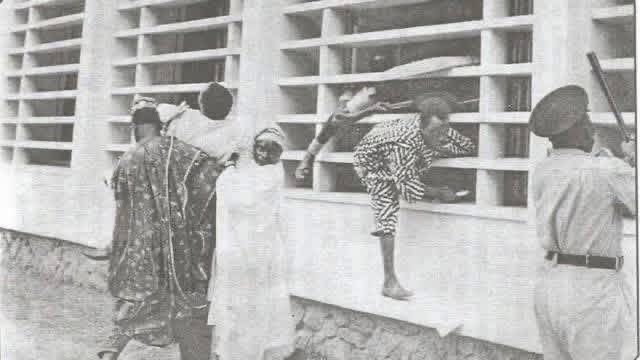
Operation Wetie, also known as the Western Nigeria Crisis, was a violent political uprising that occurred in Western Nigeria during the early 1960s, particularly between 1964 and 1965. The term “Wetie,” derived from the Yoruba word wẹ̀tẹ̀, meaning “to douse” or “to soak,” came from the practice of pouring petrol on political opponents and setting them on fire during attacks. The crisis marked one of the most turbulent periods in Nigeria’s First Republic and exposed the fragility of the country’s democratic institutions.
The conflict emerged from a deep power struggle within the ruling Action Group, which split into two factions. One faction was led by Chief Obafemi Awolowo, former Premier of the Western Region and a central figure in shaping post-independence Yoruba politics. The other faction was led by his former deputy, Chief Samuel Ladoke Akintola, who had become Premier after parting ways with Awolowo. Following Awolowo’s imprisonment in 1963 on charges of treason, political tensions in the region worsened. The 1965 regional elections were marred by widespread rigging, intimidation, and voter suppression, which triggered street protests, arson, targeted attacks, and political chaos.
Operation Wetie was not a military operation in the conventional sense. It was a period of civilian and political violence driven largely by political supporters aligned with rival factions. Urban centers such as Ibadan, Lagos, Abeokuta, and Ogbomosho witnessed some of the worst violence. Political gangs and partisan groups disrupted elections, attacked opponents, and created an atmosphere of fear and anarchy. The term “Wild Wild West” was even coined to describe the region during this period, highlighting the breakdown of law and order.

Several key political figures played central roles in the crisis. Chief Obafemi Awolowo led one faction of the Action Group, while Chief Samuel Ladoke Akintola led the opposing faction and held the premiership. Dr Moses Majekodunmi was appointed by the federal government as Administrator of the Western Region during a declared state of emergency in an attempt to restore order. Sir Adesoji Aderemi, the regional Governor, also played a constitutional role in navigating the political upheaval. Additionally, political alliances such as the Nigerian National Alliance and the United Progressive Grand Alliance emerged from various party factions, further complicating the crisis. Local authorities, police forces, and federal security officials were involved in efforts to contain the violence.
The unrest of Operation Wetie highlighted the fragility of Nigeria’s democratic institutions and demonstrated the dangers of political factionalism and unbridled competition without strong institutional checks. Public confidence in the democratic process was severely undermined, and the inability of civilian authorities to maintain order contributed to the political conditions that made the military coup of January 15, 1966 possible. The military cited the collapse of law and order in the Western Region as one of the justifications for intervention.
Operation Wetie remains a cautionary chapter in Nigeria’s political history. It demonstrated how political grievances, if left unchecked, could escalate into widespread violence with long-lasting consequences for governance and democratic evolution. Although not a conventional military operation, its legacy shaped the trajectory of Nigerian politics and underscored the importance of building resilient, inclusive political systems capable of managing conflict peacefully.
Stay ahead with the latest updates!
Join The Podium Media on WhatsApp for real-time news alerts, breaking stories, and exclusive content delivered straight to your phone. Don’t miss a headline — subscribe now!
Chat with Us on WhatsApp