
In light of revelations about the recent failed coup plot, which, if successful, would have been heavily and obviously tribal in nature, it is good to remind ourselves as a nation what can happen when we go that route.
Why? Because the last time Nigeria had what some people suspected was a tribal coup, it led to a pogrom where tens of thousands of our people died, and then a civil war, where millions of Nigerians perished because of the sins of a few ambitious young men.
So let us not repeat history and claim that history repeated itself, because Nigeria, as a country, often thrives on rumour and conjecture, even when there are documented facts to clear the air.

And that is what has happened with the events surrounding the January 15, 1966 coup.
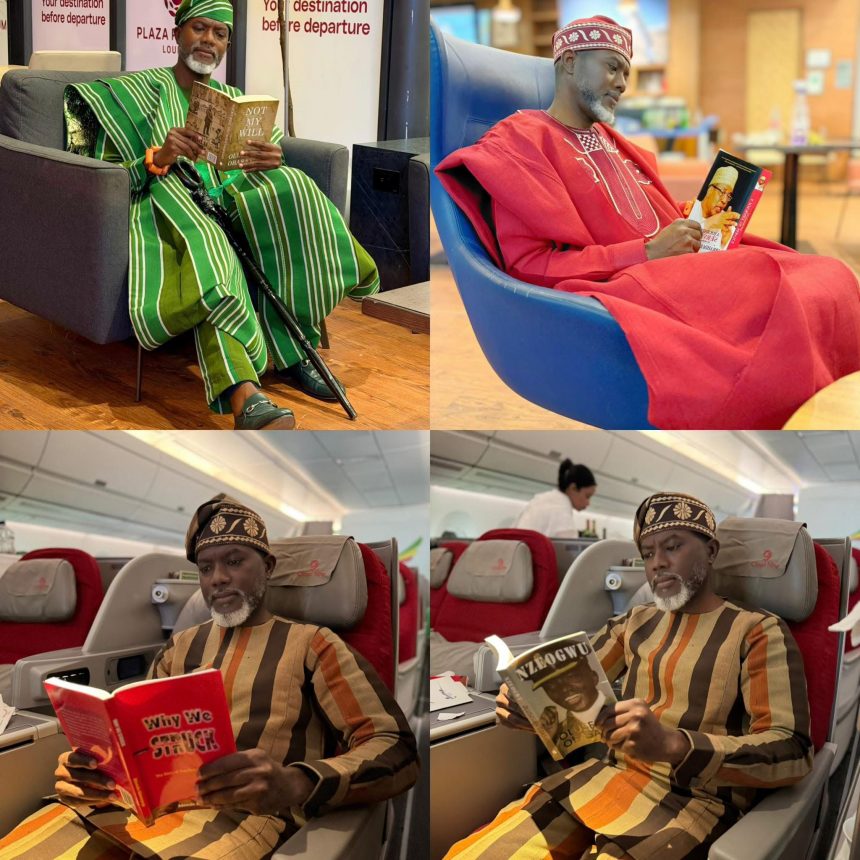
Because I love my country, and know that those who refuse to learn from history are condemned to repeat it, as attributed to George Santayana, I have read every book written by the dramatis personae and eyewitnesses involved in the aforementioned coup, including Alexander Madiebo, Adewale Ademoyega, President Olusegun Obasanjo, General Babangida, and letters and manuscripts written from prison by Majors Emmanuel Ifeajuna and Chukwuma Nzeogwu.
There is no book about that coup written by a participant or eyewitness that I have not read.
So, who was really the brain behind the coup, and why was it even executed? As much as possible, I will refrain from giving you my opinions and will let the horses speak to you from their writings.
What I have found from reading contemporary Nigerian perspectives on that unfortunate incident is that many of the people who cite Major Ademoyega’s book have not really read it, because they credit him with things he never wrote, in an effort to absolve their ethnic group of any wrongdoing.
Fifty years after January 15, 1966, we are still revising the coup through ethnic paradigms. How unfortunate!
On page 33 of his book, Why We Struck, Major Ademoyega admitted that he, along with Uche Chukwumerije, who later became Information Minister under General Ibrahim Babangida, were recruited into the plot to topple the Balewa government by Emmanuel Ifeajuna.
He repeated this forcefully on page 71. Forcefully, because he described him as also “inconsistent and unreliable.”
This assessment of Ifeajuna’s character was again corroborated by Chief Obasanjo, who described Ifeajuna as a “courageous coward” on page 108 of Nzeogwu.
In fact, he revealed that at the time Ifeajuna first broached the idea that a military solution was the only solution, he, Ifeajuna, was just a Lieutenant. He had not been promoted to the rank of Major.
For those who blame it all on Nzeogwu, Ademoyega settles the matter on page 76 when he revealed that the coup was planned beginning from 1961, long before he had met Nzeogwu. It was Ifeajuna that he met in 1961.
I must also add that on page 105 of his book, Nzeogwu, Chief Obasanjo stated that it seemed both Ifeajuna and Nzeogwu were independently planning their own coups, and decided to pool resources and work together.
The meeting where the coup was planned was held at Ifeajuna’s residence in Lagos, and he presided. Nzeogwu, Ademoyega, Okafor, Anuforo, Chude, and Chukwuka were in attendance, amongst others.

It was at that meeting, detailed on page 82, that Ademoyega revealed that what they agreed was that those to be targeted were only to be arrested, not killed!
However, it seems Ademoyega was deceived, because on page 111 of Nzeogwu, Chief Obasanjo reveals that from the get-go, his friend, Nzeogwu, and his co-conspirator, Ifeajuna, had planned the coup to be bloody. Apparently, they only told Ademoyega what they felt would make him join them.
In page 83, Ademoyega revealed that the coup was also staged to checkmate the North, which leads me to ask how he could still have wanted his readers to believe the coup was a nationalistic one when he himself confessed that it was targeted against a so-called Northernisation of the army?
Ademoyega revealed that Uche Chukwumerije, who had been an undergraduate with Ifeajuna at the University College, Ibadan, took him aside and warned him that Ifeajuna was an untrustworthy character.

This was as early as 1961/1962, when both Ademoyega and Chukwumerije applied and were accepted into the Nigerian Army.
Uche Chukwumerije later confided in a British expatriate what he and his colleagues planned to do, and was advised by the Briton not to join the Army, as their plans were unlikely to succeed given the nature of the then British-led army.
On page 36, Ademoyega detailed that, unlike his first meeting with Ifeajuna, his first encounter with Major Nzeogwu was purely military and fraternal, and he learnt the ropes of being a professional soldier from Nzeogwu.
Later, around 1965, Major Nzeogwu spoke freely with younger officers about his plans to stage a revolution. He appeared to be quite flippant about it. Chief Olusegun Obasanjo corroborates Ademoyega on page 105 of his book, Nzeogwu, in which he describes Nzeogwu’s discussions about the proposed coup as “unguarded”.
The only reason his actions may have evaded military intelligence was that, ironically, Nzeogwu was the first Nigerian military officer trained in military intelligence, and the army relied on him to expose people like him!
On page 45, Ademoyega revealed that had the coup succeeded, the plan was to create multiple states in Nigeria, which was the very thing Lt. Colonel Gowon eventually did on Saturday, May 27, 1967, when he created twelve states.

And on page 47, Ademoyega shot down the oft-repeated propaganda that the coup was staged to make Chief Obafemi Awolowo the new leader of Nigeria. Such was never the plan. If the coup had succeeded, the country would have had military leaders at the helm, who would then appoint civilian leaders to subordinate positions, such as ministers.
In truth, when you read Why We Struck, you come to realise that Ademoyega and his colleagues were actually childish and rather idealistic in their vision for Nigeria. What they planned was so utopian that it could only exist in heaven!
For example, on page 56, they planned to govern so well that Nigerians would routinely and voluntarily inform the police about their neighbours!
On page 63, Ademoyega revealed that they planned to abolish traditional rulers because “The posts of Obas, Obis, Emirs and Amanyanabos constituted the greatest anachronisms in Nigerian society.”
Another example of their immaturity was Ademoyega’s claims on page 93 that the Prime Minister was planning to use the army to eliminate (kill) the intellectuals in the Western Region. Anyone who has studied Balewa would know that he was not such a person!
At this point, let me add that, according to Ademoyega, the coup was not meant to be a tribalistic Igbo coup, but after the coup, it became ethnic, and he blamed Alexander Madiebo for that. According to him, after the success of the coup in the North, Madiebo cornered Nzeogwu and began feeding him ethnic-based considerations.
His accounts were corroborated by General Ibrahim Babangida’s autobiography, A Journey in Service.
On page 112 of Nzeogwu, President Obasanjo put much of the blame for ethnicising the coup on Ifeajuna, who he said focused on recruiting “Igbo-speaking officers”.
In another of his books, My Command, Chief Olusegun Obasanjo described the January 15, 1966 coup as “half hearted and ill fated”.
He then concluded that “The sky-high praises of the coup and the apparent relief given by it in the South came to a sudden end when the succeeding government of Maj-Gen JTU Aguiyi-Ironsi unfolded its plans. If Ironsi had displayed a greater sensitivity to Northern thinking, he could have capitalised on the relief that immediately followed the coup”.
Let me add that although the reason for the coup was given as corruption amongst the political class and Northernisation of the army, on page 114 of Nzeogwu, Chief Obasanjo, perhaps unintentionally, revealed what may have been the real reason for the coup.
Major General Aguiyi-Ironsi was about to be removed as General Officer Commanding of the Army and replaced by Brigadier General Ademulegun.
Given that Ademulegun was needlessly and brutally killed by the putschists, who shot him through his pregnant wife, Latifa, who stood in front of him, and then the fact that Ironsi was spared and ultimately was the single biggest beneficiary of the coup, I am inclined to believe this theory.
Again, on the question of whether the January 15, 1966 coup was a tribal one, let me quote from page 135 of Chief Obasanjo’s Nzeogwu. He writes:
“The coup was HEAVILY tribally biased in the South, and that nailed its coffin.”
Let me conclude with an anecdote. Although then Major Obasanjo was not involved in the coup, such was his closeness to Nzeogwu that, for two days after the coup, fearing being poisoned, Major Nzeogwu would eat only food prepared by Obasanjo. He did not even trust his fellow coup plotters enough to perform that task.
Finally, in all my reading, I have yet to encounter any serving or retired Nigerian military officer who has shown the level of intelligence or patriotism demonstrated by Mr Olusegun Obasanjo. Nobody comes even close in my humble opinion.
Reno Omokri
Gospeller. Deep Thinker. #TableShaker. #1 Bestselling author of Facts Versus Fiction: The True Story of the Jonathan Years. Hodophile. Hollywood Magazine Humanitarian of the Year, 2019. Business Insider Influencer of the Year 2022. 21st Most Talked About Person in Africa, 2024.
Stay ahead with the latest updates!
Join The Podium Media on WhatsApp for real-time news alerts, breaking stories, and exclusive content delivered straight to your phone. Don’t miss a headline — subscribe now!
Chat with Us on WhatsApp