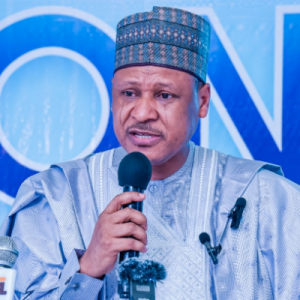

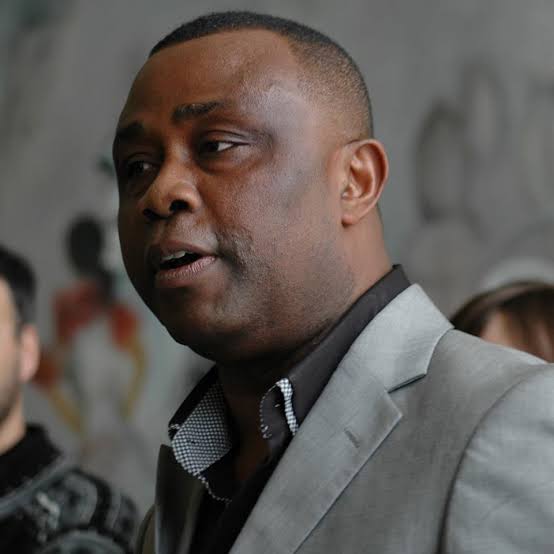
There are moments when a well-written article does more than analyse politics. It quietly elevates the moral tone of public discourse. On Frailty, Power, and the Moral Poverty of Ableist Politics, authored by Tanimu Yakubu, is one such moment. The author’s choice to celebrate human frailty rather than weaponise it, and to condemn cruelty rather than exploit vulnerability, reflects a depth of ethical reflection that deserves unreserved commendation; especially given that the author serves in a high office within the current administration of President Bola Ahmed Tinubu.
The article’s central proposition is that weakness is not a moral failing, and that politics stripped of empathy becomes morally impoverished. This is both timeless and urgently relevant. It reminds us that leadership is not the art of appearing invincible, but the discipline of governing responsibly despite human limitations. In a global climate where political opponents are increasingly dehumanised, and physical or health-related vulnerabilities are turned into ammunition, this intervention is refreshing and necessary.
Yet, precisely because I share the article’s humane spirit, I believe Nigeria must confront an uncomfortable companion issue: the culture of secrecy surrounding the health of political leaders.

The Transparency Deficit in Nigeria’s Political Culture
Nigeria’s politics is not only harsh; it is opaque. Nowhere is this more evident than in how leaders handle questions about their health. Too often, illness is shrouded in silence, rumours, half-truths, and denial. This vacuum is then filled by speculation, cynicism, and sometimes ridicule.
It is tempting to blame citizens for being insensitive. But that would be unfair and incomplete. Public reactions are largely shaped by what people are allowed or not allowed to know. When leaders choose secrecy, they inadvertently invite conjecture. When official communication is absent or evasive, misinformation becomes the default currency. In such an environment, even well-meaning citizens struggle to separate fact from fiction.
Most Nigerians are not inherently cruel. They are a compassionate people who routinely rally around neighbours, friends, and strangers in moments of illness or hardship. The same society that contributes generously to medical fundraisers and prays fervently for the sick is unlikely to suddenly become heartless simply because the patient occupies high office.
What changes is trust. Secrecy erodes trust. And where trust collapses, empathy weakens.
A Personal Reflection on Openness
I have experienced, in a modest but instructive way, how openness can shape human response.
When in Nigeria, or among Nigerians in the Diaspora, I sometimes disclose quite casually, that I am 50 per cent deaf, having suffered some years ago from Sudden Deaf Syndrome in my left ear. The reactions are almost always a familiar mix: surprise, empathy, curiosity, and occasionally pity.
I often add, smiling, that my right ear is my better ear. So now you know where to stand if you want me to hear you properly, I joke.
This is usually followed by a few seconds of awkward silence, and then remarks such as: “Nigerians don’t reveal health conditions like that,” or “and you are so casual about it,” or “really, how did it happen?”
What then unfolds is almost always a long, thoughtful conversation about the syndrome, about medical and organic options, about coping strategies, about impact, and about life.
That experience has reinforced a simple truth: when vulnerability is met with honesty, it often produces understanding rather than contempt. Openness does not diminish dignity; it deepens it.
Why Citizens Have a Right to Know

Transparency about the health of political leaders is not voyeurism; it is a democratic necessity.
Leaders hold enormous responsibility over national security, economic management, and institutional stability. Citizens therefore have a legitimate interest in knowing whether those entrusted with such power are medically capable of discharging their duties.
Beyond fitness for office, there is a broader public value in openness:
- Public health learning: Leaders’ experiences can spotlight non-communicable diseases, stress-related conditions, or age-related challenges, helping to normalise conversations about prevention and treatment.
- Destigmatisation: Honest disclosure can reduce shame around illness and disability, reinforcing the very anti-ableist ethos the referenced article so eloquently defends.
- Institutional preparedness: Transparent communication reassures citizens that governance is not personalised but system-driven, with clear protocols for continuity.
In short, transparency strengthens democracy, while secrecy personalises power.

Compassion Grows Where Honesty Lives
Ironically, much of the mockery directed at leaders’ health conditions may stem from ignorance rather than malice. When people are kept in the dark, they imagine the worst. When leaders speak openly, they humanise themselves.
Strategic and compassionate communication does not require medical minutiae. It requires clarity, consistency, and respect for the public’s intelligence. Simple, periodic updates from credible medical teams, framed in calm and professional language, would go a long way.
More importantly, leaders should model the very values they hope to see in society:
- Acknowledge vulnerability without dramatization.
- Emphasise capability alongside limitation.
- Reaffirm institutional safeguards that ensure continuity of governance.
Such openness invites empathy rather than derision.
Rejigging Nigerian Politics: From Mystique to Maturity

Nigeria must move away from a political culture that equates mystery with strength. True strength lies in accountability. Mature democracies are not afraid of the humanity of their leaders; they design systems that accommodate it.
Rejigging our politics therefore means:
- Normalising transparency about leaders’ health.
- Embedding medical disclosure protocols into governance practice.
- Treating citizens as stakeholders, not children.
When leaders act right, Nigerians usually respond right.
A Final Reflection
The article that inspired this reflection calls out the moral poverty of ableist politics. I fully align with that call. But moral renewal must also interrogate the structures that create space for cruelty.
Secrecy breeds suspicion. Transparency breeds trust. Trust breeds compassion. If Nigeria truly wishes to build a more decent political culture, then alongside condemning cruelty, we must institutionalise honesty. Only then can frailty be seen, not as a weapon, but as a shared human condition; one that binds leaders and citizens in mutual dignity.
Stay ahead with the latest updates!
Join The Podium Media on WhatsApp for real-time news alerts, breaking stories, and exclusive content delivered straight to your phone. Don’t miss a headline — subscribe now!
Chat with Us on WhatsApp