
With 2027 in sight, Nigeria’s opposition landscape is rapidly shifting. While many governors openly align with President Tinubu, others offer him tacit support or face mounting pressure.
Nigeria’s opposition politics appears to be facing its most severe test since the country’s return to civil rule in 1999.
As defections sweep through the Peoples Democratic Party (PDP) and other opposition parties to the ruling All Progressives Congress (APC), President Bola Tinubu’s political dominance is no longer measured solely by electoral victories but by the steady erosion of organised resistance at the subnational level.
The APC has endorsed the president for reelection ahead of its presidential convention.

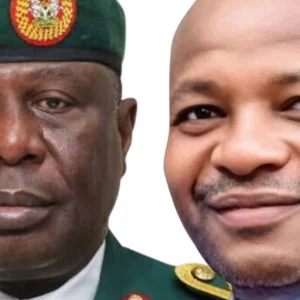
With at least six PDP governors already defecting to the APC and strong indications that Kano Governor Abba Yusuf of the NNPP may follow suit, the list of governors outside the ruling party has narrowed significantly.
The defectors are Sheriff Oborevwori (Delta), Umo Eno (Akwa Ibom), Peter Mbah (Enugu), Douye Diri (Bayelsa), Caleb Mutfwang (Plateau) and Agbu Kefas (Taraba).
The development in the polity is not only clearing the way for Mr Tinubu’s second term but also raising fears in some quarters that the country may become a one-party state.
Ifeanyi Odili, national President of the Campaign for Democracy (CD), agrees. He told PREMIUM TIMES that the concern about Nigeria sliding towards a one-party state is “quite real,” given the scale and speed of defections.
“With several governors joining the APC, the party now controls about 28 out of 36 states, leaving four for PDP, one for APGA, one for NNPP, and one for Accord. Abuja’s status is uncertain with (FCT Minister Nyesom) Wike’s influence,” Mr Odili said.
“This trend has sparked fears that Nigeria’s democracy is being undermined, as a weak opposition can lead to a lack of accountability and checks on the ruling party.”
However, outside the shrinking pool of opposition governors, attempts are emerging to rebuild resistance through inter-party coalition-building rather than through state-level power.
Central to this effort is the African Democratic Congress (ADC), which has increasingly positioned itself as a convergence platform for disaffected opposition figures, civil society actors and political blocs seeking an alternative to both the APC and the fractured PDP.
Unlike the PDP’s governor-centric structure, the ADC’s strategy is elite coordination, voter mobilisation and coalition politics, aimed at compensating for the opposition’s loss of incumbency power.
In recent months, the party has intensified talks with elements of the Labour Party, NNPP-aligned actors and PDP reform groups, reflecting a growing belief that defeating the APC in 2027 may require a broad alliance rather than a single dominant opposition party.
Despite its growing visibility as a rallying point for coalition talks, the ADC currently lacks the electoral muscle to independently pose a serious threat to Mr Tinubu’s re-election bid. The party has no serving governors, controls no state assemblies, and has limited representation in the National Assembly, factors that significantly constrain its immediate competitiveness.
Its organisational structures remain uneven across states, and its voter reach is yet to match that of Nigeria’s dominant parties.
‘Opposition’ Governors
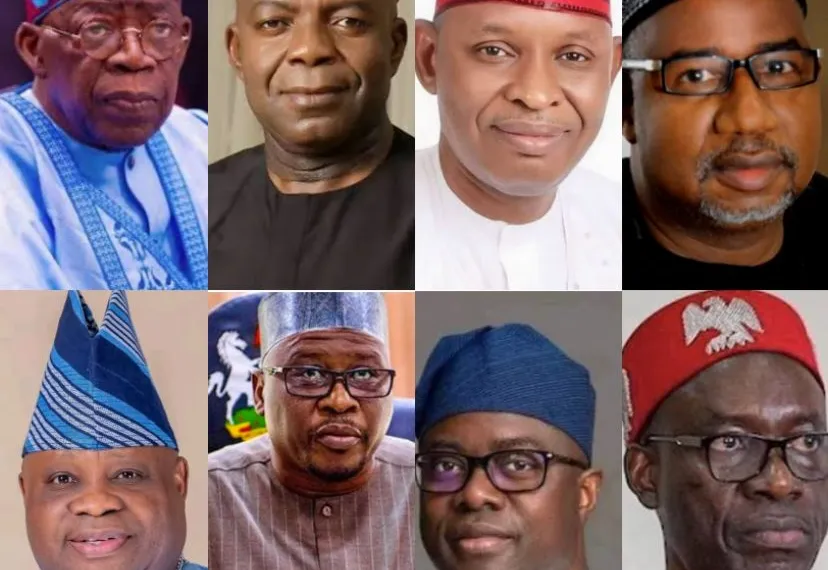
Officially, seven governors still belong to opposition parties. They are Chukwuma Soludo (Anambra), Ademola Adeleke (Osun), Ahmadu Fintiri (Adamawa), Alex Otti (Abia), Seyi Makinde (Oyo), Bala Mohammed (Bauchi), and Abba Yusuf (Kano).

However, politics in contemporary Nigeria appears no longer to be driven by party registration.
This reality partly explains why emerging coalition efforts, particularly those coalescing around the ADC, are gaining attention. With governors increasingly constrained by federal leverage and survival instincts, opposition organisers are shifting focus to party structures, voter sentiment and cross-party consensus as potential counterweights to presidential dominance.
Thus, of these seven governors in opposition parties, only two, Messrs Makinde and Mohammed, consistently project resistance to Mr Tinubu’s political dominance. Even that resistance exists under intense pressure, fuelling concerns that Nigeria may be edging closer to a de facto one-party state.
Those who are not in support may have been deliberately fought against in several ways.

Mr Odili argues that the motivations behind defections are neither ideological nor accidental.
“The defections are driven by factors like internal party crises, fears of political marginalisation and victimisation, particularly those that are potentially EFCC candidates, and the desire to align with federal power to escape any eventual harassment,” he said.
Why defections?
Most, if not all, of the six PDP governors have cited the party’s unabated crisis as the reason they dumped it for the APC.
The crisis developed gradually through a long chain of unresolved leadership disputes, court interventions, and power struggles that hollowed out the party’s authority. PREMIUM TIMES earlier analysed how the PDP’s crises worsened in 2025.
After losing the 2023 presidential election, the PDP failed to resolve disputes over leadership positions, zoning arrangements and control of party structures. Instead of settling these issues internally, a number of these disagreements spilt into the courts.
For instance, several court cases were filed over the dispute on the position of national secretary between Samuel Anyanwu and Sunday Udeh-Okoye, one of the most powerful offices in the party.

However, the national convention held by one of the factions in November, in defiance of court judgements, deepened the internal wrangling within the opposition party.
No fewer than three judges of the Federal High Court had delivered separate judgements stopping the convention conducted by the Umar Damagum-led National Working Committee (NWC) and asked INEC not to recognise it. But an Oyo High Court gave its nod for the party to go ahead.
Amid conflicting judgements, the faction held the convention, which produced a new 20-member national leadership of the party, with Kabiru Turaki, a senior lawyer and former Nigerian minister of special duties, as national chairman.
A major occurrence at the convention was the expulsion of key PDP members, including the FCT Minister, Nyesom Wike, who belongs to the other faction of the opposition party.
Others expelled were the factional national chairman, Mohammed Abdulrahman, former Ekiti State Governor, Ayo Fayose; National Secretary, Samuel Anyanwu; National Legal Adviser, Kamaldeen Ajibade; and National Organising Secretary, Umaru Bature, as well as a former senator, Mao Ohuabunwa, and a former national vice chairman of the party in the South-south, Dan Orbih.
Three of Mr Wike’s allies – Imo PDP chairman, Austine Nwachukwu, Abia PDP chairman, Amah Nnanna, and PDP South-south Zonal Secretary, Turnah George – were also given the boot. The trio had challenged the convening of the Ibadan convention, arguing that state congresses were not conducted in accordance with the PDP Constitution.
In response, the Abdulrahman faction announced the expulsion of some members of the Kabiru-led faction. Those affected included Governors Makinde of Oyo, Mohammed of Bauchi and Dauda Lawal of Zamfara from the party.
As expected, the two groups’ actions and counteractions deepened internal divisions and triggered fresh legal and political confrontations within the party.
For party leaders, who needed federal cooperation to govern effectively or seek re-election, the PDP increasingly looked like a risky platform. Osun State Governor, Ademola Adeleke, recently moved to the Accord Party, citing this fear; although he had been hobnobbing with the APC and declared his support for the reelection of President Tinubu.
As the PDP meandered through the crises, some of its faithful claimed that the governing APC planned to turn Nigeria into a one-party state, hence the quest to have its governors in its fold.
Some publicly accused the ruling APC and federal actors of offering financial and political incentives to opposition figures to defect or weaken the party from within.
Former chairman, Mr Damagum, alleged that Mr Tinubu’s camp was deliberately fuelling the PDP crisis to ease Nigeria into a one-party system.
“NEC stands in firm resistance to the sinister plot by the Tinubu-led APC to turn Nigeria into a one-party totalitarian state, as evidenced in the desperate attempts to stifle and annihilate opposition parties through open siege, threats and intimidation of opposition figures and institutions of democracy in Nigeria. It is clear that this plot is borne out of APC’s mortal fear of inevitable defeat in 2027 due to its dismal failure in government,” he said.
He warned that the systematic weakening of the PDP posed a threat to democratic balance, saying the ruling party was benefiting from and encouraging the confusion within the opposition.
Erstwhile party spokesperson, Debo Ologunagba, claimed that defections were driven not by ideology but by inducements, intimidation, and promises of protection or access to federal power.
As internal disputes festered, governors and legislators have arguably begun reassessing their political futures. Many concluded that the party lacked the unity, leadership clarity and legal stability required to mount a credible challenge in 2027.
Opposition governors’ body language
With the gale of defections in the build-up to the 2027 polls, some of the remaining seven opposition governors are likely to join the APC or at least support President Tinubu’s re-election. Their actions and public utterances suggest this. This is how they stand.
Charles Soludo (Anambra)

In Anambra, Charles Soludo, the only governor in the All Progressives Grand Alliance (APGA), has emerged as one of the most prominent examples of opposition in name but not in posture.
Long before his re-election last November, Mr Soludo openly praised Mr Tinubu’s economic reforms, particularly the removal of fuel subsidy and exchange-rate unification, arguing that Nigeria had delayed difficult decisions for too long.
He also said he has no apologies for supporting Mr Tinubu ahead of the 2027 general election, stressing that he believes political parties that profess “progressivism” should form a coalition to deepen development in Nigeria.
“For me, saying ‘progressives working together’ is a call to those who share these ideals. Regarding President Bola Ahmed Tinubu, I have no apologies for my support.
“He (Tinubu) has been my friend for 22 years and counting. You don’t deny your friend,” he said.
“I fully support him, and I am impressed by the bold economic and structural reforms he has implemented. We are on the right path, and we need to stay the course.”
Rather than positioning APGA as a counterweight to the APC, Mr Soludo has repeatedly framed Anambra as a partner of the federal government. He has avoided partisan attacks on the presidency and has said he would support Mr Tinubu’s reelection in 2027.
In effect, APGA under Mr Soludo functions less as an opposition party and more as a regional ally of the ruling centre.
Ademola Adeleke (Osun)

Osun Governor Ademola Adeleke offers perhaps the clearest example of opposition by convenience rather than conviction.
Although local APC power brokers in Osun reportedly blocked his entry into the party, Mr Adeleke’s political conduct has remained strikingly conciliatory towards the president.
Following internal disputes within the PDP and resistance from APC structures in Osun, Mr Adeleke joined the Accord Party and was nominated as its governorship candidate. Yet his political signals since then have remained deliberately ambiguous.
It suggested that while local party dynamics may complicate immediate realignment, Mr Adeleke is unwilling to position himself as an opponent of the presidency.
After defecting to the Accord Party in November 2025, Mr Adeleke said he joined the party “as a platform to seek re-election in 2026.”
While officially framed by the governor as a move to align with a party focused on “welfarism,” the shift is widely perceived as a calculated, tactical, and strategic decision.
In July, before his defection, the Osun State chapter of the PDP, ostensibly at Mr Adeleke’s prompting, endorsed Mr Tinubu for reelection in 2027.
Mr Adeleke’s spokesperson, Olawale Rasheed, disclosed that the Osun PDP declared its support for Mr Tinubu’s reelection bid.
“The caucus recognises the fact that Osun is the ancestral home of President Bola Tinubu, which makes him the son of the state,” the PDP leaders said. “Accordingly, the caucus adopted and endorsed the president for re-election in the 2027 general elections.”
Also, Mr Adeleke has paid high-profile visits to Mr Tinubu in Lagos, repeatedly praised the president’s leadership, and avoided joining coordinated PDP attacks on the federal government’s economic reforms.
On one of the visits, the governor was accompanied by his elder brother, Deji Adeleke, and nephew, Afrobeat musician David Adeleke (Davido).
Some APC members described the visit as a show of desperation by the governor seeking to curry the president’s favour in view of the coming polls.
However, a former Speaker of the Osun State House of Assembly, Timothy Owoeye, declared that there was no space for the governor in the APC.
Also, the Osun APC Director of Media and Information, Mogaji Olabisi, in a statement, said the visit of Davido, his father, and uncle to President Tinubu had no significant political implications for the party’s governorship aspirants.
“Our party is intact in our state, and I am eminently qualified to state that we have an array of capable and qualified governorship aspirants who have been consulting with interest groups about their 2026 gubernatorial aspirations, to take over from the current bumbling and fumbling governor and give quality leadership to the people of Osun State.
“The troubled looks on the faces of the three visitors to the president indicated a pointer to the fact that if something was not chasing them, they were definitely chasing something.
It is believed that Mr Adeleke’s calculations extend beyond immediate party loyalty. With Osun politics historically volatile, maintaining goodwill with the centre could prove decisive for his long-term survival, by helping him retain his seat in the 2026 governorship election before formally realigning with the centre. There are also reports that Governor Adeleke would officially join the APC if he wins his reelection, and, thus, shows that he is more popular in the state than the local APC leaders.
Alex Otti (Abia)

Abia Governor Alex Otti continues to insist that he remains committed to the Labour Party. Yet his body language, elite engagements and regional messaging increasingly tell a different story.
He remains one of the most symbolically important opposition figures, having won under the party during the 2023 electoral wave that disrupted traditional party dominance.
Officially, Mr Otti insists he has no plans to defect and continues to affirm his membership of the LP.
His recent political conduct, however, has raised questions about where he truly stands. His meeting with Imo Governor Hope Uzodimma, an influential APC figure and one of Mr Tinubu’s closest allies, was particularly instructive.
Both governors publicly declared that the South-east would back Mr Tinubu in 2027, a statement that would be politically inconceivable if Mr Otti were positioning himself as an opposition bulwark.
While Mr Otti has not endorsed Mr Tinubu outright, his refusal to criticise the president and his emphasis on regional engagement and cooperation suggest an accommodation strategy.
For many, this reinforces the growing pattern in which opposition governors prioritise access to federal power over partisan confrontation.
Ahmadu Fintiri (Adamawa)
![Adamawa State Governor, Ahmadu Umaru Fintiri [PHOTO CREDIT: @GovernorAUF]](https://i0.wp.com/media.premiumtimesng.com/wp-content/files/2022/03/ElWGcNaWMAY0AxI.jpg?resize=2048%2C1416&ssl=1 "2027: Are there Any Governors Truly in Opposition to Tinubu’s Reelection? 5")
Adamawa Governor Ahmadu Fintiri has maintained a low-profile national posture. His most visible intervention came during the PDP convention in Ibadan, where he opposed moves to expel Nyesom Wike, a figure widely regarded as politically aligned with Mr Tinubu’s camp.
That intervention placed Mr Fintiri on the side of party moderation rather than confrontation. Beyond internal party debates, however, he has made no strong public statements opposing Mr Tinubu’s policies or 2027 ambitions. He has also opposed Atiku, who was his benefactor in the PDP, amidst reports that he will support Mr Tinubu’s second-term bid.

His approach arguably reflects a broader survival instinct among opposition governors: resist internal party implosion while avoiding confrontation with the presidency.
Seyi Makinde (Oyo)

Oyo Governor Makinde stands apart from this cautious consensus. Unlike most of his peers, Mr Makinde has explicitly stated that he will not support Mr Tinubu’s re-election in 2027. He has framed his position as a defence of democratic pluralism and warned against political monopolisation.
Mr Makinde’s stance has come at a cost. Shortly after his declaration, former Ekiti governor Ayo Fayose alleged that Mr Makinde received and concealed N30 billion in federal funds linked to post-disaster intervention in Ibadan.
Although Mr Makinde strongly denied the allegation and clarified that the funds were neither hidden nor misused, the episode underscored how financial narratives can be deployed to weaken dissenting voices.
For Mr Makinde’s supporters, the timing of the allegation reinforced fears that opposition figures who resist alignment with the centre may face reputational pressure or selective scrutiny. For now, Mr Makinde appears undeterred, consolidating his image as the most consistent opposition governor in the South-west, the president’s home region.
Civil society actors see a pattern in the pressures faced by dissenters.
“I have the perception that state institutions like anti-corruption agencies and security bodies are being used to pressure, oppress opposition figures,” Mr Odili said.
“Campaign for Democracy has accused the EFCC and other agencies of selective justice, fuelling concerns about institutional bias. So, opposition voices get silenced, and the ruling party’s grip tightens.”
Mr Makinde has also accused the Minister of the Federal Capital Territory, Mr Wike, of attempting to weaken the PDP in support of Mr Tinubu’s second-term ambition.
The Oyo governor further alleged that during a meeting attended by Messrs Tinubu, Wike, the president’s chief of staff, Femi Gbajabiamila, and other officials, the FCT minister openly offered to hold the PDP for the president ahead of the 2027 general election.
Mr Makinde said the comment came as a shock to him and raised concerns about efforts to erode the opposition and push the country towards a one-party system.
While acknowledging Mr Wike’s right to support President Tinubu’s re-election bid, the governor insisted that other political actors must be allowed to protect the PDP and Nigeria’s democratic diversity.
“I was in a meeting with the president, and Wike said to the president, ‘I will hold PDP for you against 2027.’ I was in shock. So, we got to the veranda, and I asked him, ‘Did we agree to this?’
“The real issue is not that Wike would like to support the President for 2027. That’s fine. It is within his right to do that. But also some of us that want to ensure that democracy survives in Nigeria, that we don’t drift into a one-party state, and want to ensure that PDP survives, should be allowed to do our own thing,” he said.
The governor said he initially raised his concerns privately with mutual associates, hoping Mr Wike would reconsider his position, but claimed the minister remained unmoved. He added that this eventually led him to confront the issue directly.
The FCT minister, however, denied the claim.
“That’s a blatant lie,” he said. “First of all, you ask yourself, what was that for? What was the purpose of that meeting that would have led me to say, Mr President, I will hold PDP for you?”
Bala Mohammed (Bauchi)

Bauchi Governor Mohammed’s resistance is more defensive than ideological. His administration has come under intense scrutiny following the arraignment of a senior state official on charges related to terrorism financing.
The EFCC arraigned the state Commissioner for Finance, Yakubu Adamu, and three other state civil servants and others on alleged terrorism-financing and money-laundering charges, a development critics say may be politically weaponised.
Source: Premium Times
Stay ahead with the latest updates!
Join The Podium Media on WhatsApp for real-time news alerts, breaking stories, and exclusive content delivered straight to your phone. Don’t miss a headline — subscribe now!
Chat with Us on WhatsApp