
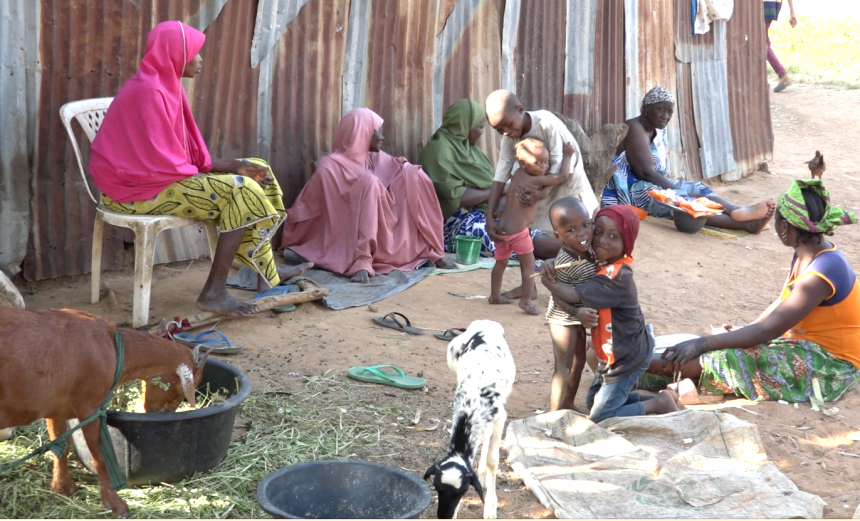
In Yangoji leprosy settlement, stigma, recurring fever, and escalating poverty are impacting the daily lives and well-being of these people with special needs, and the essential medicines that keep their condition under control have completely run out, leaving their survival hanging in the balance.
As the sun sets over Yangoji Leprosy Colony, mosquitoes hum over the ears of people seated within its boundaries. Meanwhile, the houses, roofed with leaking zinc, bathe residents with droplets of water during rainy seasons, and the doors are broken, giving way to pests and malaria-breeding parasites to access their homes.
In Yangoji, leprosy may have been beaten, yet stigma and poverty persist.

The battle for survival is like a race against time and will. It is in the midst of this struggle that another enemy emerges, and it is malaria.
Like a thief in the night, malaria stormed the house of Lawal Muhammed, a darkskinned middle-aged man of the Yangoji Leprosy colony, to take the life of his daughter by fire or by force.
Earlier in October, Lawal, a farmer who also begs for alms to survive, had rushed to the only primary healthcare centre within the colony to treat his daughter with the gripping hand of malaria. With a pensive look, he sought the assistance of the only health worker present to treat his daughter as she slipped away slowly.
Sadly, little was done as there were no drugs available for the ailing girl’s treatment.

Nigeria has a substantial number of malaria cases globally, with an estimated 68 million cases and 194,000 deaths in 2021.
A 2013 study by the National Library of Medicine said that households in Africa spend between $2 and $25 on malaria treatment and between $15 and $20 on prevention each month, with consequent loss of resources.
In Nigeria, the disease accounted for over 40% of the total monthly healthcare costs incurred by households compared to a combination of other illnesses, a statistic that has consistently led to low productivity and income among the country’s populace.
Authorities said malaria is one of the top three reasons for hospital visits in the Federal Capital Territory, especially among children under five and pregnant women.
Though metropolitan areas in the FCT enjoy better-equipped hospitals and private clinics, informal settlements and rural communities, and people with special needs settlements like Yangoji disability colony experience some of the highest malaria burdens in the territory due to poor housing, limited drainage, and inconsistent access to preventive tools like treated mosquito nets.
That is not all, the neglect of the relevant authorities exacerbates their situation.
Without any treatment, Lawal returned home blue, hopeless, and dejected. Armed with only faith and hope, the little girl spent days without getting treatment as her condition worsened.
As the days passed, her situation worsened, and he had no choice but to take her to the Kwali General Hospital to seek help, and there he met something even more sinister.
“Just two Saturdays ago, I took my child to the hospital. They asked me to pay ₦2,500 for the hospital card. Then they said they needed to test her blood and asked for ₦6,000. I told them I didn’t have that much, so they collected ₦5,000 instead. On top of that, they charged ₦1,800 for the syringe and other small expenses. They admitted her, but I still didn’t have enough to pay for everything,” he recounted

“I had to go back home and borrow ₦10,000 (about $6.9 USD) from our leader, Ali Sarki. With that money, we went to the pharmacy to buy the drugs, but the total came to ₦31,500 (about $21.7 USD). When I told them I only had ₦10,000 ($6.9 USD), they refused to give us any of the medicine. I had no choice but to take my sick daughter back home.”
Many people with special needs across the leprosy colonies in Nigeria are facing the same reality as Lawal. From stigma to poverty and lack of support, these families are shut out of various essential services, and the government looks the other way from their plight.
Gory and poignant tales like Lawal’s are echoed in homes across the settlement.

Leprosy, also known as Hansen’s disease, is a chronic infectious illness, according to the African Health Organisation. Specifically, it affects the skin, peripheral nerves, the lining of the upper respiratory tract, and the eyes. Generally, the disease is transmitted through droplets from the nose and mouth of an untreated person, usually after prolonged and close contact.

Although studies have shown that leprosy is now fully treatable and no longer the public-health menace it once was, the communities created for its survivors nevertheless remain some of the most underserved and overlooked places in Nigeria, according to the World Health Organisation.
Despite this progress, available data show that leprosy remains prevalent. Globally, the World Health Organisation reports that cases of leprosy have been recorded in 120 countries, with around 200,000 new cases reported every year.
More recently, in 2024, 172,717 new cases of leprosy were recorded in 188 countries worldwide. Of these, 69,394 cases (40.2 per cent) were among females, while 9,397 cases (5.4 per cent) were recorded among children. Notably, the Africa and South-East Asia regions recorded the highest number of newly detected cases during the period.
At the national level, leprosy remains a significant public health concern in Nigeria. For instance, more than 3,500 new cases are detected annually, with about 25 per cent of patients already showing some level of disability at the time of diagnosis.
Similarly, the Leprosy Mission Nigeria reports that the country records about 2,000 to 2,500 new leprosy cases every year, a figure that has remained fairly steady over time. Furthermore, it explains that 10 per cent of these new cases occur among children, indicating ongoing transmission, while about 7 per cent present with Grade 2 disability, thereby reflecting late detection.
According to the organisation, across the FCT, no data reflects the total number of persons affected by leprosy; however, in the Yangoji community in the Kwali Area Council, there are about 150 to 200 families who, although affected by leprosy, have been treated.

Importantly, although leprosy cannot be spread through casual contact such as handshakes, hugs, sharing meals, or sitting near someone, stigma and discrimination continue to persist. In fact, these challenges are fuelled by myths and long-standing fears surrounding the disease.
Consequently, within these pockets of stigma, neglect, and poverty, malaria, a disease that is both preventable and treatable, is increasingly tightening its grip.
NO SAFE ZONE FOR LEROSY PATIENTS

The Yangoji leprosy colony was established almost two decades ago, specifically in 2006, by the Federal Capital Territory, Abuja, under former President Olusegun Obasanjo, with the aim of housing and caring for people affected by leprosy.
Officially known as the Alheri Special Community, it was created to resettle people with leprosy from the city centre, while simultaneously offering them treatment and dignity. However, over time, as funding dwindled and government attention faded, Yangoji gradually slipped into neglect.
Today, the community is home to over 600 people. Geographically, it is located 72 kilometres away from the Federal Capital Territory, the powerhouse of Nigeria; yet, despite this proximity, it remains forgotten, isolated by stigma, and battered by disease.
At the centre of the Yangoji Leprosy Colony stands a clinic. Sadly, its roof is rusted, its windows are cracked, and inside, the shelves meant to hold essential medicines are instead lined with emptiness.
According to Adamu Sarki, a youth leader and the community’s health worker, the facility has been out of basic malaria drugs for months. In fact, he said the last supply of drugs from the federal government was received in 2012.
Since then, they have not received any help from the government except from organisations like the Leprosy Mission Nigeria.
“Although we have a clinic, it is not very functional,” he said.
“Our major challenge, therefore, is drugs. We don’t have drugs, so even when people go to the clinic, there is nothing to give them. As a result, they have to go to town, and when they do, they often lack the money to afford healthcare.”
Furthermore, Sarki noted that pregnant women in the colony fall sick almost daily. In some cases, when their conditions become critical, they are transferred in the middle of the night.

“Unfortunately, there is no car here, so we have to hire one. Sometimes, these women end up losing their children or even their lives. Even worse, when they get to other hospitals, they are often discriminated against. That is why we are begging the federal government. If medicine were available here, there would be no need to go elsewhere,” Sarki said.
“We don’t have equipment in the hospital. Recently, a vehicle came and packed away the little equipment we had. We don’t have doctors or nurses living here. They come from Gwagwalada, about 21 kilometres away, or from Kwali, about 1.7 kilometres away. Currently, we have only one doctor, who comes to us daily from Kwali.
“Almost all the children in this community have malaria. If only we had mosquito nets and drugs here, it would go a long way in helping us manage this crisis. Previously, these supplies were brought here, but now they have expired,” he said.
In a community where many residents live with permanent disabilities and depend largely on seasonal menial jobs and goodwill from non-governmental and donor organisations, accessing treatment outside the settlement is often impossible.
Compounding the problem, weakened mobility prevents many residents from clearing bushes around their homes, repairing torn mosquito nets, or fetching clean water. Consequently, pools of stagnant water form easily, allowing mosquitoes to breed freely.

“When we fall sick, there is no medicine,” said Ali Sarki, the leader of the Yangoji Leprosy Colony. “As a result, we rely on traditional remedies — herbs and leaves that we boil and drink.”
“Even I, as the king, suffer from neck pain. We have no doctor. Malaria is everywhere, and many of us are sick.”
Health experts warn that drug stockouts in underserved communities are not new; however, they are extremely dangerous. Without prompt treatment, malaria can escalate from mild fever to severe complications within days.
In leprosy colonies, where underlying health conditions are common and access to hospitals is limited, these risks are even higher.
Speaking on the issue, Tamimola Akande, a professor of public health at the University of Ilorin, said that people affected by leprosy face greater risks when drugs are scarce.
“Generally, they are poor and have almost no source of income. Consequently, they depend heavily on donor-provided drugs. With the recent skyrocketing increase in drug prices, the quantity of drugs donors can supply may be significantly reduced. This, therefore, poses a serious challenge to people living in leprosy settlements and to the organisations caring for them,” he explained.
Indeed, some residents recounted that they lost loved ones not to leprosy, but to malaria.
Sharing her experience, Sadiya Bukar, a leader of women in the colony, said malaria remains the biggest problem confronting residents.
“When malaria strikes, we suffer greatly,” she said. “Recently, a man became severely ill and died because he could not access medical care. Our children suffer too.”
“Just last Wednesday, my son fell sick with malaria, and it became so severe that he needed a blood transfusion. If women in this community were empowered, we could better manage these crises.”

Advocates argue that the root of the crisis is not simply drug shortages, but the continued invisibility of leprosy settlements in public-health planning.
Chinwendu Jeffrey Chukwu, the communications lead of the Leprosy Mission Nigeria, said stigma and discrimination still cause many patients to delay seeking care, and several colonies lack permanent and even primary health facilities.
He said the weak health system in Nigeria poses another major challenge. He added that the immediate solution would generally be to educate the colonies to focus on environmental sanitation and other preventive measures.
“For long-term solutions, we should be looking at embedding malaria modules in existing community health worker curriculum and forging partnerships with malaria‐focused NGOs for regular indoor residual spraying and environmental sanitation campaigns; we would also want to include the buy-in of the government, to strengthen health systems, which will in turn improve access to essential care for persons affected by leprosy living in these colonies,” Chukwu said.
Despite federal and NGO-driven efforts to eliminate leprosy, many colonies still rely on inconsistent donations, outdated infrastructure, and volunteers. As national malaria-control programmes push for improved distribution of nets, rapid diagnostic tests, and drugs, places like Yangoji are often the last to receive or the first to run out.
But that is not all. One major challenge the organisation faces in the course of supporting persons affected by leprosy is insecurity.
“The insecurity in several northern states limits outreach; you add that to limited accessibility, and it becomes even more difficult to reach persons affected by this disease,” said the communication lead.
“Even the mobile clinics can have limits to how far they can go, especially during the rainy season. There is a changing funding landscape that really impacts how much work is done.”
LEPROSY COMMUNITIES LEFT UNPROTECTED

Nigeria operates two major health frameworks aimed at protecting vulnerable populations: the National Tuberculosis, Leprosy and Buruli Ulcer Control Programme (NTBLCP) and the National Malaria Elimination Programme (NMEP). Yet for people affected by leprosy, especially those in long-established settlements, these parallel systems leave a dangerous gap. Leprosy is acknowledged in one programme but under-prioritised and largely invisible in the other.
The NTBLCP Strategic Plan(2021–2025) formally recognises leprosy but gives it far less weight than tuberculosis. Funding, targets, performance indicators, community outreach, and health worker training all prioritise TB. While TB has measurable benchmarks for detection, treatment success, and drug-resistant cases, leprosy targets are vague or missing, making the disease easy to sideline at the state and local levels.
Monitoring and evaluation mirrors this imbalance. Leprosy-specific data disability grading, relapse rates, treatment completion, and geographic distribution receive limited attention, leaving progress hard to track and failures easy to overlook.
For patients, these gaps are not abstract. Leprosy is curable, but delayed diagnosis and interrupted treatment can result in permanent nerve damage, deformities, and blindness. Drug supply weaknesses amplify the problem: the plan lacks buffer stocks, emergency procurement frameworks, and early-warning systems, leaving communities exposed during stock-outs. Rehabilitation services, such as physiotherapy, reconstructive surgery, wound care, and assistive devices, are loosely integrated, meaning many patients remain unable to work and dependent on family or charity.
Stigma remains a persistent barrier, yet the plan offers limited strategies to combat discrimination, provide mental health support, or create livelihood opportunities. Even community participation is minimal; people affected by leprosy are rarely included in programme design, monitoring, or review.
Case detection relies heavily on passive reporting, unlike TB’s proactive strategies. Remote settlements are often overlooked, leading to late diagnoses. Health worker training further compounds the problem. Most focus on TB, leaving frontline staff underprepared to recognise early leprosy symptoms or manage complications. Operational research on leprosy, covering adherence, stigma, and disability prevention, is also underdeveloped.
Taken together, leprosy remains formally included in policy but treated with unequal urgency.
MALARIA: A PARALLEL PROGRAMME THAT MISSES LEPROSY SETTLEMENTS

If leprosy is weakly prioritised under the NTBLCP, it is absent in Nigeria’s National Malaria Elimination Programme (NMEP). NMEPis the country’s primary framework for preventing and treating one of its deadliest diseases. Built around mass distribution of insecticide-treated nets, facility-based testing, and seasonal chemoprevention, the programme targets populations considered most vulnerable to malaria. But a closer look at the strategy reveals a glaring omission: people affected by leprosy, particularly those living in long-established leprosy settlements, are largely invisible within the malaria response.
The NMEP identifies groups such as children under five, pregnant women, and internally displaced persons as priority populations. Leprosy-affected communities are not included on this list, despite living in conditions that heighten malaria risk. Many leprosy settlements are located in rural or semi-rural areas, with poor housing, inadequate drainage, and limited access to healthcare, factors that create ideal conditions for mosquito breeding and hinder timely treatment.
This lack of recognition has practical consequences. Malaria interventions under the NMEP rely heavily on mass campaigns and facility-based services, yet residents of leprosy settlements often fall outside these systems. Stigma, isolation, and mobility challenges mean many are missed during insecticide-treated net distributions or seasonal malaria chemoprevention exercises. Others must travel long distances to access testing and treatment, a journey many cannot afford.
The programme’s heavy dependence on passive case detection further disadvantages leprosy communities. Under the NMEP, most malaria diagnoses occur when patients present at health facilities with fever. For people affected by leprosy, many of whom live with disability or face discrimination at clinics, seeking care is often delayed or avoided altogether. In some cases, malaria symptoms are mistaken for leprosy reactions, leading to misdiagnosis and dangerous treatment delays.
Coordination between malaria services and leprosy care is also weak. The NMEP operates largely in parallel with disease-specific programmes such as the National Tuberculosis, Leprosy and Buruli Ulcer Control Programme. As a result, malaria screening and prevention are not routinely integrated into leprosy clinics, outreach activities, or settlements. Opportunities to provide rapid diagnostic tests, preventive education, or timely treatment during leprosy care visits are frequently missed.
Data gaps compound the problem. The NMEP’s surveillance systems do not disaggregate malaria data by settlement type or social vulnerability, making it impossible to quantify malaria burden within leprosy communities. Without data, these populations remain statistically invisible and therefore absent from planning and resource allocation decisions.
Training gaps among health workers further weaken the response. While the NMEP provides extensive guidance on malaria diagnosis and treatment, it does not address the complexities of managing malaria alongside chronic conditions such as leprosy. Frontline workers may struggle to distinguish between malaria fever and leprosy-related reactions, particularly in under-resourced primary healthcare settings.
Perhaps most striking is the programme’s limited engagement with the social realities of leprosy. The NMEP does not address how stigma and segregation affect access to malaria services. There are no explicit strategies to ensure equitable outreach to leprosy settlements or to monitor discrimination in service delivery. For communities already pushed to the margins, this silence reinforces exclusion.
The result is a system in which leprosy communities fall between health programmes. While leprosy is addressed, albeit imperfectly, under a separate national framework, malaria remains a parallel threat that is largely ignored in these settings. For people already living with chronic illness, disability, and poverty, malaria is not a secondary concern but a daily risk.
Leprosy settlements, often rural, poorly drained, and resource-limited, are not recognised as high-risk areas. Malaria interventions, mass net distributions, facility testing, and seasonal chemoprevention rarely reach these communities.
There is little integration between malaria and leprosy care. Residents are not routinely screened for malaria during leprosy clinic visits, leaving preventable cases untreated. For people already living with chronic illness or disability, this increases the risk of severe complications or death.
INVISIBLE DATA: LEPROSY PATIENTS LEFT OUT OF VULNERABLE GROUPS

Neither programme collects data on malaria prevalence within leprosy communities. Surveillance does not track settlement type or social vulnerability, leaving malaria burden undocumented and resources unallocated. Stigma and social exclusion are also overlooked: leprosy residents often face discrimination at health facilities and are excluded from community outreach, yet neither programme addresses these barriers.
The outcome is systemic. Leprosy communities fall between two national programmes, neither fully protected from leprosy, nor from malaria, one of Nigeria’s deadliest diseases. As Nigeria pursues disease elimination goals, these gaps raise urgent questions about equity, coordination, and accountability. A health strategy that leaves its most marginalised citizens unprotected cannot be considered comprehensive.
While people living with leprosy are generally classified under persons with disabilities, the Disability Act 2018 does not have a specific caveat for them or challenges peculiar to their situation. Analysts say this gap may make it difficult for them to get full inclusion or consideration in intervention efforts and programs.
In the 2025 budget, the health sector was allocated N2.48 trillion. While there is a budget line for Health Promotion and Disease Prevention, which reportedly got N200 million, no publicly available breakdown of the health budget shows earmarking for diseases like leprosy.
The official funding framework for the National Tuberculosis and Leprosy Control Programme (2021-2025) acknowledges that implementation depends heavily on external donors. While Leprosy is formally under the NTBLCP, funding and implementation for leprosy control (diagnosis, drug supplies, community outreach, etc) likely remain dependent on a mix of general health funding, donor support from organisations like the Global Fund and other international partners, and ad-hoc programme allocations via NTBLCP rather than a dedicated, budgeted line.
The fact that Nigeria suffered drug-supply disruptions for leprosy as recently as 2024, and required external support in 2025 to resume treatment, suggests that existing budget/funding allocations have not been sufficient to guarantee uninterrupted leprosy care.
Also, the recent USAID funding freeze, which previously provided $600 million annually, including $73 million for malaria programmes, has crippled Nigeria’s health system, closing clinics, halting free drug supplies, and reducing access to insecticide-treated nets, leaving vulnerable populations like the leprosy communities in Abuja at heightened risk.
Yet, amid the struggles, resilience thrives. Residents, particularly the women, have taken to trade and farming to bring succour to their plights.
“Here, people sell onions, rice, beans, or small food items, but the profits are very little, and whatever we make usually goes straight into paying school fees and taking care of our families. We need help. If we receive support to start or strengthen our businesses, we would be able to take care of our families,” Sadiya Bukar, the women’s leader of Yangoji Leprosy Colony, said.
But these efforts, residents say, are not enough.
“Does the government not know that people affected by leprosy exist?” said Ali Sarki (leader of the leprosy colony).
“Other states receive welfare support, but here in the FCT, we are forgotten. Are they waiting for us to die before noticing us? We don’t have a car, motorcycle, or ambulance to help during emergencies. We want the federal government to see us as human beings, created by God. We want medicines. We want attention.”
“For immediate solutions, these colonies should focus on environmental sanitation, other preventive measures, and the distribution of insecticide-treated nets,” the Leprosy Mission Nigeria said.
“For long-term solutions, we should be looking at embedding malaria modules in our existing community‐health‐worker curriculum and forging partnerships with malaria‐focused NGOs for regular indoor residual spraying and environmental sanitation campaigns; we would also want to include the buy-in of the government to strengthen health systems, which will in turn improve access to essential care for persons affected by leprosy living in these colonies.”
Stay ahead with the latest updates!
Join The Podium Media on WhatsApp for real-time news alerts, breaking stories, and exclusive content delivered straight to your phone. Don’t miss a headline — subscribe now!
Chat with Us on WhatsApp