


By the time the drums of 2027 begin to sound loudly across Nigeria, one thing is already clear: this will not be a gentle contest of ideas. It will be a battle of wills, a war of nerves, and a high-stakes chess game played on a board where every move is watched, whispered about, and sometimes misinterpreted.
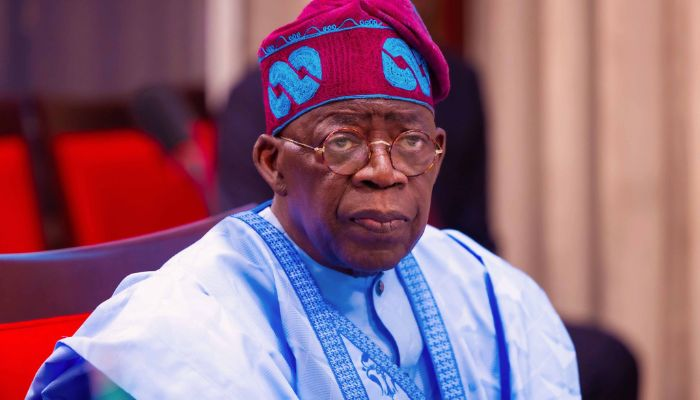
Against President Bola Ahmed Tinubu, the unseen hands are already moving, some boldly, others furtively, like midnight thieves afraid of daylight.
Politics, as the elders say, has no permanent friends, only permanent interests. And as Nigeria inches toward the next general election, interests are colliding like stubborn rams on a narrow bridge.

The Fear of a Man Too Powerful
The murmurs against Tinubu are not always about performance. In truth, many of the anxieties swirling around his presidency stem from something deeper and more unsettling to his opponents: power, raw, calculated, unapologetic power.
For decades, certain areas of governance were treated as sacred cows, no-go zones, where presidents tiptoed like guests afraid of breaking plates. Tinubu, however, walked in like a landlord returning home.
From subsidy reforms to fiscal restructuring, from security recalibration to political party discipline, he has touched nerves that previous leaders massaged gently or avoided altogether. In doing so, he has altered long-standing equations, and not everyone is pleased.
In parts of the North, dissatisfaction simmers, not always because the roof is leaking, but because the keys to the house are no longer firmly in familiar hands. Power, long regarded by some as an inherited garment rather than a shared national trust, has stayed away longer than expected. And in politics, absence does not always make the heart grow fonder; sometimes, it sharpens ambition and breeds resentment.
The Northern Question and the Southern Wall
It would be simplistic, and wrong, to paint the North with one broad brush. While some political actors nurse ambitions of reclaiming the presidency in 2027, others are already aligning firmly with Tinubu. Power blocs in the North understand the mathematics of Nigerian politics: elections are not won by noise alone, but by numbers, structures, and timing.
Indeed, there are strong indications that President Tinubu is positioned to secure majority votes in no fewer than 15 northern states. If that happens, the much-advertised northern onslaught may end like a storm that promised thunder but delivered only drizzle.
In the South, the picture is even clearer. The South-West remains Tinubu’s political fortress, solid, loyal, and well-organised. Much of the South-South and South-East have also witnessed significant inroads by the APC, turning what used to be hostile terrain into competitive ground.
As it stands, the ruling party holds sway in 28 states. That is not a coincidence; it is architecture.
The Coalition of the Restless
Still, the opposition is not sleeping. Far from it.
Across Abuja’s quiet corners and Nigeria’s political backrooms, discussions are ongoing. The African Democratic Congress (ADC) has emerged as a potential rallying platform, floated as a neutral canoe for politicians eager to cross the turbulent waters of 2027 together.
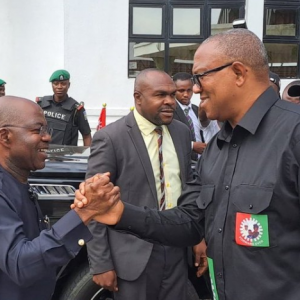
Former Vice President Atiku Abubakar, former Kaduna State governor Nasir El-Rufai, Labour Party’s Peter Obi, and other political heavyweights have been linked, directly or indirectly, to coalition talks.
Public denials follow private meetings, as is customary in Nigerian politics. One minute, there is no discussion; the next, spokespersons admit that conversations are ongoing. It is the old dance: deny by day, negotiate by night.

Even elder statesmen are being courted. Former President Olusegun Obasanjo’s meetings with Rabiu Kwankwaso and Donald Duke have fueled speculation. Calls have grown louder for a “grand opposition alliance,” with some openly urging Obasanjo to play the role of political midwife. Whether this baby will cry loudly or arrive stillborn remains to be seen.
According to political analysts, Chief Olusegun Obasanjo has historically struggled to acknowledge political greatness in any other Yoruba figure outside himself. He openly worked against President Bola Ahmed Tinubu in the last election and is widely expected to oppose him again in the next one. However, Obasanjo’s once-formidable influence in contemporary Nigerian politics has diminished significantly, evident in his growing difficulty to even command victory within his own ward.
Fault Lines, Real and Imagined
Analysts often speak of potential implosion within the APC. Legacy factions grumbling about appointments, governors uneasy about reforms, party elders nostalgic for looser control. These fault lines exist, yes, but they are neither new nor unique to Tinubu’s era. The difference lies in management.
Tinubu understands party politics like a seasoned drummer understands rhythm. He knows when to beat loudly and when to let silence speak. Discontent is inevitable in any ruling party; collapse is not. And so far, the APC has shown more discipline than disarray.

Beyond Nigeria’s borders, Tinubu has also asserted himself as a regional voice, engaging West African leaders, navigating ECOWAS complexities, and repositioning Nigeria as a serious actor in continental affairs. Diplomacy, like politics, respects clarity and confidence. Tinubu brings both.
The Yilwatda Factor: A Quiet Masterstroke
Perhaps one of the most consequential moves of this administration is the emergence of Professor Nentawe Goshwe Yilwatda as the National Chairman of the APC. In a political environment often dominated by theatrics, chest-thumping, and megaphone leadership, Yilwatda arrived with a different script. Cerebral, methodical, data-driven, and remarkably calm under pressure, he represents a new generation of party leadership; less noise, more numbers; fewer emotions, sharper calculations.
Unlike the traditional party boss who thrives on daily headlines, Yilwatda operates like a chess grandmaster who thinks several moves ahead. His academic background and technocratic disposition have brought a refreshing analytical depth to party management.
Decisions are increasingly informed by voter data, electoral trends, demographic shifts, and ground-level intelligence rather than gut feelings and godfather instincts. In a political system where improvisation often substitutes planning, this alone is revolutionary.
Under his watch, the APC has quietly but firmly tightened its internal structures. Fault lines that once threatened cohesion have been carefully managed, not by force, but by negotiation, inclusion, and clear rules of engagement. State chapters are more coordinated, internal communications more streamlined, and party discipline more predictable. Governors, lawmakers, and party elders now read from largely the same script, even when they disagree behind closed doors.

The recent off-cycle elections offered a practical demonstration of Yilwatda’s organisational strength. Those victories were not products of chance or last-minute scrambling; they were outcomes of early preparation, strategic candidate selection, efficient mobilisation, and a clear understanding of local political peculiarities. The party machinery worked like a well-oiled engine, quiet, efficient, and effective. It was politics stripped of drama but rich in results.
More importantly, Yilwatda has aligned the party’s internal rhythm with President Tinubu’s broader re-election strategy. The APC under his leadership is not merely reacting to opposition moves; it is anticipating them. From grassroots mobilisation to elite consensus-building, from conflict resolution to electoral mapping, the roadmap to 2027 is already being drawn with precision.
In simple terms, Yilwatda is not just holding the broom of the APC; he knows where the dirt is, when to sweep, and how to keep the house clean long after the guests have left. In a contest where structure often defeats sentiment, his quiet efficiency may yet prove to be one of President Tinubu’s most decisive assets on the long road to 2027.
The Road Ahead
Make no mistake: the unseen hands against President Tinubu are real. They are restless, ambitious, and determined. But they are also confronting a politician who has survived storms, outmaneuvered giants, and turned underestimation into opportunity.
In 2027, Nigerians will not just be choosing a president; they will be choosing between continuity and gamble, between a known chess player and a coalition still learning the rules of the game.
As the proverb goes, the hunter who knows the forest does not fear the shadows. Tinubu knows this forest. And while the unseen hands grope in the dark, the man at the centre of the storm appears very much at home.
Tooki is special adviser to the national chairman of APC (media and communications strategy).
Stay ahead with the latest updates!
Join The Podium Media on WhatsApp for real-time news alerts, breaking stories, and exclusive content delivered straight to your phone. Don’t miss a headline — subscribe now!
Chat with Us on WhatsApp