

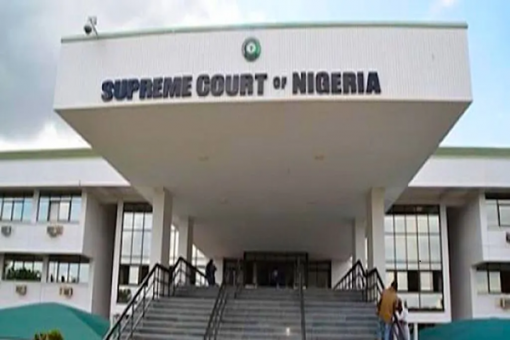
There is division among lawyers and judicial watchers over whether the Supreme Court’s pronouncements on the merits of President Bola Ahmed Tinubu’s declaration of emergency in Rivers State are binding or mere obiter dicta. Critics argue that the discretion accorded the President is dangerously open-ended, writes Deputy News Editor JOSEPH JIBUEZE.
When the Supreme Court delivered its split six-to-one judgment on December 15 on the state of emergency declared in Rivers State, it did more than resolve a lawsuit.
It ignited a national debate on the limits of presidential power.

At the centre of the storm was President Bola Ahmed Tinubu’s March 2025 proclamation of emergency rule in Rivers State, citing threats to public order and looming anarchy.
The proclamation went further than many Nigerians expected.
Governor Siminalayi Fubara, his deputy, and the entire State House of Assembly were suspended for six months.
Retired naval chief, Vice Admiral Ibok-Ete Ibas (rtd), was appointed as sole administrator.
Eleven states governed by the Peoples Democratic Party (PDP), led by Adamawa, approached the Supreme Court.
They challenged “the extent to which the proclamation can be made to affect the offices of the governor, deputy governor, and the State House of Assembly.”
What the apex court eventually said, and how it said it, has left analysts sharply divided.
The Supreme Court struck out the suit. Yet, it spoke at length.
The lead judgment
In the lead judgment delivered by Justice Mohammed Baba Idris, the court upheld preliminary objections raised by the Attorney-General of the Federation and the National Assembly.
It ruled that the plaintiffs failed to establish any cause of action capable of invoking the Supreme Court’s original jurisdiction under Section 232(1) of the Constitution.
Justice Idris explained that three strict conditions must be met before the apex court can exercise its original jurisdiction:
• There must be a dispute between the Federation and a state or states, or between states.

• The dispute must involve issues of fact or law.
• The dispute must relate to the existence or extent of a legal right.
According to the court, the PDP states failed on all counts.
“The plaintiffs did not show that the state of emergency declared in Rivers State affected them in any way,” Idris held.

He noted that no emergency was declared in any of the plaintiff states.
He also faulted them for failing to show that they were authorised by Rivers State to institute the suit on its behalf.
On that basis alone, the suit ought to have ended there. But it did not.
Despite striking out the case for want of jurisdiction, the Supreme Court proceeded to determine the constitutional questions raised.
This move has since become the most contentious aspect of the judgment.
Section 305, presidential discretion

At the heart of the dispute is Section 305 of the 1999 Constitution, which empowers the President to proclaim a state of emergency under specific conditions, including war, natural disaster, or a breakdown of public order threatening the stability of the Federation or any part of it.
Justice Idris, speaking for the majority, adopted a purposive interpretation of the provision.
He held: “Section 305 of the Constitution vests the President with the power to declare a state of emergency where there exists imminent danger of invasion or actual breakdown of public order or safety of such gravity as to endanger the stability or continued existence of the Federation or any part thereof.”
The court acknowledged that while Section 305 clearly grants the power to proclaim an emergency, it is silent on the precise content of the “extraordinary measures” that may follow.
That silence, the court said, was deliberate.
“This silence is intentional. Emergencies are inherently situational, varying in scope, intensity, and threat.
“The Constitution therefore entrusts the President with discretion to determine the measures required to restore peace and security, subject always to constitutional limits.”
To support this view, the court looked to Nigeria’s history.
During the 2004 and 2006 emergencies in Plateau and Ekiti states, elected institutions were suspended.
By contrast, during the 2013 emergency in Borno, Adamawa and Yobe States, state institutions continued to function.
“These contrasting responses underscore that emergency powers are not governed by a rigid formula.
“The constitutionally permissible response depends on the magnitude of the threat, the functionality of state institutions, and the necessity of intervention to restore constitutional order,” Justice Idris held.
Limits to emergency powers
Justice Idris emphasised repeatedly that presidential discretion under Section 305 is not unlimited.
He held: “Nevertheless, the President’s discretion under Section 305 is not unfettered. Emergency measures must be temporary, corrective, and proportionate.
“They must be directed towards restoring constitutional governance, not extinguishing it.
“Any permanent displacement or abrogation of democratically elected institutions would constitute a constitutional aberration.”
Outside a validly declared state of emergency, the President, the court stressed, “possesses no power whatsoever to interfere with state executive or legislative institutions.”
On legislative oversight, the court upheld the National Assembly’s approval of the emergency declaration, ruling that lawmakers were entitled to adopt a voice vote rather than a recorded division.
A lone dissent
Justice Obande Ogbuinya stood alone.
While agreeing that the President has the power to declare a state of emergency, he rejected the idea that such power extends to suspending elected state officials.
In his dissent, Justice Ogbuinya warned that allowing a President to suspend governors and lawmakers strikes at the heart of democratic federalism.
According to him, emergency powers cannot be interpreted to impliedly repeal express constitutional provisions guaranteeing the tenure of elected officials.
For critics of the majority decision, Ogbuinya’s dissent represents the conscience of the court.
Analytical ramifications
The legal experts agree that the Supreme Court was consistent with precedent in holding that the PDP states lacked locus standi and that the court’s original jurisdiction could not be invoked.
They see the majority judgment as affirming wide presidential discretion under Section 305, although with stated limits of temporality, proportionality and purpose.
Critics, however, argue that this discretion is dangerously open-ended.
There is deep division over whether the court’s pronouncements on the merits are binding law or mere obiter dicta (an incidental remark). Some believe the judgment should have ended with the determination of the jurisdictional issue.
While some see the comments on the President’s emergency powers as authoritative guidance from a policy court, others insist they are non-binding remarks made after jurisdiction was declined.
Ultimately, the judgment has left room for debate due to its open-endedness, over which the Supreme Court has recently been criticised.
Perhaps, the way forward, as former Nigerian Bar Association (NBA) Vice President, Dr. Monday Ubani (SAN), suggested, is for the National Assembly to clearly define the limits of emergency powers through constitutional amendment to douse concerns that a President can remove a governor on a whim.
Legal experts’ perspectives
The legal community has been deeply split, not just on what the Supreme Court decided, but on whether it decided anything at all.
Femi Falana (SAN) took the position that the court did not endorse the dissolution of democratic structures.
According to him, media reports overstated the implications of the judgment.
“Contrary to misleading reports, the Supreme Court did not endorse the dissolution of democratic structures during emergency rule in any state of the Federation,” Falana said.
He argued that Section 305 does not confer power on the President to dissolve state executive or legislative institutions, and that the court reaffirmed federalism and separation of powers.
Oba Maduabuchi (SAN) insisted that there was no binding judgment on emergency powers at all.
He argued: “The Supreme Court first said those who brought the case had no locus. That means there was no suit.
“Any other thing said after that is merely obiter dicta, which means passing remarks. They are not binding.”
To Maduabuchi, once the court declined jurisdiction, “out of nothing, nothing can come.”
Dr. Ubani, while acknowledging the court’s doctrinal consistency on locus standi, expressed concern over access to justice in matters of grave national importance.
He noted that the majority judgment adopted a pragmatic, security-conscious interpretation of emergency powers but also articulated safeguards in the form of legislative oversight, time limits, and judicial review to prevent abuse.
Still, he warned that the breadth of discretion affirmed by the court leaves room for executive overreach.
Ubani said: “The decision also exposes enduring tensions in Nigerian constitutional law, particularly the restrictive approach to standing in matters of overwhelming public importance.
“Comparative constitutional systems such as India, Kenya, and South Africa have progressively liberalised standing rules, embracing public interest litigation as a mechanism for democratic accountability and constitutional development.
“For Nigerian jurisprudence to evolve in line with international best practices, a more liberal approach to locus standi, especially in cases of grave national consequence, must be considered.
“Such an approach would enhance democratic oversight without undermining judicial discipline.”
Ubani added: “Ultimately, while this decision reaffirms executive emergency powers, it leaves unresolved the danger posed by an unpatriotic or overreaching executive exploiting undefined emergency measures under Section 305 to derail democratic governance.
“The dissent of Justice Ogbuinya, though appealing to public-interest advocates, does not confront the threshold issues of jurisdiction and standing under current Nigerian jurisprudence.
“In the absence of judicial re-orientation, legislative intervention through constitutional amendment appears to be the most viable path for those aggrieved by the breadth of executive authority affirmed in this case. A word is enough.”
Perhaps the most scathing critique came from Professor Chidi Odinkalu, who described the judgment as an exercise in “emergency politics.”
Odinkalu accused the court of declining jurisdiction but indulging in a far-reaching “discussion” that effectively expanded presidential power without the discipline of a binding decision.
“It was an odd way to phrase arguably the most cynical and gratuitous expansion of presidential power in the history of the Nigerian Supreme Court,” he wrote.
According to Odinkalu, the court’s acceptance of voice voting and its tolerance of suspension of elected officials under emergency rule could haunt Nigeria’s democracy for years.
He added: “The decision of the Supreme Court to become a ‘discussion’ forum on such an issue of extraordinary constitutional significance is guaranteed to roil governance and politics in Nigeria for a long time.
“As an exercise of judicial power, it is supremely wilful, cynical, and political.”
Human rights lawyer Inibehe Effiong said while the majority judgment appeared to accommodate the possibility that a state of emergency could interfere with democratic structures, the court avoided a definitive ruling on the constitutionality of the Rivers emergency.
“The Court found that there was no dispute between the Federation and those states,” he said.
He emphasised that because the case was struck out, any comments made on the merits do not carry binding legal force.
“By law, once a suit is struck out, pronouncements made therein do not have the binding and effective weight of a decision made by a court that is clothed with the requisite jurisdiction.”
He was of the view that the Supreme Court’s observations on the substance of the matter were advisory, made only because of the case’s “grave constitutional significance,” rather than a definitive ruling on the legality of the Rivers emergency rule.
Stay ahead with the latest updates!
Join The Podium Media on WhatsApp for real-time news alerts, breaking stories, and exclusive content delivered straight to your phone. Don’t miss a headline — subscribe now!
Chat with Us on WhatsApp