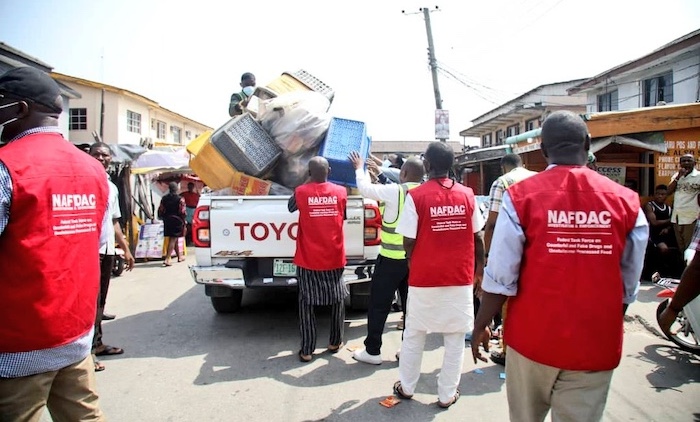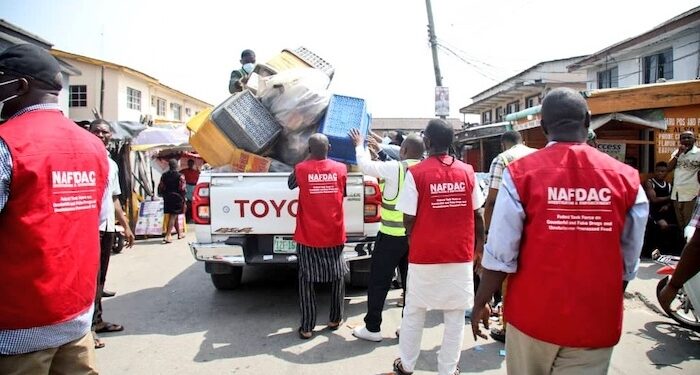
Nigeria’s drug and food regulator has destroyed more than 600 tons of counterfeit, expired and substandard products valued at over N10 billion in Kano, in one of the agency’s largest public enforcement actions in recent years.
The exercise, carried out by the National Agency for Food and Drug Administration and Control (NAFDAC), involved the burning of 618 tons of regulated products seized from markets and warehouses across Kano and neighboring states. Officials said the destroyed items posed serious risks to public health and safety and ranged from fake medicines to contaminated food products and hazardous cosmetics.
Speaking at the site of the destruction, NAFDAC’s director general, Prof. Mojisola Adeyeye, said the action showed the government’s determination to curb the circulation of dangerous products and to hold offenders accountable. She was represented at the event by Fraden Nantim-Mullah, the agency’s director for Nigeria’s North-West zone.

What they are saying
Among the destroyed items were counterfeit and substandard medicines, including antibiotics, antimalarial drugs, blood pressure medications, painkillers, herbal preparations and controlled psychoactive substances.
“Our mandate is unequivocal: to ensure that every regulated product available to Nigerians meets stringent standards of safety and quality.
“Today’s exercise demonstrates our unwavering commitment to executing this mandate without compromise,” Adeyeye said.
Officials said the seizures also included adulterated vegetable oils, contaminated beverages, unsafe sachet water, falsified tomato paste and substandard food condiments.
NAFDAC also destroyed cosmetic products containing hazardous chemical compounds, fake agrochemicals such as insecticides and pesticides that threaten food production, and counterfeit medical devices, including compromised diagnostic kits and infusion equipment. Each category, Ms. Adeyeye said, represented a direct threat to public health.
“Each of these categories represents a deliberate assault on public health. Those involved are not just breaking regulations; they are endangering lives and undermining Nigeria’s health security,” she said.
What you should know
Nigeria has long struggled with the circulation of fake and substandard medicines, particularly in large commercial hubs like Kano, which serves as a major distribution center for northern Nigeria and parts of West Africa. Public health experts say such products contribute to drug resistance, treatment failures and preventable deaths.
Ms. Adeyeye noted that the destruction exercise came as Nigeria recently attained the World Health Organization’s Maturity Level 3 status, a benchmark indicating a stable and well-functioning regulatory system.
She said NAFDAC was working toward Level 4, the highest global standard, with the backing of President Bola Tinubu’s administration.
Removing falsified and substandard products from circulation, she added, would also have economic benefits by lowering healthcare costs and improving productivity.
The Kano exercise follows similar large-scale actions by the agency in recent months. In October 2025, NAFDAC destroyed unwholesome, falsified and expired medical products valued at more than N15 billion at the Moniya dumpsite in Ibadan, in southwestern Oyo State. That operation was led by Ms. Adeyeye and carried out to prevent seized products from re-entering circulation, according to the agency.
Nigeria has struggled for decades with the widespread availability of fake medicines, particularly in major commercial hubs like Kano, which serves as a key distribution point for northern Nigeria and parts of West Africa.
Stay ahead with the latest updates!
Join The Podium Media on WhatsApp for real-time news alerts, breaking stories, and exclusive content delivered straight to your phone. Don’t miss a headline — subscribe now!
Chat with Us on WhatsApp