When Bola Ahmed Tinubu assumed the presidency in May 2023, Nigeria was not merely in distress, it was in free fall. Over 97 percent of government revenue, according to the President, was consumed by debt servicing, leaving just 3 percent for capital expenditure.
In 2022 and early 2023, the Budget Office of the Federation reported a debt service-to-revenue ratio ranging from 80 to 96 percent, depending on the quarter. Even if we take the lower end of that range as the best-case scenario, it was still catastrophic.
Governance, from federal to state levels, had been reduced to borrowing to pay salaries.

The economy was shackled by a triad of dysfunctions: a ruinous fuel subsidy, a convoluted multiple exchange rate regime, and outdated economic policies like the Import Prohibition List and archaic excise frameworks that stifled trade and innovation.
Insecurity was metastasizing. The national grid collapsed with ritualistic frequency. And the agricultural sector, once Nigeria’s pride, was faltering. Oil production hovered around 1 million to 1.2 million barrels per day in a mono economy that over relied on black gold to cater to the aspirations of over 230 million people.
THE AGRICULTURAL REALITY
By May 2023, Nigeria’s agricultural sector was not improving. According to the National Bureau of Statistics, agriculture contracted by 0.90 percent in Q1 2023, a sharp decline from the 3.16 percent growth recorded in Q1 2022. Insecurity in food-producing regions, rising input costs, and climate shocks had stunted productivity. Food inflation surged, and the sector’s contribution to GDP was slipping. The land was fertile, but the system was failing.
TINUBU’S GRIT
Yet Tinubu stepped forward. Within minutes of assuming office, he scrapped the fuel subsidy and unified the exchange rate. The market responded with pain. Prices soared. Public anger erupted.
Tinubu later admitted he had “almost run away from watching the news or reading the newspapers” as the backlash intensified.
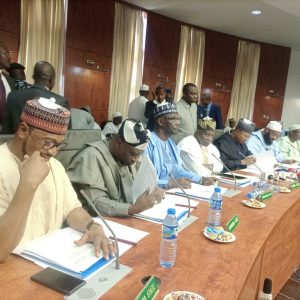
But slowly, the tide began to turn. Revenue improved. Salaries were paid without borrowing. Infrastructure projects resumed. States once crippled by insolvency began to breathe. Bauchi State, for instance, built a 3,000-capacity event centre, opposite a new government house and invested heavily in health, water, education, roads, and economic empowerment.
Governor Bala Mohammed achieved in two years of his second term what he couldn’t in the previous four. Not because he lacked vision then, but because he lacked the fiscal space to act.
Tinubu’s reforms unlocked dormant dreams, enabling states like Bauchi to build, expand, and serve.
As a private citizen, I watched with a mix of concern and conviction. I saw a leader, imperfect but determined, throw his heart, body, and soul into the job. I chose to support, not with sycophancy, but with constructive engagement.
I celebrate the Tinubu government’s achievements openly but flagged concerning issues discreetly, through a few friends I know in government. To my surprise, over 70 percent were addressed. That responsiveness affirmed a truth: when citizens speak with sincerity, governments can listen.
And when public concern rose, like during the tax reform bill, the government recalibrated, proving that feedback, even when sharp, can be a tool for refinement, not ridicule.

ENTER OBASANJO
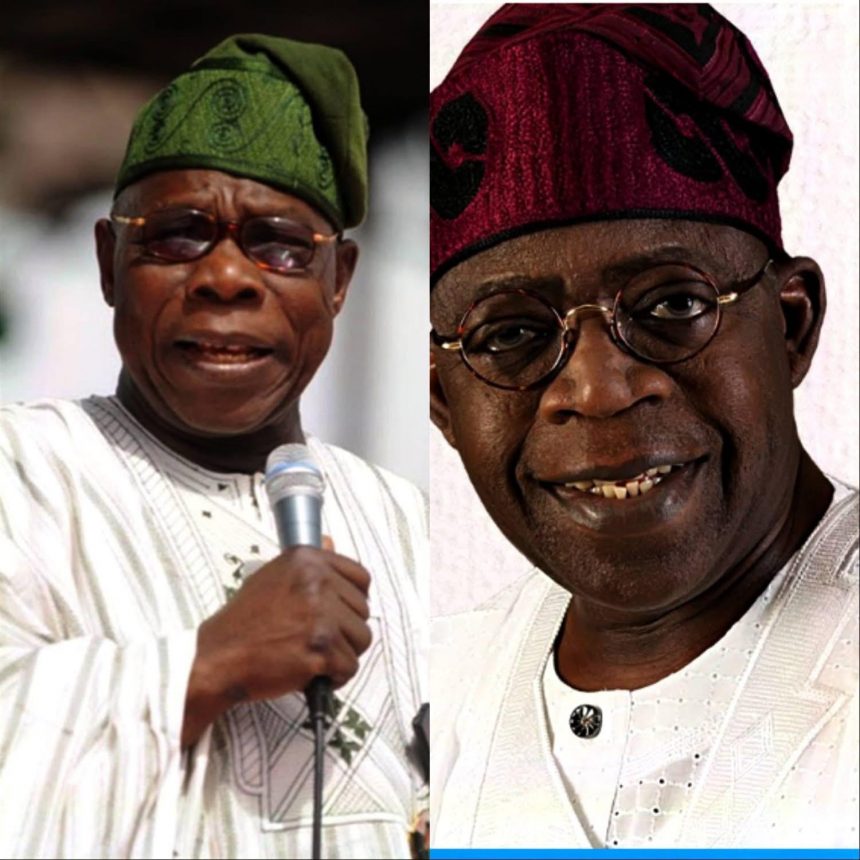
Then came General Olusegun Obasanjo, the elder statesman with a gift for timing and a taste for public rebuke. At a Christmas event in Jos, he thundered: “Stop apologising. Stop negotiating. Call for international help.” His remarks came after Tinubu announced sweeping counterterrorism reforms.
This is not new. Obasanjo has publicly criticised every successor, from Shehu Shagari to General Ibrahim Babangida, General Sani Abacha, Umaru Musa Yar’Adua, Goodluck Jonathan, Muhammadu Buhari, and now Tinubu. He rarely attends the Tinubu-era Council of State meetings. He could pick up the phone. He could write a private memo. But he chooses the podium. Why?
Is it because his counsel is ignored? Or does he relish the applause more than the impact?

THE MIRROR OF LEGACY
Obasanjo’s own presidency was far from flawless. Despite billions spent, roads like Lagos-Otta, Lagos-Benin, and Lagos-Ibadan remained in disrepair. Electricity was erratic. Bola Ige, a Yoruba icon and serving minister, was assassinated. Justice remains elusive. Airports were substandard. Nigeria’s Corruption Perception Index from 1999 to 2007 ranged from 1.2 to 1.9, keeping the country in the band of very corrupt countries. Though still low, there has been a marginal increase to 2.4 in 2024 under Tinubu.
Insecurity, though less widespread, was vicious. There were significant internal conflicts including communal clashes in the Middle Belt, Niger Delta militancy, religious riots in the north, and the emergence of the Boko Haram group. Yet, he had towering achievements. Charles Soludo, then CBN Governor, said Obasanjo kept him on his toes. The economy grew. Debt was forgiven. But even he did not have all the answers.
Tinubu, by contrast, invited all Nigerians to help when he assumed office, claiming the task at hand required the support of everyone.
Obasanjo scoffed. How golden his latest critique could have been if offered directly to the President and if he had offered to support in any way he could.
Curiously, he ignored whatever modest achievements the military had recorded against terrorists and similarly sidestepped Tinubu’s bold reforms.
Debt servicing ratio has dropped to 39.4 percent. GDP has grown by 4.2 percent. Foreign reserves have risen to $46 billion. The agriculture sector, once in decline, is now showing signs of renewed growth. Infrastructure is being renewed on a scale never before seen.

Shouldn’t the elder statesman commend the progress, even if imperfect, along with the correction?
I do not know how many Nigerians today have the depth of knowledge, local and global connections, military background, and pan-Nigerian cultural grounding of Obasanjo. The totality of his repertoire is what makes him different. It is what makes him special. It is what makes him an unparalleled sage. To withhold that would be a disservice to the motherland. But let me confess upfront, I do not know how much he shares with his successors.
What is certain is that President Obasanjo not only endorsed Peter Obi in the 2023 presidential election, he actively mobilized support for him. But once the election was concluded and Obi did not win, the irreducible minimum expected of an elder statesman was clear: set aside electoral sentiments until the next cycle and focus on building the next generation. That is the duty of those who have seen it all.
LEGACY IN BALANCE
Nigeria doesn’t need elder statesmen who only echo despair. It needs those who balance critique with collaboration. Obasanjo’s legacy is rich. But statesmanship is not just about speaking truth to power, it is about the right measure of whispering only to the ears of his successors, advising, and uplifting.
In a nation gasping for solutions, public shaming may win applause, but quiet counsel builds nations. Let Obasanjo, our former President we treasure and revere so much, remember that.
Stay ahead with the latest updates!
Join The Podium Media on WhatsApp for real-time news alerts, breaking stories, and exclusive content delivered straight to your phone. Don’t miss a headline — subscribe now!
Chat with Us on WhatsApp