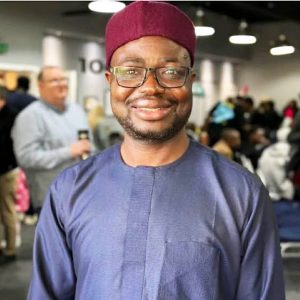




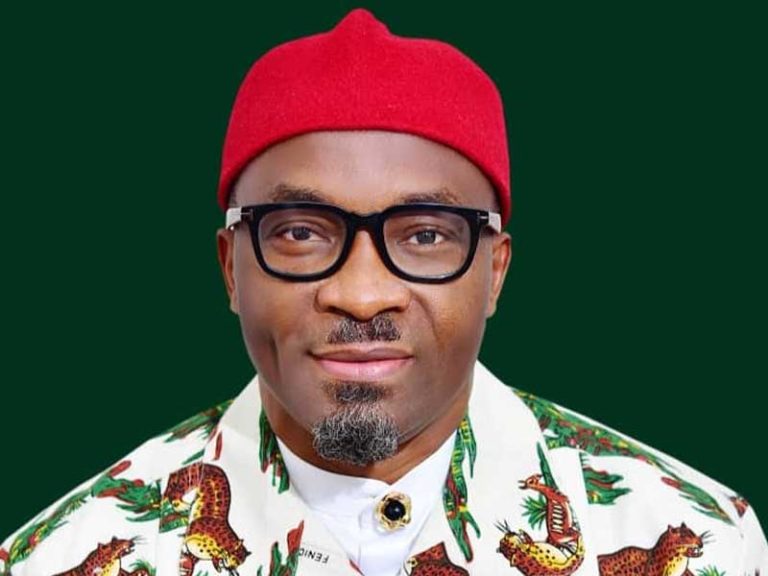
Deputy Speaker of the House of Representatives, Hon. Benjamin Kalu, in this interview says the 10th National Assembly is focusing on critical issues of national interest in the Constitution Review, while acknowledging the vital role of the media to help achieve intended outcomes, among other salient issues. Charles Ajunwa reports.
Despite his tight schedules at the just concluded retreat of the Joint Committee of the Senate and House of Representatives on Constitution Review held in Lagos, Deputy Speaker, House of Representatives, Hon. Benjamin Kalu spared time to intimate journalists with the activities of the Review Committee.
Kalu, who started by thanking the media practitioners for always contributing to national development through their reportage, said the media should help drive conversations on some critical national issues being discussed by the 10th National Assembly.

He listed local government autonomy, reserved seats for women, citizenship by investment, judiciary, security, economy as topical issues where conversations are needed to know the pulse of 250 million Nigerians.
According to him, such nationwide conversations will help federal lawmakers to arrive at collective decisions, which he said will help the President to give assent to bills passed by the National Assembly.
The Deputy Speaker likened the work of the National Assembly to that of a house builder, who after making the foundation of a building, meticulously started to put bricks one after the other in order ensure the building at the end of the day remains solid.
“I want to thank you for your contributions in the thematic areas we have discussed. We have about 13 subject matters and 86 provisions that we are working on. We need to see direct conversations through research, public opinion to guide decision makers to arrive at decisions,” Kalu said.
He cited the third tier of government, as one of the examples where people are beginning to pay attention to know what is happening.
“For example, the President reads the newspapers every morning, which means he always values your opinion on topical issues. And we also search for your opinion to be able to guide our minds. We cannot do the research alone. We do public hearings, yes. But how sufficient is that to have generality of mindsets of the country, 250 million people. But through your engagements one way or the other, your correspondents all over the country feel the pulse of the nation, and be able to say, on this subject matter, I want to guide the country towards this action. You’re talking about autonomy for local governments…It will strengthen the mindset of the man who is going to give assent, it’s going to strengthen the mindset of the man who is going to vote. If they don’t read to know what you’re saying, they become confused. You can’t abandon us, you say it is your business. No!
The Deputy Speaker also talked about Citizenship by Investment that most countries are tapping into to drive development, which he said “is not illegal”. “Why are we not talking about such things? It’s a topical issue. Comparative analysis of what other people have done in other countries and how it will help us.
“What about the reserved seats? We don’t lose anything if we stand on two legs. It’s not to compensate women. The fact is that, comparatively speaking, research has shown that countries that invest in both areas in leadership, they do better.”
He said having such a policy, will show fairness in governance, where both females and males are free to express their views on national issues without being shut out based on gender.
“There are certain things that come naturally to them and those things are needed on the political table,” Kalu said, adding that “knowledgeable conversation” by the media will help to make citizens to have confidence in the system as “there are no threats in this particular proposition”.
He said the 10th National Assembly is also working on other issues that have to do with leadership, elections, which he said they are willing to share with the media at the appropriate time. Though he acknowledged that the media may not agree with some of their decisions completely, Kalu said they put the interest of Nigeria first in all their deliberations and decisions.
According to him: “Beyond this Constitutional Review, I sit over all the reports of the House of Representatives and as the Chairman of the Committee of the Whole, every activity of the committees in the House ends up on my table.
“I review all reports, all activities of the House, whether it is the Ad hoc Committee, whether it is the Standard Committee, every investigation, I review the contents of the reports before I close.”

According to Kalu, the fulcrum of Nigeria’s democracy lies squarely on the legislature. “The fulcrum of our democracy is in the legislature, you remove it there is no democracy. But that fulcrum needs to bring confidence in the hearts of the people for democracy to survive.”
Kalu said there’s a need for people to understand the workings of the legislature, especially as it has to do with constituency projects. He stated that as a federal legislator, when a school building collapses in his constituency, his constituents will call him because they don’t understand the work of the legislature.
“They don’t call their governor, they don’t call their House of Assembly member, they don’t call their chairmen, they don’t call their councillors, they will blame it on me because they don’t know. And we cannot be saying it for them to believe us because they will think we are running away from our responsibilities.
“Educating Nigerians on the workings of the legislature is an issue so that Nigerians will come to know what to put in their expectation basket.

“What is currently in there is not what the legislature is supposed to do. People are expecting you to do what is not within your constitutional mandate,” he explained.
The Deputy Speaker, who described the parliament as true disciples of democracy that want to serve, pleaded that the media should “educate Nigerians what truly the work of the parliament is?
“Can you actually blame Nigerians and say, you were expecting a doctor to do the work of a civil engineer. It’s the work of the executive to do some of this work. But Nigerians don’t know, and that is why many people have lost their seats in the parliament because what came out of the expectation basket of their constituents far outweighs what their constitutional mandate.
“So this is why we’re saying, can we work together? Can we project some of the work that we are doing beyond lawmaking? Beyond call for action?”
Stay ahead with the latest updates!
Join The Podium Media on WhatsApp for real-time news alerts, breaking stories, and exclusive content delivered straight to your phone. Don’t miss a headline — subscribe now!
Chat with Us on WhatsApp