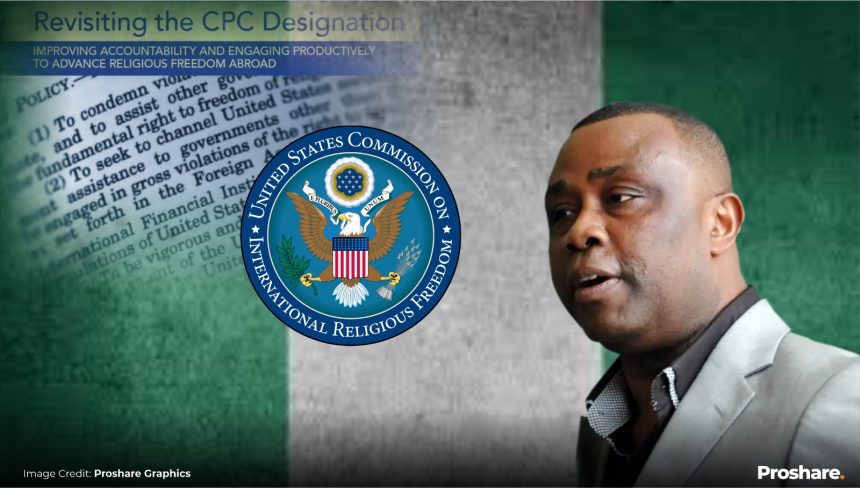
The United States has once again placed Nigeria on its list of “Countries of Particular Concern” (CPC) for alleged violations of religious freedom. It is a designation that does not instantly impose sanctions, but it does something equally consequential: it places a diplomatic question mark over Nigeria’s global reputation at a time it can least afford new headwinds.
In an earlier presentation two weeks ago, I had said that:
“The silence of the Nigerian state was not total. But it was strategic in the wrong way. Government seemed to confuse restraint with prudence, diplomacy with denial. The failure was not in the message. The failure found home in the absence of a consistent communication strategy. In the modern information ecosystem, a slow truth is as good as a lie.

The so-called “Christian genocide” narrative did not arise from nowhere. It fed on the vacuum created by Nigeria’s inability to tell its own story convincingly and compassionately. To outside observers, Nigeria looked indifferent to the suffering of Christians in the North and Middle Belt. The truth, however, is far more complex, if not far more tragic.”
Let’s be clear: this did not happen in a vacuum. The violence tearing through sections of Nigeria is real, tragic, and intolerable. But it is also complex, multi-actor, multi-faith, and rooted in governance failures, climate-induced resource conflict, rural banditry, and the unchecked proliferation of arms. Reducing it to a one-dimensional “genocide against Christians” narrative may work for U.S. domestic politics, but it leaves Nigeria to carry the strategic cost.
Yet the bigger story here is not what Washington has said, but what Abuja has not done. For more than a year, Nigeria has been without a substantive ambassador in Washington, D.C., and in many other strategic capitals. The result? No senior diplomat building coalitions on Capitol Hill, no structured engagement with the U.S. State Department, no crisis messaging, no corrective data in the room, no early warning that the designation was hardening. In diplomacy, presence is not courtesy. It is a shield.
Could a well-positioned, active Nigerian ambassador have stopped the CPC listing? Not necessarily. Could they have shaped the timing, the framing, or secured an early waiver? Absolutely.
That is what ambassadors do. They defend the national narrative with facts, relationships, and constant engagement. When Nigeria leaves key embassies empty, it leaves its story undefended. And someone else tells the story of Nigeria, often to the country’s disadvantage.
The Transactional Diplomacy Angle
In my earlier op-ed on U.S. 21st-century transactional diplomacy, I warned that Washington is increasingly blurring the line between values-based pressure and deal-based leverage. The CPC designation fits that pattern. Beyond the stated concern for religious freedom, the label provides the U.S. with a negotiating instrument: it can now be quietly linked to conversations about tariffs, duty-free access, export licenses, defense cooperation, or even Nigeria’s position in global value chains.
This is not unprecedented. Under the current U.S. doctrine, moral framing is routinely paired with economic bargaining: “We are not sanctioning you. Not yet! But we might, unless you move in our direction.” That is the essence of transactional diplomacy: principles wrapped around leverage.
Nigeria, BRICS, and Geopolitical Signalling
There is also a wider geopolitical subtext. Nigeria has recently taken a more exploratory posture toward non-Western alliances, including quiet diplomatic signalling around the BRICS bloc. The United States, aware of Nigeria’s weight in Africa and the Diaspora space, may be using the CPC tag as a calibrated warning shot: that multipolar drift carries costs.
If Nigeria deepens ties with BRICS in areas such as currency, energy, or trade settlement systems, Washington may wish to retain a pressure tool that can be activated at will. The CPC designation, unlike sanctions, is reversible, renewable, and reusable. That makes it a perfect instrument of U.S. “flexible deterrence” in the diplomatic arena.
In other words, the issue may not be limited to religious freedom. It may also be strategic alignment.
The Economic Cost of Diplomatic Absenteeism

The financial implications of CPC status are not academic. Investors read it as a risk of instability. Defense partners read it as a compliance risk. Rating agencies read it as governance risk. A country already in need of FX buffers, capital inflows, and predictable security cooperation has just acquired a perception surcharge. And Nigeria did so while leaving its loudest diplomatic megaphone unplugged.
What Nigeria must now do
- Immediately appoint ambassadors: diplomacy cannot be conducted by memos from Abuja.
- Request a U.S. waiver, backed by a verifiable action plan.
- Create a Nigeria–US joint working group on religious freedom and atrocity prevention.
- Publish quarterly data on investigations, prosecutions, and victim support.
- Re-establish structured engagement with the U.S. Congress, think-tanks, and faith-based coalitions.
The ‘CPC’ designation is not a death sentence. It is a political and diplomatic test. But Nigeria must treat it as an audit, not a provocation. Suppose Nigeria fixes the governance failures that allow violence to persist. In that case, if Nigeria restores the diplomatic machinery that explains the country to the world, it will not need to beg for image repair. The reforms will speak for themselves.
This episode reinforces a core argument in my upcoming book, Economic Diplomacy of the Diaspora: when a state abandons diplomacy, someone else writes its story and rewrites its interests. Narratives are never neutral. They are shaped by whoever shows up.

Nigeria still has time to show up.

Editor’s Note:
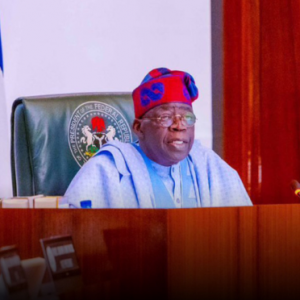
Nigeria’s President Bola Ahmed Tinubu issued this important clarification/response yesterday. “The characterization of Nigeria as religiously intolerant does not reflect our national reality, nor does it take into consideration the consistent and sincere efforts of the government to safeguard freedom of religion and beliefs for all Nigerians.
Religious freedom and tolerance have been a core tenet of our collective identity and shall always remain so. Nigeria opposes religious persecution and does not encourage it. Nigeria is a country with constitutional guarantees to protect citizens of all faiths.
Our administration is committed to working with the United States government and the international community to deepen understanding and cooperation on the protection of communities of all faiths.”
We posit that the unintended consequences of ungoverned spaces in Nigeria are now manifesting, and we should focus on actual responses rather than rhetoric.

“The spate of lands, regions and inaccessible terrains, characterized by the absence of government, and where terrorist and other non-state actors dominate….” for whatever reasons, must never be allowed to become a common feature of the Nigerian society.
Having opened the doors for mischief, misdeed, and misrepresentation, we must now take pragmatic steps – diplomatic, diaspora leverage, and direct action (society mobilization) to stem the incentives for criminality perpetuated under the cover of terrorism under fanatical religious cover.
That said, while we appreciate the interest, an American military operation, under whatever guise, has repeatedly shown a leading and lagging adverse effect and is not helpful to Nigeria. Thank you.
Stay ahead with the latest updates!
Join The Podium Media on WhatsApp for real-time news alerts, breaking stories, and exclusive content delivered straight to your phone. Don’t miss a headline — subscribe now!
Chat with Us on WhatsApp