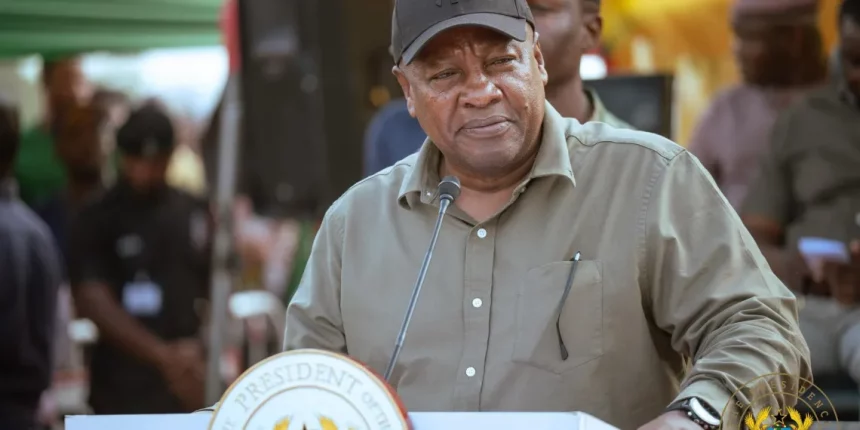
“Ghana has taken this step to avoid an escalation of incidents that have created tensions between some of our institutions and to promote an amicable resolution.”
Ghana has officially sought an international legal process to settle its long-standing dispute with Togo over their maritime boundary.
In a statement issued on Friday, the Ghanaian government announced that it has notified Togo of its decision to seek international arbitration to resolve the dispute.
It stated that it has opted to pursue arbitration under the United Nations Convention on the Law of the Sea (UNCLOS), the global legal framework governing maritime rights and responsibilities.

“The Government of Ghana has served the Government of Togo with notice of its decision that the maritime boundary between Ghana and Togo be delimited by recourse to international arbitration under the United Nations Convention on the Law of the Sea (UNCLOS),” it said.
According to the authorities, the decision was taken to prevent further escalation of tensions arising from incidents linked to the unresolved boundary.
“Ghana has taken this step to avoid an escalation of incidents that have created tensions between some of our institutions and to promote an amicable resolution, thereby contributing to the continued good relations between our two countries,” it added.
Years of bilateral negotiations to resolve the offshore boundary dispute have failed, as both parties remain unable to reach a settlement.
The disputed maritime area lies off the southern coasts of both nations in the Gulf of Guinea, a region believed to hold significant offshore oil and gas reserves.
The dispute dates back to December 2017 and early 2018, when Togolese authorities stopped two Ghanaian seismic survey vessels from conducting deep‑sea oil and gas exploration.
While Ghana regarded the location as its waters, Togo asserted that Ghana was operating in an area overlapping its claimed maritime zone.
This occurred shortly after Ghana won a maritime dispute over Côte d’Ivoire.
After the 2017 incidents, both countries agreed to negotiate a delimitation line.
They formed a Joint Maritime Boundary Technical Committee, comprising technical experts from both sides, to define an acceptable boundary.
But rounds of negotiations failed to produce an agreement.
There were differences over methodology, baseline coordinates, and the interpretation of nautical charts.
Togo also complained about the presence of Ghanaian naval vessels in contested waters while talks were ongoing.
In 2021, Ghana proposed a demarcation line, but Togo rejected it.
The two countries, however, had agreed to coordinate joint patrols, fishing activities, research and non-invasive exploration, mining studies, and maritime navigation within the area.
Stay ahead with the latest updates!
Join The Podium Media on WhatsApp for real-time news alerts, breaking stories, and exclusive content delivered straight to your phone. Don’t miss a headline — subscribe now!
Chat with Us on WhatsApp