


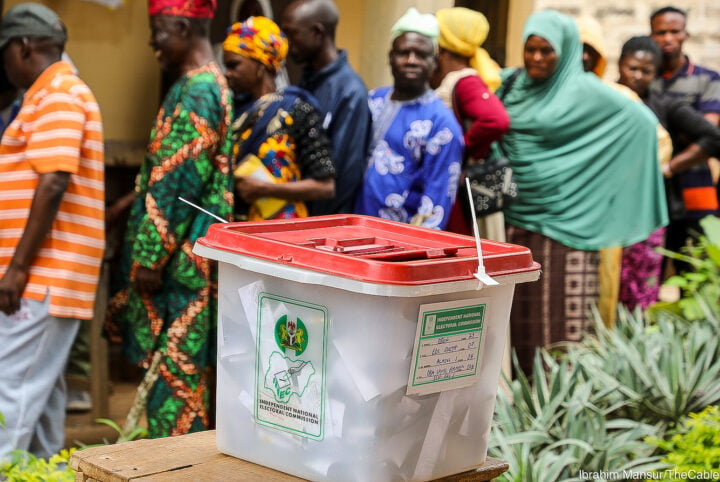
As the 2027 electioneering season descends upon us, this article is a gentle reminder on how we usually make our choices at the ballot box. We may or may not know it, or may even be in denial, but there are certain factors that influence how we think at election times and how we pick the candidates to support. Every four years, I try to remind us of the conscious and unconscious motivations that shape our electoral behaviours. I started this seasonal series ahead of the 2015 elections. Now that we are overly in the mood for 2027, I have taken it upon myself to remind us once again why we behave the way we do. I often add more items or fine-tune them based on my latest empirical observations.
If you ask voters why they are supporting a particular presidential (or governorship) candidate, they are likely to say it is based purely on merit, that their favourite candidate is the most competent. They will say their choices are based on “patriotic principles” and that they are making an unbiased, or unemotional, decision. They may even argue that they have studied all the candidates on the ballot and their preferred choice is the one best suited to manage the economy and the country in general. Most of those who say these things are lying. There is something else driving them. Either they do not understand the unconscious motivations or they have somehow successfully deceived themselves.
Nevertheless, there is still a tiny group of “principled voters”, and I acknowledge that many of them still believe in Nigeria’s potential in spite of the disturbing picture in front of them. They believe the country can be redeemed. They picture a candidate who can lead this much-needed change. They assess the credentials and pedigrees of all the candidates and come to a conclusion that a particular flag bearer fits the bill best, all pros and cons considered. Some voters in this cluster also have certain ideologies — socialist, capitalist, rightist, leftist or centrist. They tend to project and promote candidates who campaign around these ideals and ideologies or favour certain economic policies.

While the first group is made up of “principled voters”, the second consists of “prospect hunters” who do not assess candidates solely on the basis of credentials or ideologies. They are looking at who is more likely to win an election. They don’t want to waste their votes or jeopardise their personal political or economic well-being. In the politics of patronage that we practise in Nigeria, you can be left out in the cold if you support a candidate that eventually loses. Those who stand to benefit from appointments, contracts, policies, and other forms of patronage are mostly to be found in this group. They include high net worth individuals, upwardly mobile professionals and “unattached” politicians.
I call those in the third group “mercantile voters” — they are there for the money. No pretence. Who is going to bring the cash and the cow? Who is going to bring the rice and the vegetable oil? These voters are “freelancers” who base their decisions on material benefits. They do not pretend to be principled, patriotic or prospect-hunting. In local parlance, it is “money for hand, back for ground”. Or “pay before service”. They are the ones who talk the most about “stomach infrastructure”. Most of them are low-income earners. They do not trust politicians and do not deceive themselves about manifestoes. Their votes are to be bought and sold. Whoever brings the mint gets the thumbprint.
For many “mercantile voters”, it is only at election times that they get benefits from the politicians. It is their own Eid or Christmas. The politicians come around, make outlandish campaign promises about eradicating poverty and building roads and hospitals, and then become unapproachable, unreachable, and unquestionable after they have been elected into office. As far as the stomach infrastructure chasers are concerned, it is only during elections that they can ever get anything from these politicians. Half a loaf, they say, is better than none. They collect all the goodies they can and move on with their lives, knowing they may not see the politicians again until another election cycle.
There is a subgroup among “mercantile voters” — they are for the money quite all right, but they also have some loyalty to a candidate, a godfather or a party for as long as the vegetable oil is flowing. They do not believe their loyalty should go unrewarded. In fact, they believe their loyalty should be oiled regularly, not just at election times. While they are not freelancers in the real sense, they are not averse to receiving “akara” and “ankara” from other candidates as well, but that is not a guarantee that those ones will get their votes. They may still vote for the candidate to whom they are largely loyal. Mercantile voters generally believe there should be “transport fare”. But some have loyalty.
The fourth group consists of the “primordial patrons”. This is one of the biggest voting clusters. Voters are mobilised, or mobilisable, around ethnic, regional or religious emotions. They are naturally programmed to choose people who speak their language, or who come from their own part of the country, or who share their religious beliefs. If they cannot find a strong candidate of their kin on the ballot, they will vote for whoever is “closest” — someone who is most likely to serve their interests or not hurt them in the final analysis. Their choice could be to protect or project group interests. They may tell you their choice is based on patriotism and altruism, but it is all lies. It is patently primordial.
Primordial voting is very evident in every election cycle in Nigeria, although we like to deceive ourselves that we are choosing based on “merit”. In the 2023 presidential election, there were those who voted for Asiwaju Bola Tinubu because of the Muslim/Muslim ticket or because he was Yoruba. Mr Peter Obi received massive votes based on religion as well: he was the only Christian in the race with a realistic chance. Also, he had a great deal of support among his Igbo kindred. There were northerners who supported Alhaji Atiku Abubakar solely because he was a northerner — and a northern Muslim at that. All these are natural motivations that many pretend otherwise all the time.
The fifth group is made up of those who vote according to “political affinity”, in line with historical ties to a candidate or a party. They are partisan voters. They are reliable because they are not often influenced by material inducement. They can vote against candidates of the same ethnic or religious affiliation because they are not in the same party and are not their endorsed contestants. This is a good support base to have. They have an electoral bond which may not always be along Nigeria’s popular fault lines. They often go where their allies or leaders go. This is one of the largest, if not the largest, voting groups. There is a reason some states or zones are predictably safe for certain parties.
Let me cite a few examples. The Niger Delta used to align with the core north dating back to the Independence era. This affinity was also at play in the 1979 and 1983 elections. Likewise, in 1979 and 1983, Plateau state voted for Dr Nnamdi Azikiwe. Religion would ordinarily be seen as the main factor, but Chief Obafemi Awolowo was also a Christian. Rather, the Great Zik had strong political ties with Chief Solomon Lar, the moving spirit behind his electoral victories. In 1993, Chief MKO Abiola defeated Alhaji Bashir Tofa in Kano — an embarrassing home loss. But the victory was made possible by Alhaji Abubakar Rimi, the former governor of the state who was in Abiola’s corner.
I must quickly admit that my list is not exhaustive. Moreover, group sentiments are not mutually exclusive. Political affinity and primordial sentiments can influence the same voter. We can also vote along primordial lines because we believe in the candidate or think it is our turn. Candidates, in the end, get support from across these sentiments. In sum, whenever you see people jumping up and down in support of one candidate or another, try to understand their motives and motivations. Some are genuinely principled. Some are playing safe. Some are just trading. But most voters support candidates because of partisan, ethnic, religious or regional sentiments. Let’s be guided, please.
AND FOUR OTHER THINGS…
POLITICISING INSECURITY
In the wake of the kidnapping of students and teachers in Oyo state, President Tinubu has reportedly blamed those who lost out in the removal of subsidy and forex reforms as the brains behind insecurity in the country. Sounds familiar, doesn’t it? I have been witnessing finger pointing and hearing conspiracy theories about insecurity since the time of President Olusegun Obasanjo, although they were most prominent under President Goodluck Jonathan. I will repeat what I have been saying from the very beginning: if you have evidence against those stoking insecurity, go after them. Nigerians want to be safe and secure, not listen to lamentations and blames from their president. Simple!
FOOLING FUBARA
When Governor Siminalayi Fubara quit the Rivers state APC governorship race on Wednesday, it was the most expected decision in my view. That President Tinubu could declare a state of emergency and suspend Fubara as governor because of his face-off with Chief Nyesom Wike said a lot. That council elections were held during the state of emergency revealed too much. And now, the APC disqualified Fubara’s allies from its primaries. Even the APC governorship candidate is Wike’s man and is reportedly still a member of the PDP. Fubara’s defection to the APC in December 2025 was called a masterstroke by many commentators then, but, on hindsight, it was the death knell for him. Politics!
SHACKLING SALEH
Mr Saleh Mamman, former minister of power, was recently jailed in absentia by a federal high court for money laundering. Mamman, who was fired by President Muhammadu Buhari, was found to have made a cash payment of $655,700 for a property in Abuja. Just before he was sentenced to 75 years imprisonment, he disappeared. He has now been re-arrested by the EFCC. The debate on social media has shifted from the fight against corruption to why the fugitive was handcuffed after his re-arrest. That is the way we are in Nigeria: handcuffs and jail terms are for those who steal phones and laptops. Those who pilfer billions are to be treated as national icons, respected and protected. Nonsense.
NO COMMENT
Hon Desmond Elliot, the lawmaker representing Surulere Constituency I in the Lagos state house of assembly, has been in the news over his troubled fourth term bid. An A-List actor before his foray into politics, Elliot has clearly fallen out with his godfather, Hon Femi Gbajabiamila, chief of staff to President Tinubu, as well as the powers that be because of his role in the ill-fated impeachment move against the speaker, Hon Mudashiru Obasa. But for reasons I can’t understand, Elliot keeps thinking there is a way back and is now pretending to be a democracy activist. My own question is: why do most Nigerian politicians never plan to have an alternative address outside government? Hahahaha…

Stay ahead with the latest updates!
Join The Podium Media on WhatsApp for real-time news alerts, breaking stories, and exclusive content delivered straight to your phone. Don’t miss a headline — subscribe now!
Chat with Us on WhatsApp